To control the oriental fruit fly in persimmon orchards, it is necessary to understand its occurrence and damage characteristics and the key points of prevention and control techniques
Occurrence and damage characteristics of the oriental fruit fly in persimmon orchards and key points of prevention and control techniques
1 Basic information on the oriental fruit fly
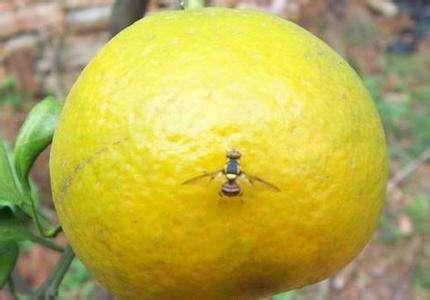
The oriental fruit fly (Bactrocera dorsalis Hendel), also known as the citrus fruit fly, oriental fruit fly, fruit maggot, etc., belongs to the order Diptera, family Tephritidae, genus Bactrocera. It is a highly destructive omnivorous pest and an important quarantine pest damaging more than 250 kinds of fruit and vegetable plants, including citrus, persimmon, carambola, fig, peach, and plum, and is listed as a domestic quarantine target [Jishan Huayao]. To describe the morphological characteristics of the oriental fruit fly, analysis is needed from three stages: adult, egg, and pupa. 1) Adult stage: the female adult is 6-8 mm long, with a wingspan of about 16 mm, and is deep black. The pronotum is dark brown with 2 yellow longitudinal stripes. The abdomen consists of 5 segments, is yellow, and has a T-shaped black spot. The male adult is 0.7-0.8 mm long. 2) Egg stage: the color is pale yellow, the shape resembles a kidney, and the length is 1.52-1.60 mm. 3) Pupa stage: yellow-brown, oval-shaped, with a length of 8.0-10.0 mm. Figure 1 shows an adult oriental fruit fly.
2 Damage characteristics, occurrence patterns, and causes of the oriental fruit fly
2.1 Damage characteristics
Under normal circumstances, adults lay eggs inside persimmon fruit, and the larvae gather inside the fruit to feed on the flesh. After persimmons are damaged by the pest, the internal tissues of the fruit gradually change, respiration is enhanced to a certain extent, and then the phenomenon appears in which the fruit is not yet ripe but the peel has already turned yellow first, with a slight tinge of red within the yellow. In addition, an abscission layer forms at the stem end of the infested fruit, causing premature fruit drop. The larvae-infested fruit falls to the ground and continues to survive and develop relying on the fruit, eating the flesh into a paste, after which the fruit rots [2]. After the fruit is damaged, early dropping is very likely to occur, thereby reducing yield, and the quality of the fruit is also greatly affected. For some persimmon orchards with severe oriental fruit fly occurrence, production faces huge losses.
Figure 1 Oriental fruit fly
2.2 Occurrence patterns
In recent years, through fixed-point systematic monitoring by the author, oriental fruit fly adults begin to appear in persimmon orchards in Pingle County from late May of the following year. The population is relatively low from June to August, adults begin to increase in early September, and the peak adult occurrence period is from early October to late November. The number of adults drops sharply in mid-December, and basically no oriental fruit fly adults are found from January to April. It occurs 3-4 generations per year, with overlapping generations that are difficult to distinguish. After emergence, adults must undergo a period of sexual maturation before they can mate and lay eggs. When laying eggs, the adult uses the ovipositor at the tail to pierce the peel, and then lays eggs inside. The number of eggs laid by an adult each time is 5-10, and 200-400 eggs are laid per year. The egg stage is 1-3 d in summer and autumn, and 13-20 d in winter. After hatching, the larvae immediately feed and cause damage inside the fruit. This causes the fruit to rot and drop. After 7-15 d, mature larvae bore out and drop to the ground, then enter the soil to pupate.
2.3 Causes of occurrence
From the current damage situation of the oriental fruit fly, the factors leading to its occurrence mainly include the following aspects. 1) Wide host range. It can damage more than 250 kinds of fruits, melons, and vegetables, including guava, carambola, citrus, persimmon, and cucurbits. 2) Problems exist in persimmon orchard management. The economic benefit of persimmons is relatively lower than that of other fruits, which affects farmers' enthusiasm for managing the oriental fruit fly. 3) Large-scale unified prevention and control is difficult. At present, melons, fruits, and vegetables in Pingle County are still mainly planted in small areas in a dispersed manner, making it difficult to unify control measures, resulting in low control effectiveness. 4) Control methods are relatively backward. There is not a high degree of attention to prevention of the oriental fruit fly, and treatment is usually carried out afterward, lacking corresponding preventive measures.
3 Prevention and control measures for the oriental fruit fly
Adhere to the plant protection policy of "prevention first, integrated control," implement the concept of "public plant protection, green plant protection, scientific plant protection," carry out the working mechanism of "government leadership, territorial responsibility, joint prevention and joint control, unified prevention and unified control," and vigorously promote specialized, joint prevention and joint control, and mass prevention and mass control green prevention and control techniques, so as to control the overall loss rate of oriental fruit fly damage in persimmon orchards to below 5% [3].
3.1 Do a good job in agricultural control
3.1.1 Deep plowing of soil
In combination with winter orchard cleaning, plow the soil once to bury overwintering pupae deep so that they cannot emerge from the soil. This measure can significantly reduce overwintering pest sources and reduce the occurrence of the first generation of pests the following year.
3.1.2 Raising chickens
Raising chickens can peck and eat the eggs and larvae in fallen fruit and can also prey on adult oriental fruit flies. This is the most direct and effective method for reducing insect population density.
3.1.3 Picking up fallen fruit and infested fruit
Because eggs and larvae are all inside the fruit, picking up fallen fruit and infested fruit is one of the effective methods for reducing insect population density. Pick up fallen fruit and infested fruit once every 5-7 d, and bury them deeply in a centralized manner or compost them into fertilizer through corresponding measures.
3.1.4 Timely harvesting in batches and multiple times
Fruit that matures early and has excellent quality is susceptible to damage by the oriental fruit fly. Therefore, it is necessary to harvest in batches and multiple times in a timely manner to prevent the fruit from becoming overripe and rotting.
3.2 Physical control
3.2.1 Hanging vibration-frequency insect-proof lamps
Taking advantage of the phototaxis of the oriental fruit fly, hang one vibration-frequency insect-proof lamp per 2.67 hm2, which also controls other pests.
3.2.2 Yellow sticky board trapping and killing
When adult damage is first found, place 20-30 yellow sticky boards per hm2 for color-based attraction and killing.
3.2.3 Sugar-vinegar pesticide liquid trapping and killing
According to the biological characteristic that adult oriental fruit flies need to supplement a large amount of nutrition before laying eggs, prepare a sugar-vinegar pesticide liquid by mixing 1 000 g brown sugar, 200 g edible vinegar, and 100 g 15% chlorpyrifos with 30 kg water to trap and kill adults.
3.2.4 Sex trapping and killing of adults
Attractant control is a control measure for the oriental fruit fly that has gradually been used on a large scale in recent years and has been widely recognized in the industry. There are two types of attractant control. 1) Food attractant: using the Guoruite fruit fly trapping and killing agent produced by Hubei Gurui Te Biotechnology Co., Ltd., spray 10 spots per 667 m2, which can simultaneously attract and kill both female and male adults with highly effective toxic killing effect. 2) Sex attractant: hang 3-5 fruit fly traps per 667 m2 to trap and kill male oriental fruit flies, reduce mating of the oriental fruit fly, reduce the number of eggs laid by females, and reduce damage by the next generation of larvae.
3.3 Chemical control measures
The oriental fruit fly has a strong short-distance migration ability, so the effect of spraying chemical agents is not very ideal. However, when the adult population density of the oriental fruit fly in persimmon orchards is high and the control effect of agricultural control and physical control is limited, timely use of chemical pesticides at the adult peak period in combination with other control measures can effectively reduce insect population density and greatly reduce damage. For chemical agents, 80% dichlorvos EC or 90% crystal trichlorfon 800-1 000 times liquid or 48% chlorpyrifos EC 1 500-2 000 times liquid, etc., or pyrethroid-type 2 000-3 000 times liquid can be selected to spray the tree canopy and weeds to kill some adults. The best time for pesticide application is before 9:00.
Through observation by setting up year-round monitoring points in persimmon orchard areas, according to the characteristics that adult oriental fruit flies are active outside the fruit while eggs and larvae develop inside the fruit and the characteristics of the population fluctuation pattern of the oriental fruit fly, it is difficult to achieve an ideal control effect by using pesticides alone in a small area or using a single control technique alone. Only long-term, large-scale unified pesticide application can effectively control the damage of the oriental fruit fly to persimmon orchards.