Watering flowers is not simple: blindly watering until it runs through, and every pot you plant dies
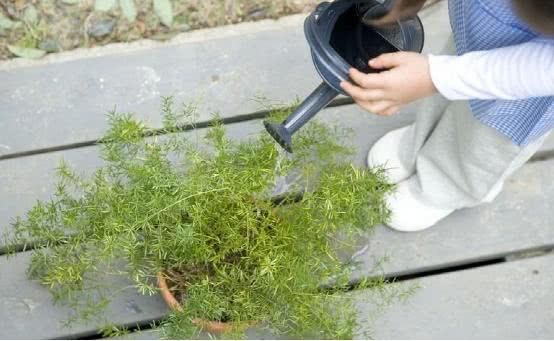
Whether a pot of flowers is well grown or not, how well you water is absolutely the key factor. Too much water causes waterlogging, too little causes drought; you could say whether a flower grower is professional and whether they can keep improving depends on their watering skill. In this regard, some veteran gardeners can even determine the watering frequency and water amount just by observing the flower pot and the potting soil, so how exactly do they do it? After courting favor again and again, I finally got a flower-growing expert to talk, so let's hear what he has to say.
Veteran gardeners stress "first look at the pot, second look at the soil" when watering flowers. As for the pot, there are mainly two things to look at. First is the material of the flower pot; different materials have different water permeability. Glazed ceramic pots and plastic pots have the worst water permeability, followed by clay pots and tile pots. If you ask which have the best water permeability, that would absolutely be earthenware pots and wooden pots.
We can water according to this rule: the better the water permeability, the more frequent the watering should be and the more water should be used. After all, they hold water a bit poorly and are not prone to waterlogging, while those with much less water permeability can have their watering amount reduced accordingly. The special case here is the plastic pot, which can improve air permeability by punching holes in the pot wall, making it quite flexible and adaptable.
Second is to look at the size of the flower pot. A small pot holds limited soil and stores less water, while a large pot holds more soil and its water storage increases accordingly. Therefore, if the bottom of the pot has the same drainage outlet, generally speaking a small pot always loses more water and dries faster than a large pot. For this very reason, if the same flowers are planted in flower pots of completely different sizes, the small pot can be watered more often but with a little less water each time, while the large pot is exactly the opposite.
Now that we have finished looking at the pot, let's continue with studying the soil. Looking at the soil also really centers on two points. Sandy soil has a coarse texture, seeps water quickly, has weak water-holding capacity and dries easily, so the watering frequency should be appropriately increased; heavy clay soil should have the watering frequency appropriately reduced, and the watering amount can be increased as appropriate.
Next, look at the color: when the soil's water content differs, the color differs. If the soil starts turning white, feels light in weight and is hard, then it is time to water, and the watering should be appropriately heavier.