How can hydrangeas bloom every year? Do these 5 things well
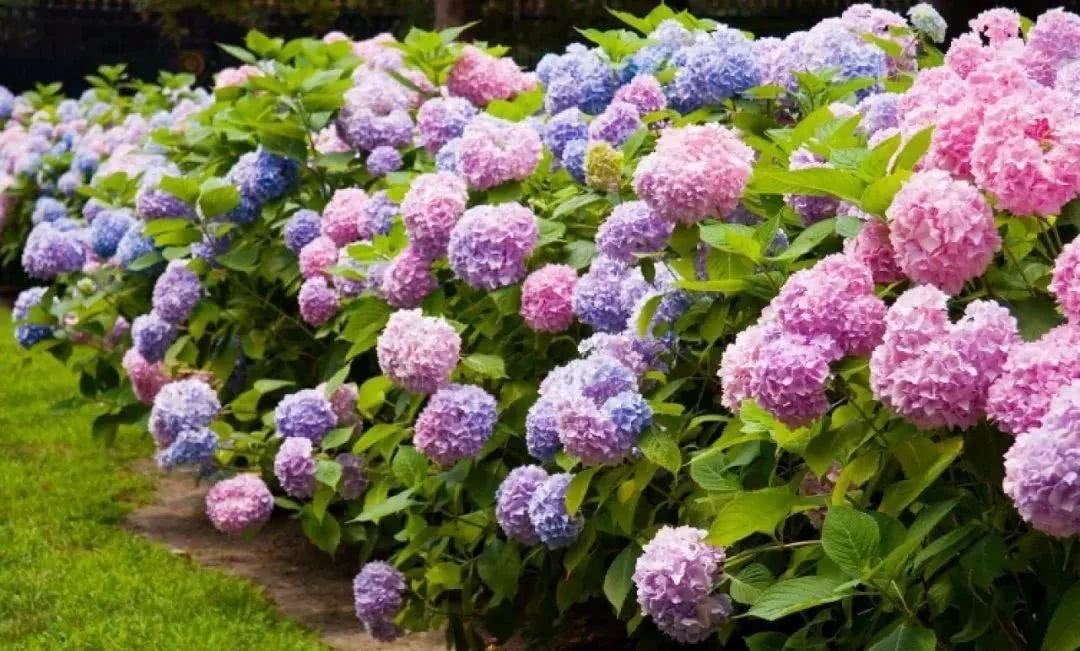
In places at home where the light is not too abundant, you can also grow hydrangeas well. They do not need too much light and can grow even in partial shade. As long as you give them a little scattered light every day, they can produce bright flowers and bloom every spring, but you need to do the following five things well.
Hydrangea is a flowering shrub plant that I really like. Some friends think hydrangeas require a lot of care and are very picky about the environment, but that is not the case. Hydrangeas are easier to grow than you might imagine. They bloom relatively easily. Take a look at the following five points and see whether you have done them all well.
First point, the planting location
When planting different types of hydrangeas, you need to choose a suitable place. Some varieties need a little more light, while others are slightly more shade-tolerant.
The best planting location is an east-facing balcony or yard, where they can get more light in the morning, while at noon and in the afternoon they should be shaded. They grow best in this kind of environment.
In addition, hydrangeas need a fairly large space to grow. Each hydrangea should have proper spacing, and they should not be planted too densely. Generally, they are planted in spring and autumn. Before planting hydrangeas, you should dig the holes properly, prepare loose, well-drained soil, and you can add some compost at the bottom. Hydrangeas quite like moisture, and the soil needs to have a certain water-holding capacity.
Second point, pay attention to watering and fertilizing
Hydrangeas quite like moisture. During the growing season, water them regularly to avoid the soil becoming too dry, otherwise the leaves are prone to wilting.
During the growing season, hydrangeas need the soil kept moist. When growing hydrangeas, you should give appropriate fertilizer, so that the hydrangeas can grow well.
Normally, you can give a dilute fertilizer once every 1-2 months. You can use a balanced fertilizer. In the early stage, when growth is not yet very vigorous, you can give a compound fertilizer with a nitrogen-phosphorus-potassium ratio of 12:4:8. Later, after the stems and leaves grow vigorously, you can appropriately supplement with monopotassium phosphate to promote flowering.
Third point, pay attention to pruning hydrangeas
Once you find withered flowers or flowers that are about to fade, be sure to cut them off in time to avoid consuming too many nutrients. When the branches of the hydrangea begin to age and gradually become woody, they will produce relatively smaller flowers, so they also need regular pruning.
After the branches of the hydrangea grow too tall, you should pinch off the tips appropriately to prevent the hydrangea from growing too tall. You can choose to prune appropriately in autumn or after flowering.
Fourth point, growth rate
Hydrangeas can grow to about 50-60 cm each year and grow very quickly. They need a fairly large space to grow. If growing them in pots, be sure to choose a relatively large container, and drainage must be ensured. You can spread some granular stones at the bottom to prevent the drainage holes from getting blocked.
Fifth point, changing the color of hydrangeas
Hydrangeas can produce very unique flowers, and the flowers look like charming colorful hydrangea balls. You can also control the color of the flowers, that is, change the pH value of the soil to make the hydrangeas change color. The stronger the alkalinity of the soil, the more the flowers will turn pink. If you want pink hydrangeas to turn blue, you can increase the acidity of the soil, which can make the flowers turn blue.
Regularly adding some peat soil or compost soil to the soil can make the soil more acidic, and you can also directly water with some ferrous sulfate solution. If you want to make the soil more alkaline, then you need to regularly add lime.