These 3 problems are most common in indoor Rubber Plants in summer, and preventing them in advance is key
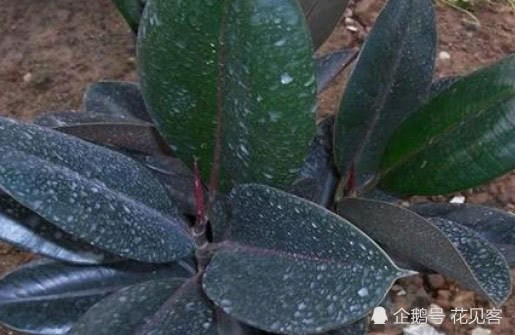
The Rubber Plant's leaves are thick and broad, deep green in color, with a surface that looks as if it has been coated in wax, and its growing tips are bright red; set off by the large leaves, it resembles a red tassel hanging upside down, giving it quite a charm. It is a well-known potted foliage plant, and many flower lovers especially like to use it to accent living rooms, studies and so on.
The Rubber Plant counts as a fairly easy flower to care for, but in summer these 3 diseases are the most common; if you keep ignoring them, all you will have left is the pot. Preventing them in advance is very necessary.
1. Anthracnose
Rubber Plants are most prone to anthracnose, especially in summer, which is the peak period for the disease. It only attacks the leaves, and the main symptoms are: round or oval gray spots appearing on both sides of the leaf veins; in severe cases the spots merge into one patch, spread to the whole leaf, and eventually affect the entire plant, causing death.
Prevention and control methods:
[1] In the hot, humid summer environment, pay attention to ventilation and place it in a spot with good airflow; combined with pruning, promptly cut off diseased branches, old leaves and withered leaves to reduce infection.
[2] The branches and leaves need to be disinfected once a month. You can spray 0.1% Bordeaux mixture or 0.5% potassium permanganate onto the branches and leaves, and spray evenly; when the disease occurs, you can dilute carbendazim 500 times and spray it.
2. Gray leaf spot
Gray leaf spot is mainly caused by infected wounds. The main symptoms are leaves turning dark brown and developing black granular material, then gradually drying up.
Prevention and control methods: when pruning branches and leaves, it is best to apply lime powder or potassium permanganate and the like to the wounds, then place it in a cool, ventilated spot and wait for the wounds to dry.
When gray leaf spot appears, you can directly dilute carbendazim 1000 times and spray it to treat the disease.
3. Root-knot nematode disease
Root-knot nematode disease mainly targets the root system, constantly invading the roots and causing many tumor-like growths of varying sizes to form on the fibrous roots, making the roots rot and finally causing the entire Rubber Plant to die.
Prevention and control methods: you can use sugar water for prevention and control. Water once every half month with a 1:500 sugar water solution, which can promote the reproduction and growth of beneficial bacteria in the soil and thereby destroy the living environment of root-knot nematodes; you can also apply 15% aldicarb granules, about 1 g per 1 kg of soil, which can effectively eliminate root-knot nematodes in the potting soil.
That is all for the introduction to care when the Rubber Plant develops disease. If flower lovers have other additions, you can share them with everyone in the comment section below. If you want to learn more about flower care, you can follow Huajianke.