Summer flower arranging makes life as splendid as summer blossoms
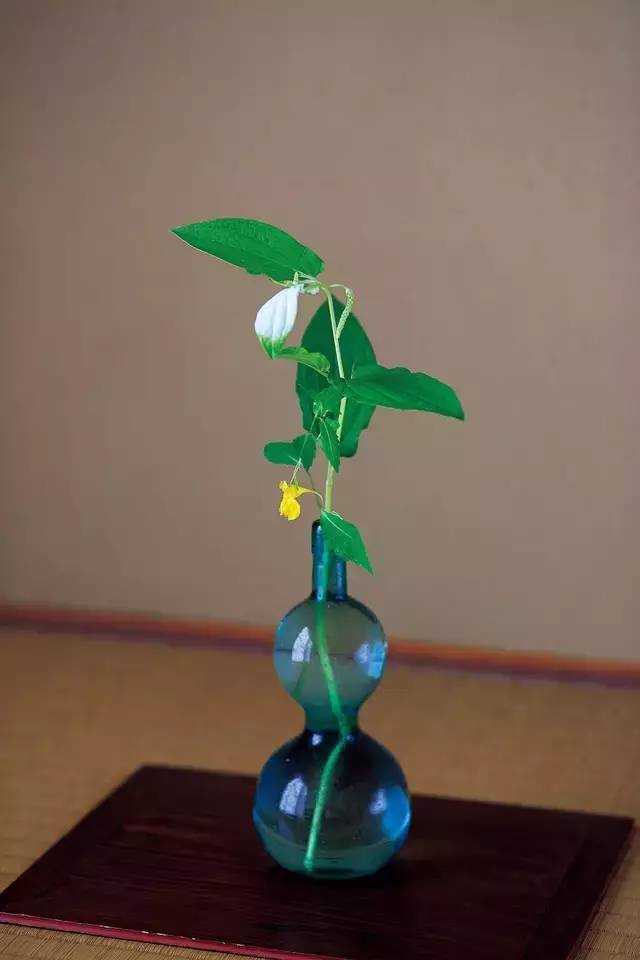
Where the breeze passes, plants grow.
In the deep secluded courtyard, the summer mat is cool; pomegranate blossoms open all around, bright through the curtain.
Tree shade covers the ground at midday; waking from a dream, an oriole calls now and then.
Green shade and secluded grass surpass the flowering season.
In every season, there are many flowers blooming and fading unknown to people. Cultivated flowers or wildflowers alike, every single flower should have its own season.
Summer flower arranging differs from other seasons; uncomplicated techniques and unshowy flowers are the first choice.
The range of flower materials to choose from in summer is very wide: wildflowers by the roadside, small chrysanthemums of the fields, aquatic plants in the pond, and various crops in the farmland can all be used; flowers, leaves, stems and fruits each have their own bearing and all have ornamental value.
Summer flower arranging seeks coolness and calm of mind, so for all flower branches you can choose those that are seventy or eighty percent open; buds just about to bloom are the most ideal. When trimming flower branches, be sure not to prune too much of the withered leaves, small twigs and thorns; it is best to let them be and keep their natural bearing.
There is no need to be rigid in choosing flower vessels; natural and following the heart is best. In Japan, flower vessels are distinguished by three grades: "shin," "gyo" and "so." Using calligraphy as a metaphor for the three temperaments, they correspond respectively to regular script, running script and cursive script. The highest grade, "shin," is somewhat like wares from Chinese kilns, using dignified materials such as bronze, and is smoother and more elegant. Besides these, some deformed vessels, or various creative flower vessels made of bamboo or wood, are "so," also called nanban flower vessels.
Saxifrage
Unassuming small flowers paired with pottery, much like the scenery of Nara
Indigo
Restoring the posture of flowers blooming on the tree
Michelia figo
Sweet fragrance where deities pause; petals will blow down one by one
Spiderwort
Wildflowers casually arranged and hung on the alcove; vacant and leisurely
Acorus
Just-swelling buds and long leaves; most suitable for a early-summer wind stove tea gathering
Hydrangea serrata
Transforming into many forms in the plum rain season; paired with a zongzi-shaped flower vessel, it shines brilliantly
Water lily
Blooms in the morning, closes tight in the afternoon; let guests feel the cool sense of summer
Spirea
Fine leaves like those of a willow; arranged in a precious flower vessel to express feeling
Hime lily
Small lily blooms are hard to come by; in the scorching summer they suit a fishhook flower vessel
Hibiscus
White, clear and refined; soak in water quickly, suitable for a tea room
Mountain hydrangea
Flowers blooming in clusters among the rubble; take only two branches and arrange them in a flower basket
Begonia
Paired with hydrangea and arranged in a narrow-necked bottle; careful water changes can keep it unwithered for a long time
Summer wisteria
Casually placed in a glass wine bottle; has a rustic elegance and quiet seclusion
Lotus
Naturally matched with the glaze color of the sutra cylinder; suitable for August Buddhist services and Dharma assemblies
Pomegranate fruit
Select small fruits; arrange them in a hanging pot, delicate and refined
Japanese flower arrangement master Akimitsu Tanaka - "Like Flowers in the Wild"
"Like Flowers in the Wild" is a record of the four seasons' flower tales by Japanese flower arrangement master Mr. Akimitsu Tanaka. The "Tales of the Past from Mufuan" within it is both a recollection of past events and a record of flower affairs through the years.
In the book, Mr. Akimitsu Tanaka is a person "obsessed with flowers." He began running an antique art shop in his twenties, and at first started arranging flowers and brewing tea to attract customers, but unexpectedly became deeply intoxicated once he entered this path, immersed in it for fifty years.
The flower works in his hands always carry the temperament of the tea ceremony's "harmony, respect, purity and tranquility"; whether swaying gracefully, fresh and pleasant, or withered and desolate, they are all filled with the most primal and beautiful power of nature. Whenever he sees a flower vessel and a flower as if they were a match made in heaven, he cannot help but sigh: "Flowers can bring so much happiness and moved feeling!"
"Only by going deep into nature can one seek flowers"; there is nothing more beautiful than flowers in nature.
All the brilliance, all at Huayipai Youzan Mall
Flowers and love | Huayipai