Can Black Rot in Succulents Still Be Saved? A Detailed Guide to Beheading Treatment
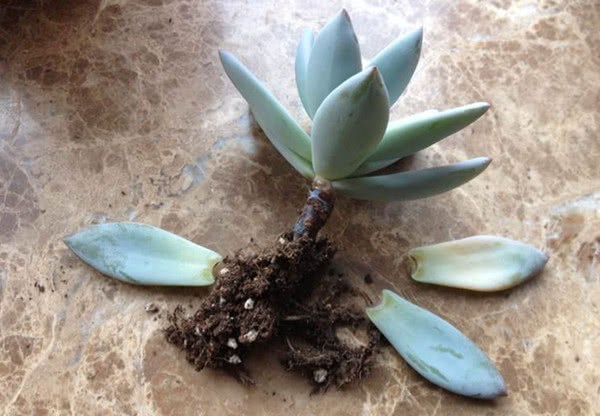
Four or five years of growing plants, and black rot strikes in an instant. Now the weather is getting hotter and hotter, and I see many plant lovers' succulents have rotted away. What should be done? Black rot is like "cancer" in succulents. Once it occurs, the only option is to quickly "behead" them to save themselves; there is no other way. All we can do is try our best to prevent black rot from happening.
How to save succulents when black rot occurs?
1. Beheading
Black rot usually starts with blackening at the root and stem. Cut away all the black-rotted tissue, soak the healthy part in carbendazim, let it dry, and replant it. Pull off some of the leaves at the base to expose more healthy stem tissue and make sure what you cut off is the part without black rot. Healthy leaves can also be used for cuttings.
If it is discovered early and only a tiny bit of the stem has black rot, you do not have to pull it out; you can directly use a knife to gouge out the black-rotted part.
2. Leaf cuttings
For some succulents with short stems, there is no head to cut off, or the center has also blackened. In that case, you can pull off the healthy leaves and propagate them as leaf cuttings.
How to reduce black rot infection?
To reduce black rot infection, the most fundamental thing is to improve the cultivation environment for succulents and give them a healthy and safe growing space.
1. Breathable soil. Mix large particles into the growing medium (crushed bamboo charcoal, vermiculite, perlite, coarse gravel, etc.) to increase air permeability. Do not directly dig up garden soil for planting.
2. Do not water at high temperatures. Water in the early morning or evening, avoiding noon. When watering, just water the soil and avoid water droplets remaining on the plant, especially in the leaf center.
3. Avoid water accumulation. When it rains, besides bringing in the clothes, you also need to bring in the succulents, especially during consecutive rainy days. If your succulents are relatively robust and have always been kept outdoors, they may be more adapted. If you only occasionally get a sudden whim and take them outdoors, it is very easy to lose your little succulent babies this way.
4. A ventilated environment. The cultivation environment must have air circulation. Indoor care also requires opening windows for ventilation. Under high temperatures and muggy conditions, all kinds of pests and diseases will come knocking. There should also be ventilation between plants, and dead leaves and plants should be cleaned up in time.
5. Prevent mealybugs. Deal with mealybugs promptly when found. If they should be pinched to death, pinch them to death; if they should be sprayed with pesticide, spray them. Severe mealybug infestations easily trigger other diseases.