How many of these common ferns do you know?
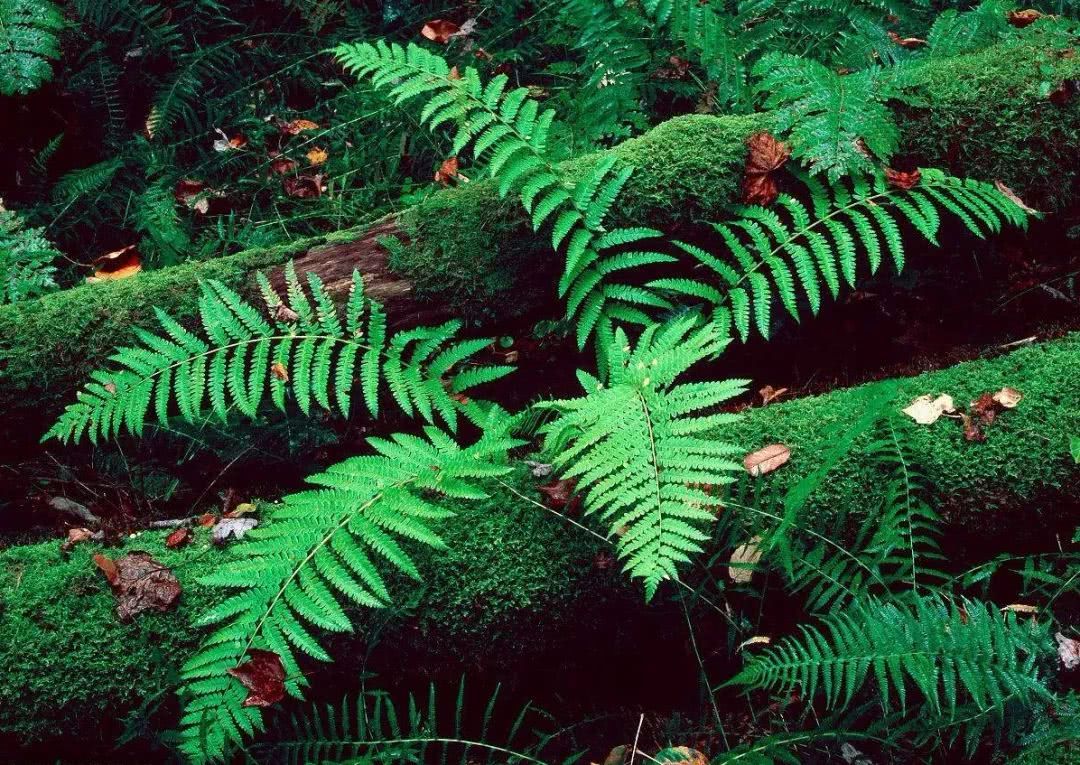
Source | Vanke Building Research Center
In the history of life's evolution and development, ferns are a miracle. Ferns were the earliest group of plants to colonize land, with a survival history of more than 300 million years to date. Ferns were the main food source for dinosaurs, and now that the dinosaurs are extinct, the ferns are still here; ferns are the ancestors of gymnosperms, and while many gymnosperms have now become relict plants, ferns remain full of vitality; ferns are the progenitors of flowering plants, and in today's world of flower-covered fields, ferns still flourish.
Origin and Classification
Ferns are also called fern plants. In the Paleozoic era, the lepidodendrons and calamites among the ferns were very tall and were important raw materials in the formation of coal. Among the ferns surviving today, apart from the only surviving tree fern in the world, the Cyathea, which is woody, all the others are herbaceous. Ferns have no flowers, and no fruits or seeds; they reproduce by spores. They can be roughly divided into 4 classes: Psilotopsida, Lycopodiopsida, Equisetopsida (the above are the fern allies) and true ferns (the true fern class).
The underground stems of ferns can send up leaves everywhere year after year, and the young leaves are curled at the upper part and covered outside with white down, which in ancient times was called "fist vegetable" or "fern fist." The leaves gradually grow larger, and deep green and beautiful pinnate compound leaves grow on the leaf stalks. Ferns growing wild in mountainous areas are plain and sturdy, relying mainly on the brown or yellow spores on the back of their leaves scattering in moist places, and after a complex process, developing into new ferns.
Young leaves of ferns
The leaves of ferns can also be divided by function into two kinds: sporophylls and trophophylls. Sporophylls refer to leaves that can produce sporangia and spores, also called fertile leaves; trophophylls can only carry out photosynthesis and cannot produce sporangia and spores, also called sterile leaves. In some ferns the sporophylls and trophophylls are not separate, and can both carry out photosynthesis and manufacture organic matter, and also produce sporangia and spores, with leaves of the same shape, called homomorphic leaves, such as the common Cyrtomium, Dryopteris, and Pyrrosia; in addition, on the same plant body there are two kinds of leaves with different shapes and functions, namely trophophylls and sporophylls, called heteromorphic leaves, such as Matteuccia, Drynaria, and Osmunda.
Sori of ferns
Emei Cyrtomium
Drynaria
Osmunda
There are about 12,000 species of ferns in the world. Ferns have a very wide range of uses. Many kinds can be eaten, with young shoots used as vegetables, such as fiddlehead fern, which is fresh and delicious and has the reputation of "king of mountain delicacies." The rhizomes of many ferns contain large amounts of starch and can be used to make wine or sugar. The underground rhizome of Angiopteris can weigh 20-30 kg. Many kinds are well-known medicinal plants, such as Lycopodium, Selaginella and Cyrtomium. Azolla and Salvinia are feed and also fertilizer.
Culture and Application
Ferns give people a feeling of simplicity, calm, plainness, freshness, elegance and even a touch of mystery. There are records of ferns very early in Chinese history. The line "I climb that southern hill, and there gather its ferns" in the Book of Songs records the legend of Bo Yi and Shu Qi gathering ferns on Mount Shouyang at the end of the Shang dynasty, and together these forged ferns into a distinctive cultural symbol in traditional Chinese culture. "What state has recluses? The rivers and mountains are rich in vetch and ferns" - gathering ferns became a symbol of those beyond the world seeking to lay down arms and return to the fields; "Everywhere children gather ferns, one after another hidden birds build nests" - the yearning for a beautiful pastoral life.
This very ancient group, the ferns, has many unique adaptive mechanisms for adapting to extremely shady environments, extremely polluted environments, and extremely dry environments. In indoor ornamental display, urban three-dimensional greening, and environmental remediation in areas with severe urban heavy metal pollution, ferns also have obvious advantages. At present, the application of ferns in gardens is mainly concentrated in indoor ornamental display, cut flowers, and as a foil for outdoor flowering plants; they belong to relatively new garden landscaping plant materials, and their application is not particularly widespread.
New leaves of Athyrium
National flower of New Zealand - silver fern frond
Soft tree fern
Edible wild ferns
As ornamental plants, ferns have long enjoyed the reputation in the West of "beauty without flowers." Especially in Japan, Europe and America, they are regarded as a symbol of nobility and understated elegance, representing a major trend in the world's ornamental plants today. In New Zealand, the silver fern is even regarded as the national flower, seen everywhere, on visas, on postcards, and even on the door plaques of craft shops, gradually becoming a symbol of New Zealand. Ferns are elegant and novel, with verdant green leaf colors and diverse shade-tolerant ecological adaptability, giving them broad application prospects, especially in indoor horticulture, where their advantages are even more evident. In recent years, the use of ferns as landscaping and decorative materials in parks and courtyards has become increasingly common.
Compared with flowering plants, ferns have unique advantages. First, ferns are shade-tolerant and can survive and carry out photosynthesis normally in relatively shady environments. Second, ferns only produce spores, unlike flowering plants which produce highly allergenic pollen, and so far no reports have indicated that fern spores cause allergies in people.
The Vanke Dongguan Tropical Rainforest Botanical Garden, which has now begun construction, has a dedicated fern area - the Cyathea Valley. Ancient ferns are placed within strong modern design elements to display the unique charm of ferns in gardens. Coordinating with the winding streams and undulating hills of the rainforest, it highlights the plain, fresh and delicate style of ferns, while forming an overall atmosphere of elegance, etherealness and harmony.
Fern micro-landscape
Ferns at the Royal Botanic Gardens Melbourne
Ferns of Hawaii
Concept image of the Cyathea Valley in the tropical rainforest valley of the Vanke Building Research Base
Staghorn fern
Maidenhair fern
Selaginella uncinata
Lycopodium cernuum
Selaginella
Chinese quillwort
Psilotum
Equisetum
Field horsetail
Pteris semipinnata
Rabbit's-foot fern
Cibotium barometz
Fujian Angiopteris
Sphaeropteris lepifera
Sphenomeris chinensis
Marsilea
Water fern
Lemmaphyllum drymoglossoides
Blechnum orientale
Diplopterygium chinense
Dicranopteris
Bird's-nest fern
Cyathea
Pteris cretica 'Albolineata'
Neolepisorus
Lygodium japonicum
If you also like growing flowers, then follow us!