After the peak blooming period of roses, care for them this way, and in two weeks they will bloom again in full glory
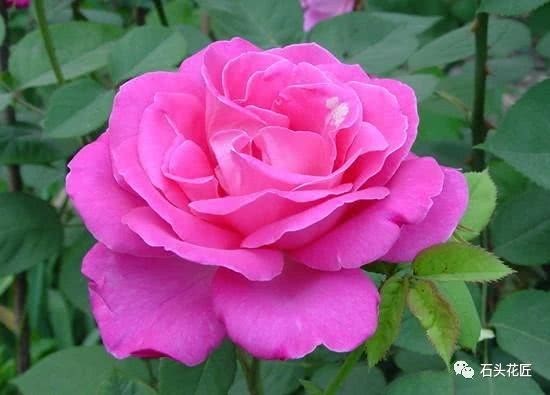
Over the past month, many flower lovers have probably noticed roses blooming in their neighborhoods, parks, and green belts. Of course, those who grow roses will feel this even more.
It is often said that roses have a long blooming period, lasting throughout summer and autumn. This saying is not wrong, but the methods and techniques of cultivation are especially important. Today, Shitou will share with everyone what to do after the peak blooming period of roses: through proper pruning and fertilizing, you can achieve another peak blooming period.
Methods for pruning roses after flowering
1. Pruning time:
Post-bloom pruning of roses is mainly done by observing when the flowers have finished blooming. Once they reach the state shown in the picture above, they can be pruned! A reminder to everyone: do not be reluctant to cut. For woody flowers like roses, pruning is essential to promote the development and growth of lateral buds, and then new flower buds will grow from the branches of the lateral buds!
2. Pruning methods:
Pruning roses is simple, but also requires attention to detail. It is divided into the following two pruning methods based on variety:
1. Single-head varieties
So-called single-head varieties are those where one branch produces one flower, and the branches are generally quite thick and strong. When pruning, you can prune heavily, cutting from near the flower bud down to the fifth leaf. In two weeks, the lateral buds below will grow new flower buds.
A rose leaf has 5 leaflets on one petiole. Below a rose flower, the first 1-2 leaves are usually three-leaflet leaves. A petiole with 5 leaflets indicates that the nutrients are relatively sufficient, and correspondingly the bud points will also have relatively sufficient nutrients.
2. Multi-head roses that bloom in stages
So-called multi-head varieties are those where one branch produces several flowers. For such plants, first cut off the main flower that is nearly finished blooming, and after the other flower buds have opened normally, then prune.
3. Multi-head roses that bloom simultaneously
For a branch with many flower buds that open simultaneously, prune uniformly after flowering. For strong branches, keep 3-4 leaves and cut off everything above. For medium branches, keep only 2-3 leaves and cut off everything above. For weaker branches, prune heavily, keeping only 1-2 bud points to encourage the growth of robust branches.
Friendly reminder: When pruning roses, be sure to pay attention to the direction of the bud points. Try to preserve the outward-facing bud points, so that the branches that grow will be neat, receive even light, and the whole plant will have good ventilation. Otherwise, mostly crossing and intersecting branches will grow, which is not good for the plant's shape and can easily cause poor ventilation and susceptibility to disease. The direction and height of the cut are also very important. When pruning, the direction of the cut should be opposite to the direction of the bud point, cutting 0.5-0.8 above the bud point. The cut can be a flat cut or slightly angled.
Methods for fertilizing roses after flowering
For roses, after post-bloom pruning, fertilizing and supplementing nutrients is very necessary because after the first wave of flowers has bloomed, the plant's nutrients have been consumed a great deal. This is also the time when new flower buds are developing. It is recommended to use potassium dihydrogen phosphate to promote the development of the plant's root system and also provide sufficient nutrients for the development of flower buds. Avoid using nitrogen fertilizer at all costs, as the effect will be counterproductive, burning the flower buds and causing the roses to fail to bloom.