Straight-trunk bonsai creation techniques: crafting a majestic form that stands tall and reaches for the sky
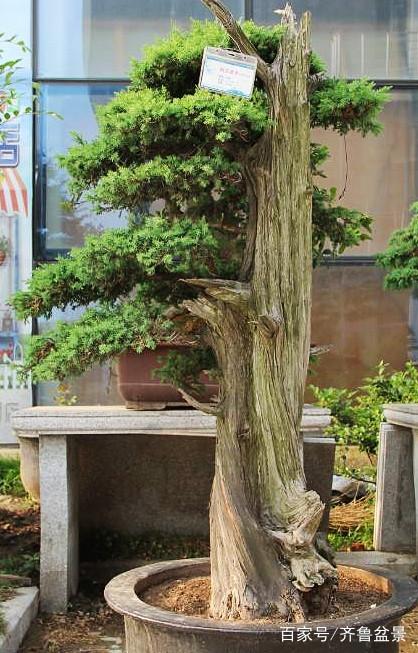
Straight-trunk bonsai, as the name suggests, features an upright main trunk that branches at a certain height, imitating the tall, upright posture of trees in nature that stand between heaven and earth. Since straight-trunk bonsai requires an upright main trunk, the focus of styling is on the branches and foliage. Different tree species have different branches and foliage, and the styling techniques vary accordingly. Below, we will focus on some techniques for creating straight-trunk bonsai.
1. A standard straight-trunk bonsai should have a tall and upright trunk, thick at the bottom and tapering toward the top, with branches on both sides of the main trunk spreading out horizontally, and exposed roots extending in all directions, gripping the ground firmly. Usually, the lowest primary branch should be the longest, in a drooping state, the middle branches spreading horizontally or slightly pressed down, and the upper branches slightly upturned.
The topmost apex branch can be shaped into an S-curve to facilitate forming the crown, but the center of gravity must not deviate from the central axis of the main trunk.
2. In bonsai creation, we often encounter tree stumps with upright trunks that are plain and unremarkable, always leaving people at a loss as to where to begin. They are set aside with little care, and in the end many become firewood, seriously wasting resources. For these stumps, we can use the trunk-splitting method and be bold, which often turns the ordinary into something extraordinary. There are several specific splitting methods.
1 Split off a section of the main trunk from top to bottom, to a depth of about one-third of the trunk. The split-off section should preferably be thicker at the top than at the bottom.
2 Split from the middle of the main trunk, dividing it into two. After it survives, pay attention to the position of retained branches, striving to make it as natural as possible.
3 Split from the root extending up to the trunk, leaving only the upper part of the main trunk connected. A stone can also be inserted in the middle of the root. The size and shape of the stone should be used flexibly according to the styling.
Finally, one more point to add: for straight-trunk bonsai, no matter what shape of pot is used, it should be shallow rather than deep. A shallow pot can set off the tree's imposing presence of standing between heaven and earth and reaching for the sky.
I am Qilu Bonsai Qingsong. If there is anything unclear, please leave a message and I will reply as soon as possible.