How to dwarf bonsai trees? Clever use of the ring-barking method to create bonsai
First of all, I have to say that everyone who clicked in to read this article got tricked into it. I've been pretty busy lately and don't have much time to play around. Although I have a lot of material on hand, I haven't had time to organize it. But work is work, and play is still play. This ring-barking method is actually just high-level air layering. This method can be used for propagation and for changing the root system. The bonsai-making process I'm talking about today is the same thing as all that air layering I've rambled about before. Anyway, you just give the trunk two cuts, peel off a section of bark, then bury the bare part, and after a while when it has rooted, cut it off. If you have a tree whose trunk is just a pen shaft or a cannon barrel and you don't like it, but its upper part is so full of character that you can't resist it and can't stop admiring it, then what do you do? Give it two cuts, then throw away the lower part and keep the part with character. That way you get the best of both worlds.
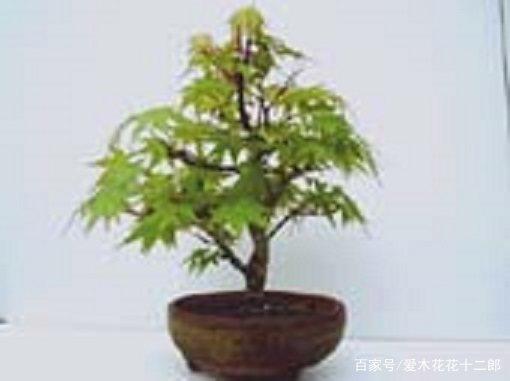
This maple is just like that. The photo quality isn't very good, so just make do with it to get the idea. Actually, this tree is already not bad. The position of the first lower branch isn't too high, and although the angle is a little off, a downward pull will fix it. But the bonsai artist didn't think so. Having gotten tired of the tying game, he wanted to try something else.
He wanted to remove this section of the main trunk, so he adopted the ring-barking method to regrow roots. He made the ring cut below the first branch point.
The rest of the process is the same and very simple.
In the blink of an eye, half a year passed after it was wrapped up, and it had grown this many roots. It was time to harvest.
So it was harvested.
And so a perfectly fine tree had its top cut off, instantly going from 1 m 8 to 1 m 5. I wonder what it was thinking inside.
Overall, after this treatment, the tree went from a large straight-trunk tree form to a double-trunk style, and both trunks are still fairly shapely. In the future it should have boundless prospects. After two years of building branches and reducing the leaves each year, in three years this tree will make people look at it with new eyes.