Why are the tips of the newly sprouted Gardenia leaves black and scorched
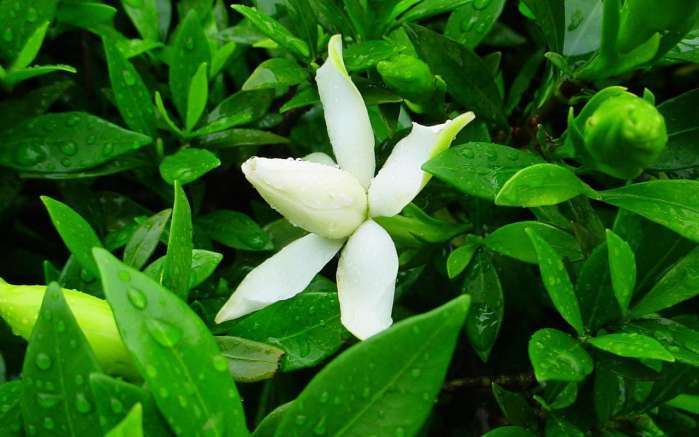
Everyone knows it for its creamy white flowers, and when it blooms it gives off a very strong fragrance. This flower is often planted in flower beds at schools and residential communities, and once the blooming season arrives, you will smell its rich floral scent, and it is deeply loved by many people.
Q: When our gardenia's leaves sprout, the tips seem to be black. What is the reason? Is this normal?
A: Black tips on gardenia leaves are definitely not normal, and there are many reasons for this phenomenon. First, pests. Improper daily care can lead to pest problems on the gardenia, and this is a main cause of black spots appearing on the tips of the gardenia's newly sprouted leaves. Second, it may be that the temperature is too low. When the temperature is relatively low, the gardenia will automatically enter a dormant state, which causes the tips of the gardenia to turn black. Third, too much watering. When growing gardenias at ordinary times, watering it frequently and using a relatively large amount of water each time is also a cause of black tips on the gardenia. Fourth, improper fertilizing. Fertilizing the gardenia frequently leads to excessive nutrients in the gardenia, which is also a cause of black tips on the gardenia.
Q: So how should these problems be solved if they appear?
A: First, when pest problems are found on the gardenia, deal with them promptly. If the pest problem is not too serious, you can spray a harmless insecticide you make yourself on the leaves, but if you find the pests and diseases when they are already at a serious stage, then you need to use insecticide.
Second, gardenias are suited to living in an environment with a suitable temperature. Generally, a temperature of 16-25°C is the most suitable, so pay attention to growing the gardenia at the right temperature. When winter comes, it is best to move the gardenia indoors to grow it.
Third, do not keep watering the gardenia all the time. It has the ability to absorb moisture from the air on its own. If you really cannot stop yourself from watering the gardenia, then you can spray a smaller amount of water each time; otherwise, too much watering can easily lead to root rot.
Fourth, the main purpose of fertilizing is to supplement enough nutrients for the gardenia. If, when you first start growing a gardenia, you use soil suitable for gardenia growth to cultivate it, that will be very good; the soil should be slightly acidic. When fertilizing the gardenia at ordinary times, pay attention to the frequency; fertilizing once every three months is enough. When fertilizing, do not apply fertilizer directly at the roots; stay away from the roots and apply the fertilizer at the edge of the flowerpot. The gardenia should be repotted once a year. When repotting, you can spread a thin layer of organic fertilizer at the bottom of the flowerpot to increase the nutrients in the soil, then add soil and place the gardenia