Why are so many girls especially fond of French floral art?
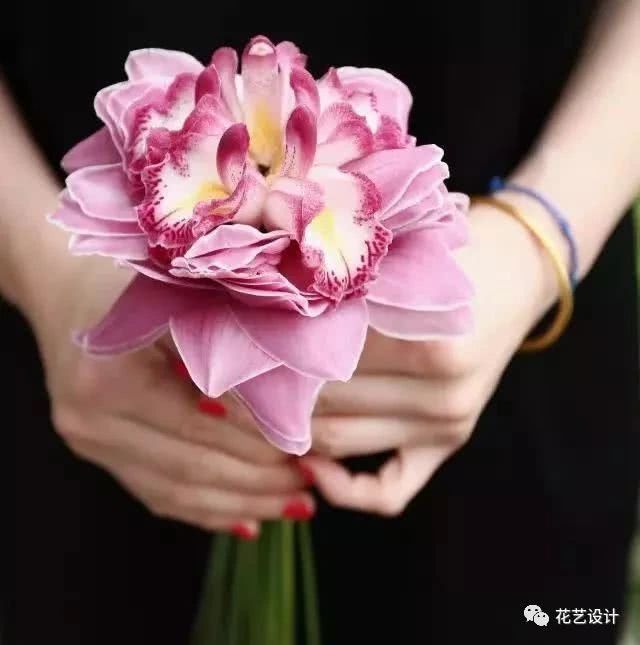
French natural-style flower arranging is broad and profound, and today we will take you on an in-depth exploration.
First, let's cover some basic knowledge of French bouquets. The three major categories of French bouquets are the classic hemisphere, the grouped bouquet, and the natural style.
In addition, we will introduce some ingenious flower arranging methods.
Bouquet wrapping
Wrapping is the final step of a gift bouquet. It can make the bouquet larger and create a bear-hug bouquet effect.
Wrapping paper usually comes in two colors; one color is chosen from the existing colors in the bouquet, making it look more harmonious.
Choosing wrapping paper according to the bouquet's character is also a commonly used wrapping method. French bouquet wrapping paper choices are generally quite classic, with elegant colors such as high-end gray, bronze, and nude pink; of course, white and black are versatile colors.
Table floral art
Multiple floral arrangements appear in close succession, forming French table floral art and creating a magnificent visual effect.
Multiple bouquets are placed at staggered heights through the containers, forming rich layers; dining in such a sea of flowers makes the mood brighter as well.
Tracing history | The four major stages of French floral art development
Babylonian periodSymmetrical, dense over large areas, slightly casual
Container choices: copper and gilded vessels
Commonly used flowers: anemone, lily, carnation, rose, snapdragon, poppy, tulip
Color combinations: medium pink, lavender purple, blue, gray-white, red, gold
Design shapes: determined by the container, flowers and foliage, and the artistic concept expressed
Commonly used elements: candlesticks, Baroque angel ornaments, small wooden boxes
Rococo periodNo strict symmetry, open style, elegant and light
Container choices: ceramic bottles and jars, glassware, goblets
Commonly used flowers: lilac, delphinium, peony, poppy, tulip, ferns, honeysuckle
Color combinations: soft color schemes of pale pink, light yellow, and cream
Design shapes: oval, S-curve, and other curved forms
Commonly used elements: sculptures, books, masks, embroidered items
Neoclassical periodRefined and exquisite, with feminine characteristics
Container choices: tall porcelain vases, glass or crystal containers
Commonly used flowers: anemone, marigold, rose, hyacinth, snapdragon
Color combinations: soft cool tones
Design shapes: flame-like, linear, pointed
Commonly used elements: ceramic statues, porcelain items
Empire periodCalm and balanced, compact in structure
Container choices: marble vases printed with classic patterns (Greek, Roman, and Egyptian cultural motifs)
Commonly used flowers: lily, rose, agastache
Color combinations: bright tones such as red, green, white, gold, and purple
Design shapes: triangular style
Commonly used accessories: clocks, candlesticks, small decorative boxes
Discovering trends | The French floral art style that has evolved to the present
Through evolution to the present, French floral art has retained more of its natural characteristics. Especially the popular linear-style bouquets, oil painting frame floral art, long table flowers, arches, flower baskets, and other floral styles, each design shape shows the vitality of plants from a unique perspective, expressing an elegant, natural, and casual state.
Linear-style bouquet
Generally centered on a focal point, using a radial insertion method, with very strong linear expression, it demands extremely high technical skill from the florist, who must form a floral shape with a gradual flowing direction. Specific flower shapes include crescent, S-shape, cascade, and so on.
Crescent and S-shapes are often used for decoration in weddings, churches, homes, events, business settings, and other scenes. Skillfully hiding the flower stems, coordinating and extending while decorating the upper part, they naturally present the lively pastoral charm and dynamic space within the floral art.
The cascade bouquet is the darling of bridal weddings, often using flower branches and ribbons to highlight the lightness of the bridal bouquet. It is the most solemn bouquet and is very suitable for grand, dignified, and luxurious weddings; the florist must have excellent ability to grasp the overall style.
Oil painting frame decoration
When floral art meets an oil painting frame, this pairing is unique. It has an extremely wide range of uses: art exhibitions, galleries, office buildings, homes, weddings, and more. It requires the florist to have excellent artistic ability and to highlight the expressive power of the work.
French long table flowers
Whether at a banquet or a wedding scene, we can always see table flowers. French long table flowers have a more romantic flavor, with colors mostly in solid tones or noble, gorgeous, and richly brilliant combinations; the richly layered vintage colors fully express understated luxury and noble artistry, and having high-level color matching ability will absolutely make your work more perfect.
Natural-style floral arch
The wedding arch first appeared in Western architecture, and its original inspiration came from the rainbow. Today, the most popular is the French natural-style floral arch, another subversive floral arch design with a greater wild feel, while the exquisite decorative design makes people feel as if they are in a dream. The production process is relatively complex; besides weddings, it is also very common in many events, exhibitions, and photo walls.
French flower basket
It emphasizes elegance and nobility, as well as the harmony between nature and the flowering season, with a style leaning toward a natural atmosphere of communication. It is very widely used and can be used in gift giving, homes, and weddings. The florist must make the floral embellishments in every corner vivid and lifelike, showing the beauty of plants from every angle.