Key Cultivation Techniques and Pest and Disease Control Methods for Guangxi Wogan Mandarin
Key Cultivation Techniques for the Wogan Mandarin in Guangxi and Pest and Disease Control
1 Key Cultivation Techniques for the New Wogan Mandarin Variety
1.1 Selection of Saplings
To grow Wogan in Quanzhou County, Guangxi, one should choose Wogan grafted saplings with a well-proportioned plant shape and a relatively intact root system. Saplings suffering from anthracnose, canker, and other diseases must absolutely not be selected for planting. In addition, for the Quanzhou area, red tangerine should be used as the grafting rootstock in alkaline soil as much as possible, while under paddy field soil conditions, large-leaf trifoliate orange is best used as the grafting rootstock, so as to ensure high-quality Wogan grafted saplings.
1.2 Orchard Soil Management
It is best to select a planting orchard in an area with loose and fertile soil, and good wind sheltering must be ensured. For areas with a relatively small slope, deep plowing and soil loosening must be carried out while the soil is still relatively moist, with the deep plowing depth maintained at 60-70 cm. During deep plowing, a vertical downward plowing method is adopted, and necessary leveling work must also be carried out after cultivation is completed. Subsequently, based on the actual soil conditions, drainage ditches with a depth of about 60 cm should be dug. To promote the healthy development of farmland, other cash crops can also be interplanted between the saplings in spring and autumn. However, in Quanzhou County, Guangxi, there are some areas where the soil is relatively poor. To grow Wogan in such areas, the best soil management method is to first dig a large pit in the area, fill it with some organic fertilizer, allow it to fully blend with the soil, and finally backfill the blended soil.
1.3 Regulation of Fertilizer and Water
The new Wogan variety has tenacious vitality, so cultivation and management are relatively simple. Under conditions of sufficient light, Wogan can grow well, but what requires special attention is the application of various fertilizers. Grasping the proportion of nitrogen, phosphorus, and potassium content in the fertilizer is more conducive to Wogan flowering and fruiting. When base fertilizer needs to be applied during the planting process, fermented fertilizer water can be used instead.
1.4 Planting Technology
When growing Wogan in Quanzhou County, Guangxi, spacing is an important link in the cultivation techniques. The vertical distance between each Wogan plant should be kept within the range of 2-3 m, and a horizontal spacing of 3-4 m is most suitable; from February to May, the temperature in Quanzhou County has already begun to rise, and if there is rainy weather during this period, it is most suitable for planting. If unexpected circumstances are encountered, choosing September to November is also acceptable.
1.5 Management of Young Trees
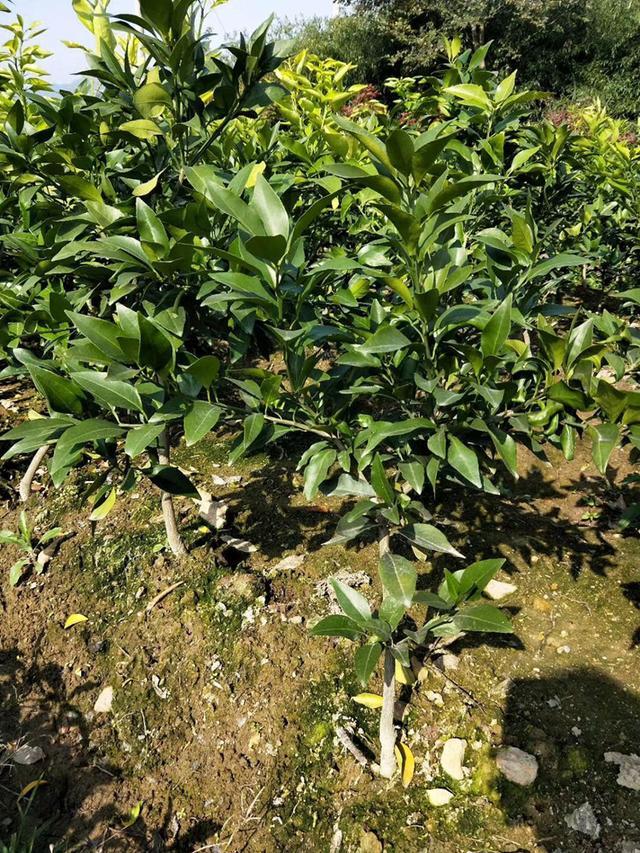
During the growth process of young Wogan trees, applying strong-effect fertilizer is an indispensable and important link. Therefore, in order to better promote the growth of young trees, water and fertilizer spraying equipment can be installed in the planting area. This equipment mainly includes switches, water storage tanks, filters, and so on. In order to promote young trees to grow a canopy as early as possible, in addition to regularly spraying water and fertilizer, it is also particularly important that the water and fertilizer must ensure an equal proportion of nitrogen, phosphorus, and potassium, and it must also be ensured that each young tree can absorb about 15 kg of organic fertilizer and 2 kg of compound fertilizer each year. Under the effect of good water and fertilizer, Wogan can grow 6-7 rounds of new shoots each year, so fruit growers must prune them regularly. The pruning requirement should follow the principle of "one fork, three branches." Simply put, relatively thin and small branches should be pruned off, and the pruning degree of relatively long branches should be controlled at 20-25 cm. Only when this series of standards is met can the planted young Wogan trees grow better.
2 Pest and Disease Control of Wogan
2.1 Canker
For the Wogan variety, the main disease affecting its yield and quality is canker. This disease not only causes unsightly spots on Wogan leaves and fruit, but in severe cases will also cause problems such as fruit drop. The disease is also extremely contagious. If one tree in the entire orchard suffers from the disease, transmission through wind, rain, and various insects may very likely cause the entire orchard to be affected. Therefore, in order to prevent the threat of this disease, first of all, disease-free saplings must be selected, and in addition, regular pruning must be carried out. Once diseased branches are found, they must immediately be pruned and burned for disposal.
2.2 Anthracnose
The months in which anthracnose occurs in the Wogan variety are generally concentrated in April-May or July-August on branches and trunks with weaker growth vigor. If not treated promptly, in severe cases it will lead to branch withering and a large reduction in yield. To prevent this disease, fruit growers can spray 45% prochloraz combined with 600-1000 times 80% mancozeb, plus 3000-5000 times 25% difenoconazole spray, on the surface of the fruit or on the branches.
2.3 Citrus Leafminer
Wogan citrus leafminer damage mostly occurs from late April to mid-May, and July-August is the prevalent stage of the disease, which in severe cases can endanger seedlings. Therefore, once this disease occurs, the seedlings must be uniformly flushed for shoot emergence. To better prevent and control this disease, fruit growers can also choose to spray 25% bisultap aqueous solution at 500 times or 5% imidacloprid at 1500 times; if the disease is relatively severe, multiple pesticides can also be mixed and sprayed.