Propagation and Pest and Disease Control Cultivation Techniques for Agavaceae Plants in Nanning, Guangxi
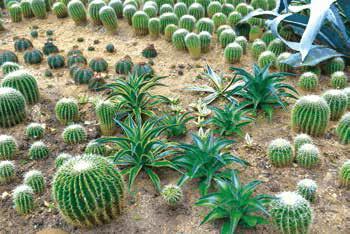
Propagation and Pest and Disease Control Cultivation Techniques for Agavaceae Plants in Nanning, Guangxi
Growing environment
Agavaceae plants prefer a warm, dry environment with plenty of sunlight. They are slightly cold-tolerant, relatively shade-tolerant, and highly drought-tolerant, requiring well-drained, fertile sandy loam. In winter, the temperature should not fall below 5°C; when exposed to water, they will contract violently.
Nanning is located in the south-central part of the Guangxi Zhuang Autonomous Region, slightly to the west, on the south side of the Tropic of Cancer. It has a humid subtropical monsoon climate, with abundant sunshine, ample rainfall, few frosts and no snow, and a mild climate. The average annual rainfall reaches 1304.2mm, giving it a uniquely advantageous geographical position for the growth of Agavaceae plants.
Ornamental cultivation and propagation
Most Agavaceae plants are relatively simple to cultivate, and most have no special soil requirements. The types of Agavaceae native to the Americas, mainly those in the genera Agave and Beaucarnea, will grow in ordinary mountain soil. Their fertilizer requirements are also not high. Varieties native to Africa, such as those in the genus Sansevieria, however, require relatively nutrient-rich soil. Easily obtained soils such as sandy soil, loess and clay can be simply mixed and blended for planting Agave, and then some leaf mold, nutrient soil, sand and animal manure can be added to the soil so that it contains a certain level of fertility, which will enable Agave to grow vigorously. The specific situation can be determined according to the soil conditions, but manure-type fertile soil should not be added too much; 5% to 10% of the total potting soil is sufficient. The prepared soil can be placed under the sun for a few days to kill the pathogens in the soil.
Agavaceae plants can be propagated by division or sowing, and some plants can be propagated by leaf cuttings, such as Sansevieria trifasciata, Sansevieria trifasciata 'Golden Hahnii', Sansevieria trifasciata 'Laurentii', Sansevieria trifasciata 'Hahnii', etc.
Pest and disease control
Agavaceae plants commonly suffer from leaf spot disease, anthracnose and gray mold disease, and can be sprayed with a 50% Tuzet wettable powder 1000-fold solution. If there is damage from scale insects, an 80% dichlorvos emulsifiable concentrate 1000-fold solution can be sprayed to kill them.
Garden landscape application