Key Points of High-Yield Cultivation Techniques for Masha No. 1 Yam in Pingnan County
High-Yield Cultivation Techniques for Masha No. 1 Yam in Pingnan County
The Masha No. 1 yam improved variety line was developed through systematic selection from yam resources. It is a dual-purpose medicinal and culinary yam variety, belonging to the mid-to-late maturing, dual-purpose medicinal and culinary brown-bracted Dioscorea group of Fujian yam varieties, and is part of the purple yam series. It passed variety certification as a non-major crop in Fujian Province in 2012. The breeding institutions were the Institute of Agricultural Biological Resources of the Fujian Academy of Agricultural Sciences, the Fujian Provincial Crop Technology Extension Station, and the Agricultural Technology Extension Station of Masha Town, Jianyang City. This variety was selected and bred from the Jianyang native yam variety "Jianyang Tushu" of Fujian Province.
In November 2016, the 2017 annual science and technology extension task project of the Fujian Provincial Comprehensive Agricultural Development Land Improvement Project, "Demonstration and Extension of Shallow-Groove Directional Cultivation Technology," was implemented in Pingnan County. Masha No. 1 yam, as the main crop promoted by the project, was introduced, demonstrated, and extended for cultivation by the Pingnan County Qingfeng Agricultural Products Farmers' Professional Cooperative (the cooperative's production base is located in Shantouzi Natural Village, Daduan Village, Xiling Township, Pingnan County), using the shallow-groove directional yam cultivation technology. Through nearly two years of trial planting, the demonstration and extension cultivation effectively increased yam yield and marketable rate. According to field measurements, the yield under shallow-groove cultivation can reach about 10,000 jin per 667 m2,with an average yield increase of about 45%, and a marketable rate of 100%. Based on field cultivation surveys conducted in recent years at the demonstration and extension base of the Qingfeng Agricultural Products Farmers' Professional Cooperative in Xiling Township, the various stages of high-quality, high-yield cultivation of Masha No. 1 yam are described below.
1 Variety Characteristics
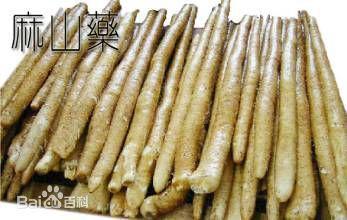
This variety is an annual or perennial twining vine plant, mid-to-late maturing, with a growth period of 210-240 d. The stem is angular, right-twining, green with purple. Leaves are alternate, rarely opposite; leaf apex acuminate, base cordate, ovate, 8-12 cm long, 3-6.5 cm wide, hastate, leaf margin slightly wavy, veins prominent, green, no bulbils in leaf axils. Flowers unisexual, dioecious, in spikes, yellow. Tubers are long cylindrical, 55-90 cm long, 2.7-5.0 cm thick, single fresh weight about 500 g, skin yellowish-brown, with fibrous roots, flesh white, starchy, mucilaginous, dry matter ratio 35.4%.
2 Site Selection
2.1 Land Selection
Masha No. 1 yam is a deep-rooted plant. For cultivation, plots should be selected that have strong fertilizer tolerance, deep soil layers, rich organic matter, a pH of 5-7 (slightly acidic), uniform soil structure, a groundwater level above 1 m, and good drainage. Within the soil profile, there should be as few clay and sand interlayers as possible; otherwise the appearance of the product will be affected, which in turn affects quality. At the same time, continuous cropping should be avoided as much as possible, generally with a rotation every 2-3 years, and legumes and taro should not be used as preceding crops. Where conditions permit, fields with convenient irrigation and drainage can be selected.
2.2 Land Preparation and Trench Digging
In the mid-to-high altitude townships of Pingnan County, land preparation should preferably be carried out around the Winter Solstice (end of December) each year, suitable for single-trench, single-row ridging. Before sowing, the already plowed land should be deep-plowed more than 40 cm and sun-dried. Make ridges oriented north-south, with a bed width of 70 cm and unlimited length, open a trench in the middle of the ridge, and apply 15-20 kg per 667 m2 of compound fertilizer containing 15% each of N, P, and K. Before the previous winter, the planting trenches should be dug. Dig trenches along lines at 110-125 cm spacing, with a trench width of 25-30 cm and a depth of 130 cm. Place the excavated soil on both sides of the trench. After winter freezing, thawing, sun exposure, and weathering, the soil undergoes frost-snow disintegration and loosening. After the soil thaws in the following spring, backfill it into the trench and pick out all debris. During backfilling, compact layer by layer, leveling and compacting once for every 20 cm filled, to prevent trench collapse during heavy summer rains, which would break the purple yam rhizomes. Before planting, complete land preparation on a sunny day, with a bed width of 120 cm, keeping the trench in the center of the bed, and open drainage ditches 20 cm wide on both sides for intercepting and storing rainwater, facilitating irrigation and preventing soil loss. Generally, alternate rows are excavated first, and after half a trench has been filled and leveled, the remaining half trench is excavated. Cultivation should preferably be oriented north-south. If individual plots must be planted east-west, the row spacing can be widened, and single-row or double-row planting can be chosen according to the terrain, with bed-edge ditches and bed-surface ditches opened before planting.
3 Pre-Planting Treatment of Seed Tubers
3.1 Using Yam Segments as Seed Tubers for Sowing
In the mid-to-high altitude townships of Pingnan County, the sowing period is mid-to-late April. Sprouting should be carried out 15-20 d before sowing, and cutting, sun-drying, and seed dressing should be done before planting. Use cut yam segments; after cutting, soak for 1-2 min in a 300-fold solution of 70% mancozeb wettable powder with carbendazim, then air-dry, or coat both cut ends with a layer of plant ash and lime. Dipping both ends in the solution can protect the cut surfaces from pathogen infection and serve a disinfecting function to reduce pathogen infection. Generally, when planting, cut and plant at the same time, ensuring that the pieces are roughly the same size at planting and that each piece has a bud, so as to ensure uniform sprouting.
3.2 Installing Shallow-Groove Supports
Masha No. 1 yam is a vertically growing crop, and it is mostly only adaptable to growing in sandy loam soil, rooting and growing 0.8-1.3 m in the soil. However, in the mid-to-high altitude townships of Pingnan County, the soil layer is thin and highly clayey, making it difficult for yam to root. Therefore, U-shaped polypropylene pipes can be selected as shallow grooves. The shallow groove is a semicircular plastic pipe about 1.2 m long. Rice husks are spread inside the groove, and a space is reserved at the top for placing the seed, and the shallow grooves are laid along the trench in the prepared bed-surface furrows. This shallow-groove directional cultivation technology not only improves yam quality and yield but also solves the problem of crop soil growth space. In appearance, the cultivated yams are larger, straighter, and of better quality.
3.3 Placing Filling Material
According to local conditions, select several substrates and fertilizers, mix them thoroughly as the filling material in the shallow grooves, and place them into the grooves in sequence.
3.4 Bed Surface Mulching
Mulch the bed surface after planting, to provide shade, retain water, and limit weeds.
4 Field Management
4.1 Fertilization
Masha No. 1 yam is a fertilizer-loving crop with a high fertilizer requirement. Generally, the yield per 667 m2 is 1,800-2,200 kg. In fertilizer management, shallow topdressing is advocated. When the seedlings reach about 10 cm tall, carry out the first topdressing together with intertillage and weeding, applying a seedling-promoting fertilizer once. Combined with rainfall, apply 15-20 kg urea per 667 m2, or 500 kg dilute biogas slurry, or 50 kg certified organic fertilizer; the second topdressing is applied when the seedlings reach 15 cm, applying a seedling-strengthening fertilizer, with 500 kg dilute biogas slurry per 667 m2; in mid-June, during vigorous stem and leaf growth and the flowering stage, apply 10 kg urea and 15 kg diammonium phosphate per 667 m2, followed immediately by watering after furrow application; from August to mid-September is the key period for tuber growth and expansion. At this time, crack fertilizer should be applied well, with heavy potassium fertilizer preferred, preferably by flushing application, mainly using a high-potassium, high-calcium package fertilizer, applying 10 kg potassium fertilizer per 667 m2 around the root cracks, and irrigating once with a run-through water to meet the fertilizer and water needs of tuber expansion. Note that during the vigorous tuber growth period, the soil should always be kept moist; do not irrigate when not drought-stressed. In short, apply sufficient base fertilizer and topdress in a timely manner. If a large amount of base fertilizer is applied, then topdress less or not at all. To ensure high yam yield, topdressing two or three times is needed throughout the growth period.
4.2 Irrigation Techniques
Masha No. 1 yam is a drought-tolerant crop. Irrigate timely and reasonably according to different growth and development stages, climatic conditions, and soil moisture status. However, for high yield, appropriate watering is also necessary. Generally, before and after the first topdressing, if there is a long drought without rain and the soil turns white, lightly water twice; watering until the soil surface is moistened is sufficient. In August-September, if dry and hot weather persists for many days, water with cool water in the early morning to combat drought. In addition, because purple yam is a crop whose product is the tuber, it is even more afraid of waterlogging. Standing water easily causes poor root growth or tuber rot. In rainy seasons, ditch drainage is very important. Ditches should be cleared and drained in a timely manner so that there is no standing water in the field.
4.3 Trellising and Vine Guiding
Masha No. 1 yam begins to send out vines a few days after emergence and cannot grow upright. At this time, supports should be set up in a timely manner. Use thin bamboo poles or branches 2.2-2.5 m long to build a human-shaped trellis, and guide the vines onto the trellis in a timely manner. The trellis height should preferably be 2.0-2.5 m. The sides should cross diagonally, and every 6-8 m should be reinforced with thick bamboo poles or wooden stakes. Be sure to build it firmly to prevent it from toppling, especially during typhoons and heavy rain. During the growth period, the vines should often be arranged evenly to facilitate ventilation and light penetration.
4.4 Intertillage, Weeding, and Plant Adjustment for Vigor Control
If rain occurs during the germination and emergence stage of Masha No. 1 yam, it easily causes soil crusting and affects emergence, so the soil should be loosened immediately to break the crust. Carry out shallow tillage to maintain good soil permeability and promote tuber expansion. During production, weeds should be removed in a timely manner. In fields with severe weed infestation, manual weeding should be carried out on sunny days. Before emergence, soil-closing herbicides such as diphenamid or acetochlor can be used, or herbicides such as haloxyfop and quizalofop can be used to control weeds.
The growth of Masha No. 1 yam stems and leaves is directly related to yield. Within 1 month after emergence, measures such as increasing nitrogen fertilizer and pinching the main vine should be used to promote branch and leaf growth so that they fill the trellis surface as quickly as possible. When stem vines grow too vigorously and produce too many axillary buds, they should be removed in a timely manner. After lateral vines appear, the basal lateral vines should be removed. When stem vines reach the top of the trellis, the growing tips should be pinched off. After branches and leaves fill the trellis, measures should be taken in a timely manner to control excessive growth.
5 Integrated Control of Diseases, Insects, and Weeds
The main diseases include stem blight, anthracnose, brown spot, and root rot. The main pests include slugs, mole crickets, cutworms, and white grubs. Focus control at different stages. Follow the plant protection policy of prevention first and integrated control. Starting from the whole ecosystem, comprehensively apply various control measures, carry out integrated agricultural, ecological, and chemical control measures well, preserve the balance of the ecosystem and biodiversity, and reduce pesticide residues to within the prescribed standard range. Give priority to integrated agricultural control; for chemical control, select high-efficiency, low-toxicity, low-residue chemical pesticides or biological agents. Never use highly toxic pesticides or high-residue pesticides, and also pay attention to the pre-harvest interval.
5.1 Anthracnose
It appears initially as yellowing leaves, with small spots on the leaves, and finally stem withering and leaf drop. This disease should be prevented mainly. Agricultural control is carried out by good rotation and crop replacement, timely removal of diseased residues, and selection of disease-free seed tubers. Chemical control is to soak seeds for 30 min before sowing with a 500-fold solution of 25% carbendazim powder for seed tuber disinfection. After cultivation, strengthen field management to enhance plant disease resistance.
5.2 Brown Spot
It mainly damages leaves. The control method is mainly to avoid inter-row closure and high temperatures, pay attention to drainage, and in the early stage of disease, spray 75% chlorothalonil wettable powder once every 10 d, for 2 consecutive sprays.
5.3 Phytophthora Blight
It mainly damages the base of the vines. Yam plant death is mainly caused by this disease. Standing water at the base of the stem vines during rainy seasons is the main cause of severe disease. The main measures to control this disease are: 1) change the cultivation method, advocate ridge cultivation, and avoid furrow cultivation and other agricultural measures; 2) chemical control, spraying the base of the stem vines during rainy seasons, which has good results.
5.4 Stem Blight
Throughout the entire growth process of Masha No. 1 yam, emphasis should be placed on controlling stem blight. This disease generally occurs from late August to early September, and can be controlled by spraying or drenching the roots with an 800-fold solution of 50% carbendazim.
6 Timely Harvest
The harvest of Masha No. 1 yam is generally around Frost's Descent, after the stems and leaves wither. If harvested too early, it contains more water and is easily broken, so it should be harvested at the right time.