Things to Note When Repotting Succulents in Summer
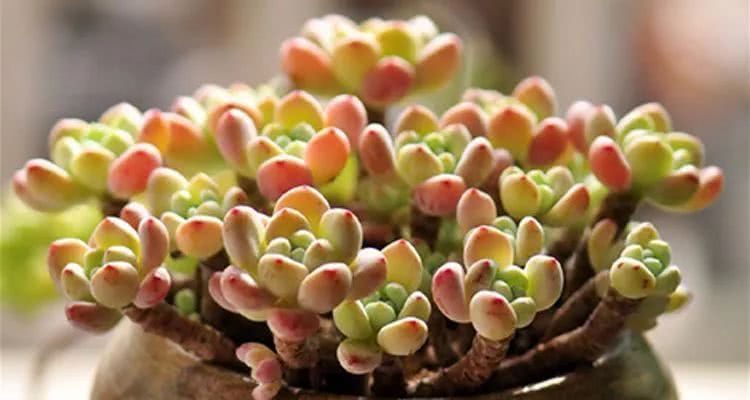
The hot summer has arrived, and it is very hard for succulents to get through. Many gardening enthusiasts struggle with whether to repot succulents in summer. My personal advice is to try not to repot in summer unless there is a reason that makes repotting necessary, such as newly bought succulents or existing succulents suffering from pests and diseases that require repotting and changing the soil for treatment. Why is it best not to repot succulents in summer? Because most succulents are in a dormant or semi-dormant state in summer. Even for healthy succulents, in summer we still need to shade them, ventilate them, and control watering so they can safely get through the summer. If we disturb and repot them at this time, the roots cannot recover in time, and it is very easy to cause the plants to die.
Yesterday I bought several pots of succulents at the flower market. Their overall condition was still good. The only shortcoming was that the pots were small, the soil was little, and there were too many succulents, causing the succulents to be squeezed together and deformed. This not only makes the space crowded and inhibits succulent growth, but also means nutrition cannot keep up, and the succulents cannot absorb enough nutrients to satisfy their own vigorous growth. So I must repot them.
The crowded cluster of succulents packed the original pot so tightly that there was no room for air, and even removing them from the pot was difficult, so I chose to directly cut open the original plastic pot. Only in this way could I prevent damaging the cluster of succulents when removing them from the pot.
After removing the pot, I could see densely packed roots tangled together and impossible to separate at all. The soil in the pot was already so little that it was almost invisible, and I could clearly see that the spaces between the succulent seedlings were all filled with dry leaves and rotten leaves, with no room for air. How to solve this situation? To be safe, I chose to transplant the whole pot, without moving the roots at all, and move the whole pot into a new flowerpot. Because summer is too hot, if at this time I shook off the soil, trimmed the roots, dried the roots, and then potted them, the risk would really be too great. For now, let them safely get through this summer first.
For the container, I chose a ceramic pot much larger than the original one. At the bottom of the pot I placed volcanic rock to one-third of its height. Volcanic rock is breathable and permeable, and can effectively prevent water accumulation in the flowerpot. Then the soil was a mix I prepared myself, with peat and granules in a 3:7 ratio, and I added some small medicinal granules for sterilization and pest prevention. On top of the volcanic rock I sprinkled a thin layer of the prepared granular soil, then put in the cluster of succulents that had just been removed from the pot, then used granular soil to fill the empty parts of the flowerpot. Finally, for the top dressing I also used volcanic rock. In this way, potting was completed.
The last step is the key to preventing black rot when growing succulents in summer, which is cleaning up leftover leaves. When removing the pot, I saw that those black leftover leaves had directly filled all the spaces around the succulent seedlings. These are dead leaves accumulated over a long time and are very easy to contract pests and diseases. Especially in summer, they easily create a sealed, stuffy, and hot environment, so they must be cleaned up. After cleaning was completed, the succulents not only became much fresher and cleaner, but also had enough space to grow.