Haworthia cooperi leaves shriveled? Two methods to make them quickly crystal clear
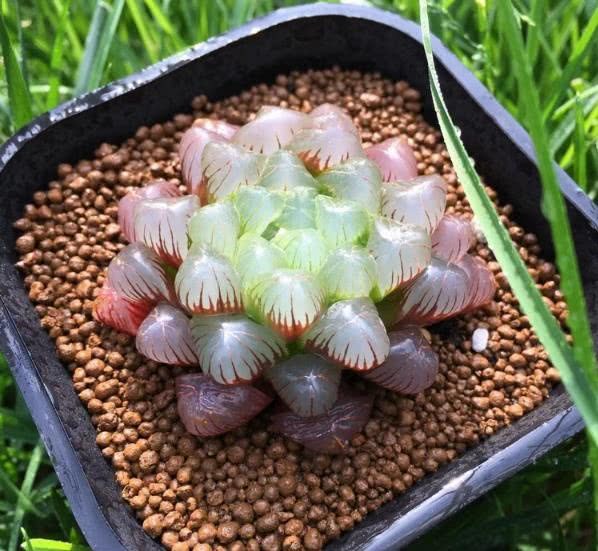
Haworthia cooperi is a "soft-leaf" variety in the Haworthia genus of the Liliaceae family. This series has many varieties, the more common ones include Haworthia cooperi var. venusta, Yuzhang, Haworthia cooperi 'Hime', large Haworthia cooperi, spiny Haworthia cooperi, and so on. Haworthia cooperi plants are small and delicate, with rich variety, and leaf colors that are crystal clear and full of variation, like living works of art, very lovely. It is one of the more popular small succulent plant varieties in recent years.
Haworthia cooperi prefers shade, and must never be exposed to the sun; scattered light is enough. When you see the leaves lose their luster and become shriveled, do not water blindly, as this can very easily lead to root rot. Simply mist the leaf surface to maintain leaf moisture while also increasing the leaves' translucency and saturation. When air humidity is low, you can put a plastic bottle over the pot to create a small greenhouse effect, increasing air humidity in a small area. These two methods can absolutely prevent Haworthia cooperi leaves from shriveling.
Haworthia cooperi is native to South Africa and prefers a warm, dry, semi-shaded environment. It is not cold-tolerant, and avoids high temperatures, humidity and scorching sun. It fears waterlogging, and the suitable growth temperature is 18~22 degrees. It is suitable for growing in an environment that is warm in winter and cool in summer. In summer when temperatures are high, the plant enters a dormant or semi-dormant state, growing slowly or completely stopping. It can be placed in a ventilated, cool, dry place for care, and avoid scorching sun and prolonged rain, and do not water too much. Stop fertilizing, and wait until autumn cools down before resuming normal care.
In spring and autumn the temperature is suitable. If you observe that Haworthia cooperi begins vigorous growth, it means the root system is strong at this time. After the potting soil dries, you can water the potting soil thoroughly, place it in a ventilated spot for a few days to remove excess water from the potting soil, and then cover it for cultivation. In summer when temperatures are higher, Haworthia cooperi stops growing and the window surface transparency decreases. At this time the root hairs are dried up and have no water-absorbing capacity, so watering should be stopped. In the evening you can mist to add humidity to relieve leaf surface shrinkage.
During the growing season, watering should follow the principle of not watering until dry, and watering thoroughly when you do. Avoid waterlogging, and even more avoid rain, especially prolonged rain, to prevent root rot. But it should also not be dry for a long time, otherwise although the plant will not die, the leaves will shrivel and the leaf color will be dull. When the air is dry, you can frequently spray water on the plant and its surrounding environment. During the growing season, you can cut off the upper half of a transparent colorless beverage bottle and cover the plant for care, so that it grows in a small environment with humid air, which can make the leaves plump and the "window" more transparent. But in the high-temperature summer season, the beverage bottle must be removed to avoid plant death caused by stuffy heat and humidity.
The main disease is root rot, which is caused by poor permeability of the cultivation material and long-term water accumulation in the soil. Therefore, the cultivation environment should be improved, and loose, well-aerated soil should be chosen for planting, and there should be no long-term water accumulation. In addition, if water accumulates in the center of the plant for a long time, it will cause heart rot. If the soil is not changed for a long time, the aging and hollowing of the root system will cause physiological diseases in the plant, making the plant stop growing and the leaves shriveled and not plump. When this happens, the soil should be changed promptly. For pests, there is root mealybug. You can subject the soil to high-temperature treatment before planting, and add insecticide to the soil.
This is a gathering place for succulent plant enthusiasts, sharing succulent care tips. Welcome to follow and exchange.