Seven major reasons succulents die, which one did you get wrong?
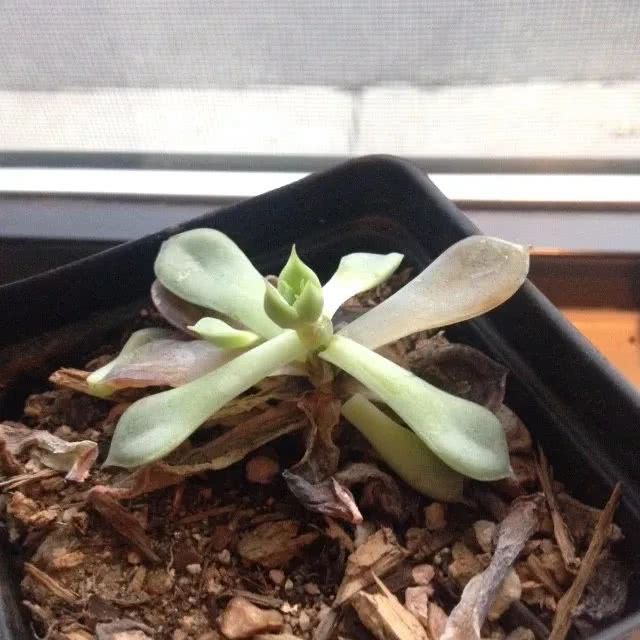
Below I'll introduce the 7 major reasons people often kill their succulents. You can improve based on your own care habits. Some friends buy dozens of potted succulents after the warm spring, but after summer only a few are left. Let's take a look at the correct way to care for them.
Point one, watering too frequently
Succulents have very low water needs. During the peak growing seasons of spring and autumn, you basically wait until the potting soil is completely dry before watering thoroughly.
Succulents stop growing or slow their growth during the hot summer and cold winter, so watering must be controlled at these times. You can let the soil dry out for a few days before appropriately replenishing water. In the hot summer, it is generally best to water in the evening, and in the cold winter, you can choose to water in the morning.
When watering succulents, avoid pouring water directly onto the leaves or the center of the rosette, otherwise it can easily cause rot in the core.
Point two, the container is too small
Some friends plant them directly in cute teacups or small flower pots, which looks quite nice, but the roots need a larger space to grow well. If the container is too shallow, it is hard for them to grow well. The depth of the container should generally be more than twice the size of the succulent's root system, and the width should be slightly larger than the plant by one ring. Of course, don't make it too much larger, otherwise it can easily cause water accumulation and root rot.
The container must have a fairly large drainage hole. You can lay some granular stones at the bottom to prevent the soil from clogging the drainage hole, causing water accumulation and root rot.
Point four, keep it warm and slightly dry year-round
Most succulents originally grow in warm and dry tropical desert environments year-round. They are afraid of the cold and like ventilated environments. The care location can be an east- or south-facing windowsill or balcony. Aside from appropriate shading in summer, they should be given plenty of light in the other seasons.
In winter, avoid freezing. Keeping the minimum care temperature at 5 degrees or above is best, and avoid placing them directly against the window, otherwise it can easily cause frostbite. When summer is excessively hot and the temperature exceeds 35 degrees, you must increase the ventilation of the environment.
Point five, growing too densely packed
Many people like to plant different succulents in one pot to form an attractive combination planter. In fact, this carries some risk. Do not plant succulents with different growth habits together. For example, summer-growing and winter-growing succulents cannot be planted together.
When planting, there should be some gaps. At least give them some space to grow, otherwise their root systems will tangle together and repel each other.
Point six, unsuitable soil
Some friends directly dig up some garden soil downstairs to grow succulents, which is very bad. Garden soil easily clumps, which is terrible for the root growth of succulents, and it easily causes water accumulation and root rot.
To grow succulents, you must use loose, well-draining sandy soil rich in organic matter. You can use peat soil and perlite at a ratio of about 2:1.
Point seven, repot regularly
When growing succulents, they generally need to be repotted once every one or two years. This keeps them in vigorous growth. You can move them with the soil still attached into a larger container, giving them more space to grow and preventing the roots from being too cramped.
Repotting succulents also gives them a good nutrient boost, keeps the soil rich in humus, promotes good root growth, and may even encourage the succulents to bloom.