Crape jasmine is an ornamental plant with compact flower clusters
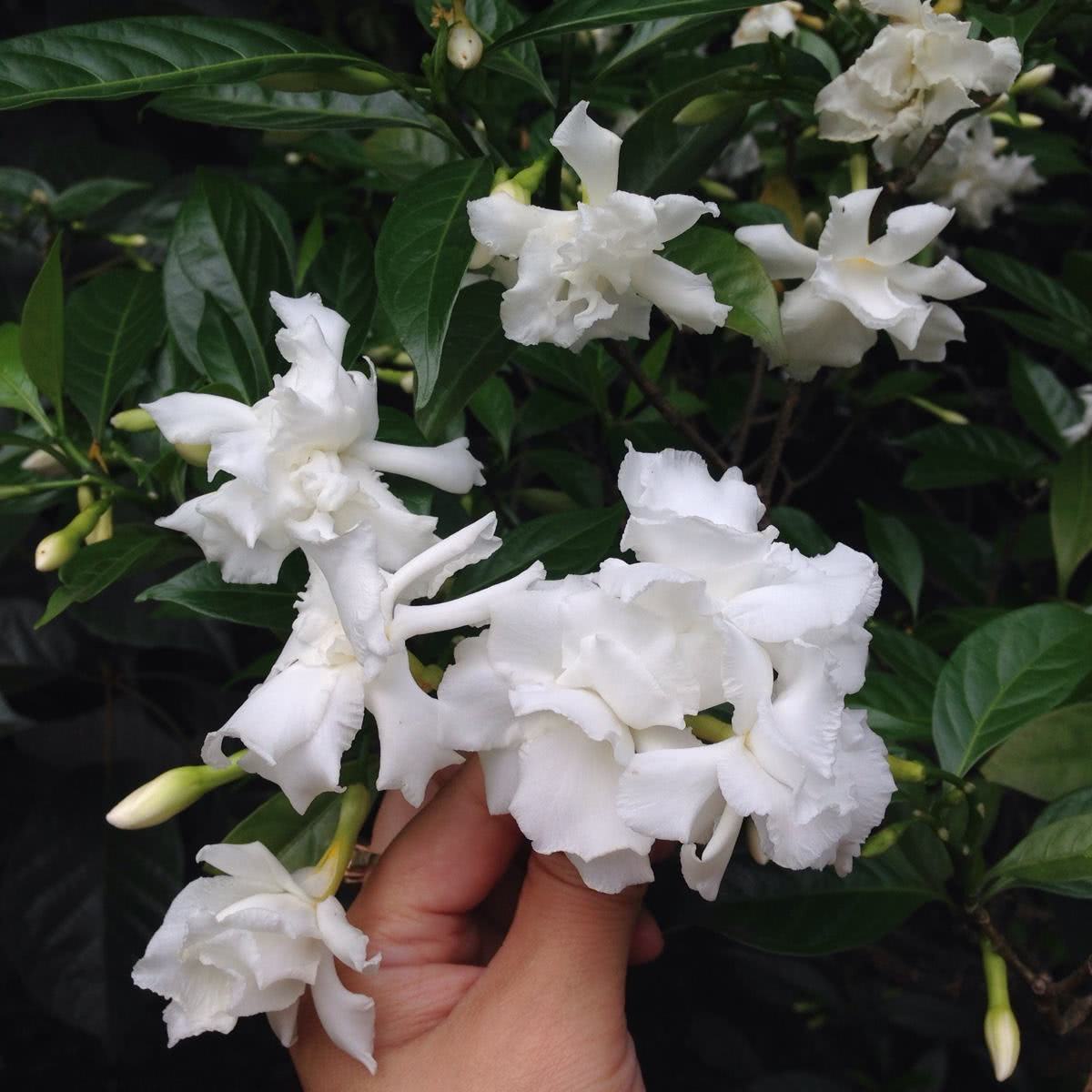
Crape jasmine, also known as white dog fang and lion flower, is a shrub in the dogbane family (Apocynaceae), genus Tabernaemontana, usually up to 3 m tall, hairless except for the ciliate margins of the sepals; branches and branchlets grayish green, with lenticels and longitudinal fissures when dry; internodes 1.5-8 cm long. Leaves firm-papery, elliptic or elliptic-oblong, short-acuminate, wedge-shaped at the base, 5.5-11.5 cm long, 1.5-3.5 cm wide, dark green above, pale green beneath; corolla white, the corolla tube up to 2 cm long; stamens inserted below the middle of the corolla tube; style 11 mm long, stigma obovoid. Follicles 2.5-7 cm long, widely spreading or curved outward; seeds 3-6, oblong. Corolla double. Flowering period June-November, fruiting in autumn.
Crape jasmine
Crape jasmine likes high temperatures and a humid environment, with dense branches and leaves and a compact plant shape, pure white and elegant flowers, simple and refined, and a long flowering period, making it an important background and color-blending flower, suitable for flower hedges, flower borders or large potted plants. The leaves can be used medicinally and have the effect of lowering blood pressure; folk tradition holds that they can clear heat, relieve fever, promote urination and reduce swelling, and treat eye diseases, scabies, breast sores, and bites from rabid dogs; the roots can treat headaches and fractures, etc.
Growing environment:
It likes high temperatures and a humid environment. Its cold resistance is relatively low; with prolonged low temperatures of 5-6 degrees Celsius, the plant suffers severe cold damage, and below 0 degrees Celsius it will freeze to death. It likes semi-shaded sites and can also grow well under full light. It likes fertile, moist, well-drained acidic soil.
Crape jasmine likes warmth and humidity, is not cold-tolerant, prefers semi-shade, and likes fertile, well-drained acidic soil. Since crape jasmine is moved outdoors in April, it is repotted once every 1-2 years as part of its growth habit. So when repotting, add compound fertilizer or soybean cake as a base fertilizer, and prune dead and weak branches, then place it in semi-shade.
Crape jasmine
For crape jasmine, keep the soil moist at ordinary times; water before it dries out completely, and in summer spray water around it frequently to increase the air humidity of the environment. This flower is fond of fertilizer, and its flowering period is long; from May to September, alternately apply compound fertilizer and manure water every 7-10 days. After moving indoors at the end of October, generally water once every 5-7 days; the soil should just be slightly moist, and keep good light; the room temperature should be kept above 10°C, otherwise the leaves will turn yellow and fall off, and below 0°C the branches will be damaged by cold.
Cutting propagation:
Crape jasmine can be propagated by cuttings or air layering, mainly by cuttings. In South China it can be propagated from spring to autumn, but spring is best. Cut 12-15 cm long, 1-2 year old young shoots as cuttings; milky sap flows from the wound, so first wash off the sap, then insert them into a moist sand bed; either shading or full light is acceptable.
Crape jasmine
Notes:
1. It can be done year-round in a greenhouse; outdoors, the best time for cuttings is June-July. Select healthy one-year-old branches and cut 8-12 cm long shoot tips, insert them into vermiculite, and take care to keep them moist and shaded; they will root in about two weeks.
2. Move crape jasmine outdoors in April, and repot once every 1-2 years. When repotting, add compound fertilizer or soybean cake as a base fertilizer, and prune dead and weak branches, then place it in semi-shade for care.
3. Crape jasmine likes a environment with sufficient light, so at ordinary times it should be placed in a spot with sunlight to absorb scattered sunlight. In summer, when the sun is scorching, place it in semi-shade to avoid burning the leaves.