4 Tips for Ornamental Fish Keeping: A Primer for Beginners and a Refresher for Veterans
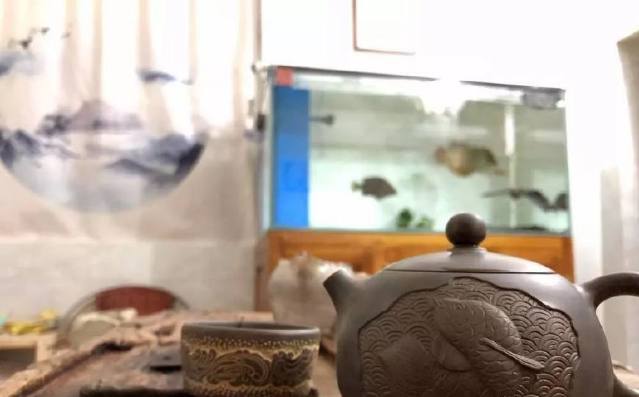
Before putting pen to paper, I have many thoughts and don't know where to begin, yet I am filled with emotion; the boy who once held a 5-yuan fish tank with a 5-mao goldfish in it has now stepped through the gate of 30. Looking around, my parents' white hair grows ever more, my child grows up day by day, and every day I rush about under heavy financial pressure. Looking back again, that boy is still there in the sunlight, holding the fish tank and smiling brightly....
I have kept fish for over ten years. My writing is ordinary, and perhaps this is just commonplace talk, but I still hope this short article can help newcomers - even if just one, I would be gratified.
1. The Physical Section
I have seen far too many fish keepers make the biggest mistake right from the start: "filling to the brim." What does "filling to the brim" mean? Many fish keepers wrongly believe that the more filter media the better, that stuffing the bottom compartment full means success, not realizing that so many types of filter media have been produced that each must have its own reason for existing.
First, you must learn to clearly recognize what the physical zone is. The so-called physical zone is the first layer that blocks and breaks down leftover bait and feces. If the physical stage is not done well, then no matter how efficient your subsequent biological filter media is, it is all in vain.
Personally, I recommend a drip tray (wet/dry). No need to explain this layer - everyone who has used one gives it a thumbs up. Below the drip tray should come white, blue, and black filter pads, increasing layer by layer, to block and break down waste with maximum efficiency and form a preliminary biofilm.
2. The Biological Section
If I explain it too complexly, many new players will not understand. In short, please first pick up your test kit and test the tap water at home. Only by fully understanding your local water quality can you better match biological filter media.
If your tap water is already around 7, you can comfortably pair soft filter media + hard filter media, one compartment of each. So-called soft media: K1, K3, filter brushes, Shichuan Next Generation filter media, and so on. So-called hard media means fired stone-type filter media.
If your local water quality is 8-9, please strictly use a ratio of 2 parts soft to 1 part hard; otherwise your later-stage pH will trouble you for a very, very long time. In one simple sentence: please choose the soft-hard combination that suits you best according to your local water quality, rather than blindly following what others say - dumping in whatever filter media someone says is good, which wastes effort and money.
3. The Treatment Section
This is only for the early symptoms of some minor ailments, suitable for attentive keepers. Many keepers have heard of the old three tricks: "raise temperature, change water, add salt." But how do you change the water? How do you raise the temperature? And the salt? Based on past experience treating fish myself and helping fellow keepers, here are a few simple words.
First, the conventional method is to change 1/4 of the water, raise the temperature by 2 degrees, and add 3 parts per thousand salt. The usual accompanying details are to turn off the lights, turn on the oxygen, and let the fish rest quietly; change 1/5 of the water daily to help stimulate metabolism and recovery. Generally, repeat step 1 every 4 days, and recovery usually takes 3 rounds. Of course, some cases test your patience, but that is another matter.
4. The Food Section
My personal diet combination: loach + shrimp + insects (loach is certainly controversial). I won't say much about preparing loach; in my case there is an extra patient step - they must be kept for more than a week with a 100% water change every day, until the body color visibly turns from black to golden yellow, then remove the head and innards and refrigerate.
Shrimp I will skip; why mention insects too? Arowanas, after all, still have their bloodline to consider, and occasional insects really help them maintain a fighting condition.
My writing ability is limited, so I will stop here for now. Finally, I wish everyone clear water and beautiful fish.
[Disclaimer: This article comes from Longyu Zhidian. The copyright belongs to the original author. If your rights are infringed, please leave a message to contact us for deletion.]