This flower blooms in clusters, making it a new favorite in the floral world
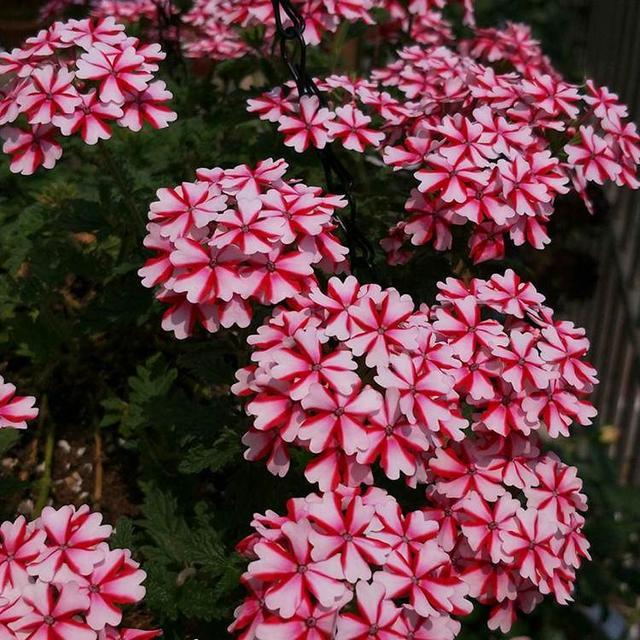
Verbena (Glandularia), this flower has a low, dense growth habit with abundant, brightly colored blooms that give a feeling of passionate exuberance. It is suitable for mass planting, blooms in clusters, and has excellent landscaping effects, making it a "new favorite" in the floral world. It comes in diverse colors, including purple, pink, and rose red, and each color has its own merits. They can be planted separately or mixed together, and all look beautiful.
When growing verbena in pots, a loose, fertile neutral sandy loam soil is best. Verbena is cold-tolerant but not heat-tolerant, and has strong adaptability. The growth temperature is 5-25°C, with the optimal temperature being 16°C. In winter it can withstand -5°C, while high summer temperatures are unfavorable for growth, and growth stalls when the temperature exceeds 30°C.
Fellow gardeners, when caring for verbena, pay attention: light is very important for the growth and development of verbena. From seedling growth to flowering, it needs sufficient sunlight to have sturdy stems and leaves, dense flowering branches, continuous blooming, and vivid flower colors.
In addition, applying sufficient base fertilizer is a key to successfully growing this "new favorite" of the floral world - verbena. Before planting, apply decomposed organic fertilizer and some superphosphate to the bottom of the pot as base fertilizer. After that, simply cover with 1 cm of leaf mold soil each winter to supplement the base fertilizer.
Verbena is admired for its abundant flowers and low, neat, uniform growth. If it grows too tall, it looks less attractive, so do not apply too much nitrogen, otherwise the branches will grow leggy and the overall effect will be affected. Gardeners can apply organic liquid flower fertilizer once every half month during the growing season, and spray 800-fold diluted organic liquid flower fertilizer once a month during the flowering period to promote more blooms and beautiful flower shapes in verbena.
When caring for verbena, one more thing to note: verbena is quite sensitive to water during its growth process. It fears drought but also dislikes waterlogging. During the seedling stage, the potting soil must remain moist, which is beneficial for seedling growth. After the plant matures, its drought tolerance increases. If the temperature is high and water consumption is large, make sure to provide sufficient water. If there are many overcast and rainy days, in mild cases the branches and vines will grow leggy and weak with reduced flowering, and in severe cases the stems and leaves will gradually wilt and even die.
Therefore, in general, water less in winter and spring, and water more in summer and autumn. Never let drought occur. During the flowering period, it is best to water in the evening, so that plants disturbed by the water pressure can gradually recover overnight without affecting the daytime ornamental effect.
In routine care of potted verbena, when the seedlings grow to 10 cm tall, pinch off the growing tips to encourage side branches to sprout and keep the plant compact. At the same time, in order to keep it blooming continuously, promptly cut off spent flowers after each bloom.