The only purpose of summer pruning for roses: to make the autumn blooms more beautiful
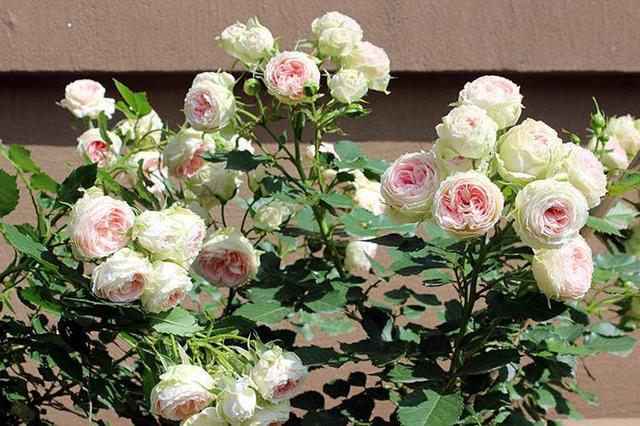
The summer solstice has just passed, and for the care of roses that follows, there is still one very important finishing task: the start of summer pruning. For summer pruning of roses, gardeners only need to know one "purpose", and that is to make the autumn blooms even more beautiful. So, how to summer prune roses?
Summer pruning is generally carried out from late August to early September (late August in colder places), mainly so that hybrid tea roses and floribunda roses can produce beautiful autumn blooms in mid to late October. For repeat-flowering varieties, the time between cutting off the spent flowers and the next flowering is called the "return-to-bloom days".
Setting aside the influence of variety and climate conditions for now, let us roughly estimate this number of days as around 40 days in warm regions. If you prune too early, relatively weak flowers will open amid the lingering heat of mid-September; if you prune too late, the return-to-bloom days will be lengthened by falling temperatures, and the plant may even fail to bloom because of the cold.
Therefore, summer pruning of roses does not require pruning all the branches; you only need to prune the withered parts and the branches of the third flush of flowers, while keeping the thinner and shorter branches unpruned, and you can achieve the goal of autumn blooming. Below is the detailed pruning method:
First, gardeners need to cut off 1/2 of the third-flush flowering branches, that is, at a point about 1/2 the height of the rose branches that have already bloomed a third flush, choose a spot above a 5-leaflet compound leaf and cut there. Note that this does not mean 1/2 of the overall plant height. The cut can be either flat or slanted. If you find dead branches, cut them off too.
Then, for the other branches, also cut them to 1/2 their length; even roses that are still blooming should have their branches here cut off. Because these branches are shorter, even if they bloom, the flowers are relatively weak. Likewise, keep the branches at 1/2 their length and prune them. After pruning is completed, fertilize the roses promptly; even in summer, once the wounds have healed, you can use a rose-specific organic nutrient solution, diluted 500 times with water, to water the roots, once a week.
In principle, this summer pruning removes the dead branches and small short branches of the rose entirely from the base of the branches, but gardeners usually keep the small short branches. This is because the leaves on the small short branches can help maintain the plant's nutrition, and keeping as many branches as possible can reduce the risk of losing all the autumn flowers due to pests, diseases or typhoons.
If all the branches are pruned neatly together, the autumn flowers will open all at once, and the corresponding viewing period will be shorter. If some branches are left unpruned, although there may not be many flowers opening at the same time, the flowering time can be extended.
After pruning, if you encounter buds like those in the picture below, keep the buds that have stopped growing. Some branches develop buds that stop growing due to heat and other reasons; when planted in the ground these are usually removed, but for potted plants such buds can be kept.
Rose plants that have completed summer pruning, although there are some differences between varieties, usually produce beautiful autumn flowers about 40 days after pruning.