Detailed Explanation of Bonsai Making Methods and Cultivation Techniques
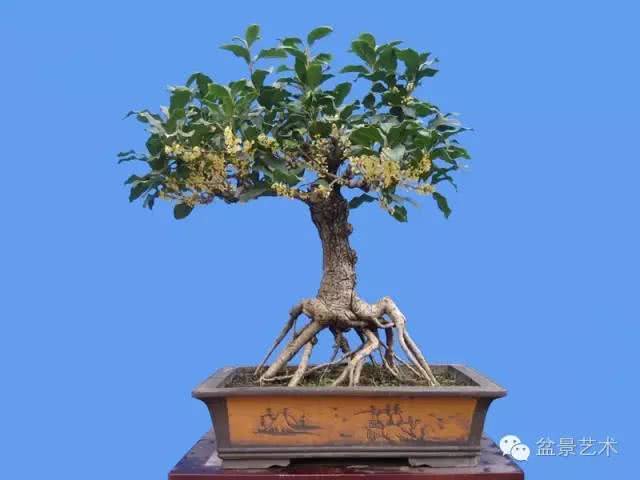
Osmanthus Bonsai Cultivation Techniques: Osmanthus prefers warmth and moisture. The average temperature for osmanthus cultivation is 14-28°C, with an average July temperature of 24-28°C and an average January temperature above 0°C; it can tolerate a minimum temperature of -13°C, and the optimum growth temperature is 15-28°C. Humidity is extremely important for the growth and development of osmanthus, requiring an annual average humidity of 75%-85% and annual rainfall of about 1000 mm. Especially during the young stage and when mature trees are flowering, more water is needed; drought will affect flowering, and strong sunlight and shade are both detrimental to its growth. Generally, 6-8 hours of light per day is required.
Osmanthus Bonsai Material Selection and Propagation Measures
Artificial propagation: Osmanthus can be propagated by sowing, cuttings, grafting, and layering. Usually, cuttings and grafting are the main methods, while the sowing method is rarely used. For the cutting method, use tender branches grown in the current year during the plum rain season for cuttings, which gives a high survival rate. Cuttings should be taken from osmanthus trees of excellent varieties and robust growth, about 10 years old, with a length of 8-10 cm and a thickness of 0.3-0.5 cm; remove the top shoot and retain 2 leaves. Before inserting, soak in a 100 ppm naphthalene acetic acid solution for several hours, then insert into a clay pot or seedbed with sandy loam soil, at a depth of 1B2-2B3; it should not be too deep, as too deep results in poor aeration and easy root rot. After inserting, press the soil firm with your fingers, water thoroughly, and shade promptly, maintaining a certain humidity and frequently spraying water on the leaves; the soil moisture should not be excessive. After about 60 days, roots will form. After rooting, allow light in the morning and evening, and increase light exposure after autumn to promote growth; in the following spring, it can be potted for cultivation.
The grafting method for osmanthus bonsai generally uses branch grafting, which includes cut grafting, cleft grafting, and approach grafting. Common rootstock species include Ligustrum sinense, Ligustrum quihoui, and Ligustrum lucidum. The cut grafting method is widely used: when grafting, cut off the rootstock at 5 cm above the ground, choose the smoother side of the bark, cut vertically downward slightly into the wood, making an incision 2-3 cm deep; take a mature one-year-old branch as the scion, 6-8 cm long, with 2-3 nodes, cut the lower end of the scion into a 2-3 cm slanted surface, and on the opposite side cut another short slanted surface of about 1 cm; then press the long cut surface of the scion tightly against the cut surface of the rootstock, insert into the incision so that the cambium layers of the two cut surfaces are in close contact, then wrap the bark of the rootstock incision around the outside of the scion, bind and fix with plastic film tape, sealing the rootstock incision and the top of the scion to prevent water evaporation, which makes survival easier. Approach grafting involves cutting away 5-10 cm from both the mother branch of the scion and the mother branch of the rootstock, to a depth of 1B3-1B2 of the trunk diameter into the wood, joining the two together, binding them well with plastic film tape, and separating them after they have survived. Approach grafting has a very reliable survival rate, and garden nurseries mostly use this method to cultivate potted four-season osmanthus. The layering method is also commonly used and also roots easily.
Potting Process
Pot selection: Osmanthus has green leaves and yellow flowers and is evergreen year-round; it is suitable to choose a relatively deep round pot or square pot. The pot mouth diameter should roughly match the spread diameter of the osmanthus branches and leaves, which benefits root development and growth. For the pot material, purple clay ceramic pots or glazed ceramic pots are best. In color, purple or ochre is better, as it can create a sharp contrast with the colors of the flowers and leaves and enhance the ornamental effect.
Soil: Osmanthus prefers fertile soil, so use fertile, loose, and well-drained sandy loam. The culture soil for potted osmanthus is usually prepared from garden soil, composted manure, and river sand in a 1B3 ratio each; note that disinfection treatment is needed to avoid infection by pests and diseases.
Osmanthus Cultivation Techniques: Osmanthus is best planted in early spring or autumn. Before potting, place a layer of river sand or vermiculite at the bottom of the pot to facilitate aeration and drainage, then spread a layer of peat soil or fine mud about 2-3 cm thick on top, reaching 1B3 of the pot depth. Then, place the osmanthus seedling with its root ball into the pot, fill with culture soil, press firm with your fingers, and fill soil until near the pot rim; the soil surface should be 2-3 cm lower than the pot rim to facilitate watering and fertilizing. After planting, water thoroughly, then move to a shaded place for about 10 days to let it "acclimatize to the pot" and gradually resume growth.
Styling Techniques
Processing: Osmanthus has strong sprouting ability and tolerates pruning. One or two years after potting, during the plum rain season or after autumn flowering, shape it by combining bending and tying with pruning. The trunk can be bent and tied into a curved-trunk form or slanting-trunk style; if the trunk is relatively tall, it can be appropriately shortened to encourage new branches and trunks to sprout from the base, preventing the lower part from becoming bare, or heavily prune the upper branches and overly dense branches to stimulate new branches from the lower part of the trunk, maintaining balance between top and bottom and making the tree shape beautiful with luxuriant flowers and leaves.
Tree shape: For osmanthus styling, the curved-trunk style, slanting-trunk style, or flowing style are best. With the tree spreading at an angle, dense branches and leaves, and an ancient and natural look, it is most enjoyable to appreciate. When in bloom, its rich fragrance fills the air and delights the heart.