After two years in the hobby, I've summed up my care method for Haworthia cooperi var. obtusa - it quickly grows strong, radish-like roots.
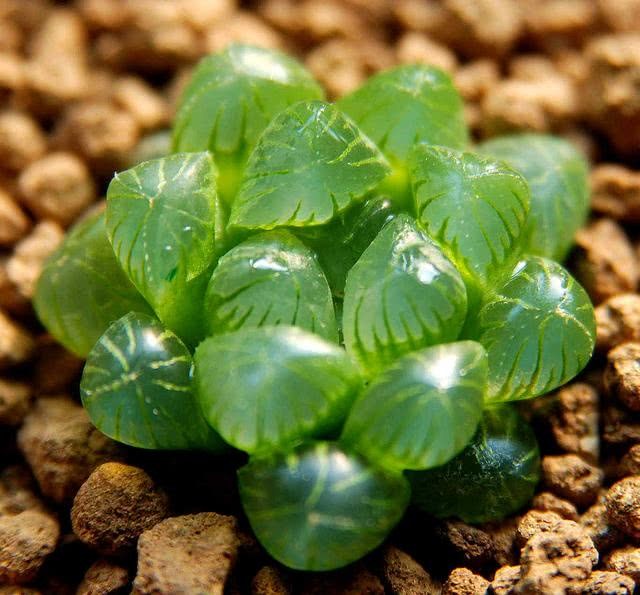
First of all, the most important thing is getting the light right. From spring to autumn, I keep Haworthia cooperi var. obtusa on a south-facing balcony, a fully open environment, where it can get 4 hours of direct sunlight every day (it should be even better behind glass). I think when the temperature is 15-25°C, keeping it in an open environment is ideal. But during the one month of midsummer, it's best to moderately shade it from the strong midday sun, otherwise the leaf tissue tends to turn red, and over time it may even get scorched. Although I personally think slightly reddened leaves have a certain charm of their own, I still wouldn't encourage less experienced beginners to take the risk. Overall, light is crucial to the window clarity and color of Haworthia cooperi var. obtusa. You can't give it too much sun, but you can't give it too little either. So the growing environment is very important, and a south-facing windowsill or balcony is most suitable.
Secondly, the planting medium should be loose and breathable. I use a potting mix of peat, vermiculite, akadama (maifan stone), and perlite in a 5:1:3:1 ratio. It may be a bit complicated, but I worked it out myself. The core is breathability and moisture retention, which helps the roots breathe. The trace elements come from the granular soil, which helps build strong roots.
Finally, for watering, it's best to use a small spray bottle to spray, focusing on the potting soil, and just slightly moistening the leaf surface. If too much water collects on the leaves and can't dry for a long time, it easily leads to rot. Some gardening friends like to use the soaking method to replenish water, but this makes things too wet and makes it hard to control the amount of water given. Generally speaking, the potting soil should still be watered thoroughly only after it dries out completely. During the plum rain season or hot, muggy weather, water as little as possible; keeping it slightly dry is safer. On rainy days, be careful to avoid rain exposure.
For the choice of pot, I use a Wanxiang pot. It's relatively deep, which lets Haworthia cooperi var. obtusa grow radish-like roots that are very strong.