These vegetables have excellent anti-cancer effects and are the top choice for balcony vegetable gardening - beautiful and delicious.
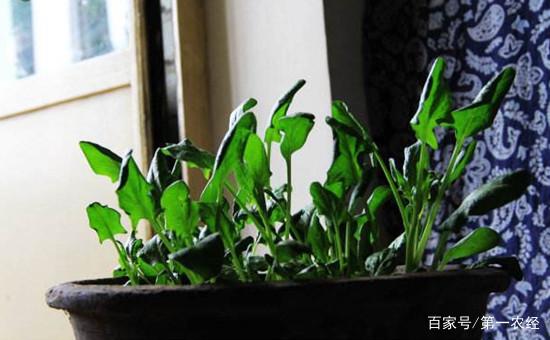
Nowadays, more and more friends like to grow some potted plants at home, such as ivy, pothos, spider plants, etc., which can not only green up the home environment but also purify the air. Of course, besides these common potted plants, growing some vegetables at home is also a good choice, allowing you to harvest truly green, pollution-free vegetables. So today, let me share with you a round of potted growing methods for anti-cancer vegetables. Grow a few pots on your balcony - beautiful and delicious, healthier the more you grow them. Let's take a look!
1. Spinach - Fighting cancer
Spinach contains a large amount of plant crude fiber, which promotes intestinal peristalsis, helps with bowel movements, and reduces the time carcinogens stay in the intestines. Moreover, eating spinach can reduce the damaging effect of carcinogens in cooked meat on human cells, lowering the risk of intestinal tumors by half, from 58% to 32%.
Potted growing method: For growing spinach in pots on a balcony, the broadcast sowing method can be used. Spinach seeds have water caltrop-like ridges, like thorns, which need attention when sowing. First pour soil into the balcony vegetable container and spread it flat, then evenly scatter the pre-soaked seeds on top, cover flat with soil and press lightly. Then water generously, with water flowing out from the bottom of the pot as the ideal amount; after about 1 week the spinach seeds begin to sprout. When they first sprout, be sure to water in the morning and evening, not too much, just keep the soil moist, to encourage the new sprouts to grow quickly. Where they are too dense, some seedlings need to be pulled out; spinach seeds are small and the sprouts are small, and as they gradually grow they begin to look crowded. At about 2 leaves, thin out some weak seedlings where too dense, with a plant spacing of about 5cm being suitable; when spinach has grown about 3-4 leaves, at this point you need to make the spinach grow sturdy, not just tall. So control the amount of watering to encourage plump leaves; when planting at higher temperatures, harvest in time to prevent aging. If harvested in time, you can pick a crop in less than a month, then immediately plant again, making it a regular standby vegetable. Everyone knows spinach is nutritious, and it ranks very high among leafy vegetables.
2. Asparagus - The number one anti-cancer plant
Asparagus contains comprehensive nutritional elements. Asparagus is especially rich in tissue protein, folate, nucleic acids, and selenium, ranking first among 30 anti-cancer plants, and is recognized worldwide as an anti-cancer food. Asparagus enters the lung and kidney meridians, and has significant therapeutic effects on lung cancer, kidney cancer, skin cancer, bladder cancer, and lymphoma.
Potted growing method: Before sowing, soak in warm water at 25°C-30°C for 3-5 days, changing the water 1-2 times a day. Once the seeds have absorbed enough water, remove them, mix with fine sand or vermiculite, place in a container, cover with a wet towel, and keep at 25-30°C to germinate, turning twice a day. After 5-8 days, once they have sprouted white, they can be sown. For sowing, you can use peat soil or seedling soil with a seedling tray, or seedling blocks with a seedling box. Cover with soil about 2-3cm thick, with 25-30°C being optimal for raising seedlings; when seedlings are over 15cm tall, they can be transplanted into flower pots, with a pot depth preferably over 25cm. Use sandy loam rich in organic matter with a pH of 5.8-7, or sun-dried and crushed pond mud mixed with washed sand (3:1), sun-exposed for 1 week and disinfected as potting soil, then apply decomposed manure and compound fertilizer as base fertilizer; after planting, pay attention to ventilation and moisture retention, keeping soil moisture at 60%-70%. If too dry, water appropriately; during the rainy season, dig drainage ditches to prevent water accumulation and root rot. Asparagus is actually very easy to grow, as long as you have patience. Below let's briefly talk about harvesting. Asparagus generally begins to be harvested around mid-May, usually between 9-11 AM, using a stainless steel knife to cut the young stems neatly. Do not leave tall stubble on the stems, and be careful not to harvest all of them - leave 1-2 strong stems per plant for photosynthesis. When they reach 70cm in height, pinch the tips in time to control plant height.
3. Carrots - Preventing lung cancer
People lacking vitamin A have a cancer incidence rate more than 2 times higher than normal people. The carotene contained in carrots can be converted into large amounts of vitamin A, therefore it can effectively prevent the occurrence of lung cancer, and even has the effect of stopping the progression of already transformed cancer cells or reversing them. Carrots contain relatively rich folate, which is a B vitamin, and also has anti-cancer effects; the lignin in carrots also has the function of improving the body's anti-cancer immunity and indirectly killing cancer cells. For long-term smokers, drinking half a cup of carrot juice daily can also have a protective effect on the lungs.
Potted growing method: After watering the potting soil thoroughly, broadcast the seeds on the soil surface, cover with about 2cm of soil, keep the soil moist, and at 18-25°C they sprout in about 10 days; during the seedling stage growth is very slow, so be careful to control water to avoid leggy growth - just don't let it dry out. Along with watering, spray 1-2 times with thin decomposed organic fertilizer; at 1-2 true leaves, do the first thinning, with plant spacing of about 2-3cm; at 3-4 true leaves, thin again, with plant spacing of about 5cm; at 5-6 true leaves, do the third thinning, with plant spacing of about 15cm. Generally, seedlings with leaves that are too dark, too many, or too short should be pulled out. You can also transplant and set them out at 2-3 true leaves, with plant spacing of about 15cm; at 7-8 true leaves, begin normal fertilization, combined with watering, spraying once every 20 days or so; when the fleshy root begins to swell, increase the proportion of phosphorus and potassium fertilizer; after about 3 months of growing, when the fleshy root has fully swollen, it can be harvested. At this time, the soil near the fleshy root usually shows cracks, the heart leaves turn yellow-green, and the outer leaves begin to wither and yellow. Water thoroughly before harvesting, and when the soil becomes soft, pull the carrots out, or use a bamboo strip or similar tool to carefully dig out the fleshy root.