How to Create a Weeping Willow Style Tamarisk Bonsai
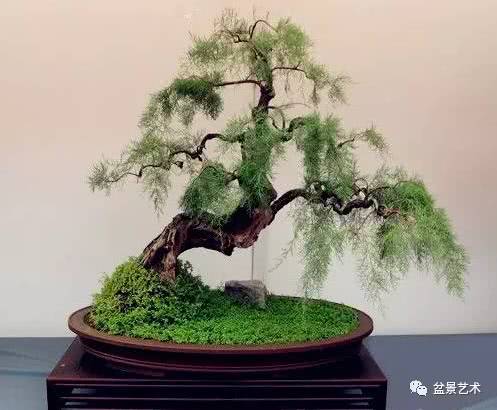
Tamarisk is an excellent material for making weeping willow style bonsai. The method for making tamarisk into a weeping willow style bonsai is as follows:
1. Transitional training and shaping of branches and trunk: Choose a tamarisk stump suitable for the weeping willow style, cut off all the original pine-and-cypress-type branch pads, and leave one strong bud on each of the two main trunks. When they are half-lignified, shape them with wire, and after about 20 days remove the wire and let them grow freely (never pinch off the growing tips, as pinching makes it hard for them to thicken). Remove all other branches and buds. Because nutrients are concentrated, by autumn the transition of the branches and trunk is basically suitable. After winter begins, cut them back short, and bury the potted stump in a sunny spot in the yard to overwinter.
2. Training and shaping of the branch pads of the weeping branches: In early spring, take out the potted stump that overwintered last year, do not change the soil or the pot, and carry out normal care. According to the tree shape you envision, keep 4-5 well-positioned strong buds on the main trunk, remove all other branches and buds, and let them grow freely. When they are half-lignified, shape them with wire, and after about 20 days remove the wire. Because nutrients are concentrated, by early July the branches basically match the main trunk. At this time, according to the needs of the weeping branch pads, keep some strong branches at appropriate positions and let them grow freely, while removing all other branches and buds. When they are half-lignified, carry out shaping, and by autumn the weeping branch pads have been successfully cultivated. From then on, each year's cultivation of weeping branches is based on these branch pads. Cut back short when winter begins, and the overwintering method is the same as before.
3. Cultivation and creation method of the weeping branches:
1. The next year, take out the potted stump and carry out normal care. In April, countless branches and buds emerge all over the stump and are allowed to grow freely. Because what is needed are weak branches, in this way nutrients are dispersed, and there will be relatively many weak branches on the branch pads. By mid-May, remove all the strong and medium-strong branches on the weeping branch pads, and remove all growth on other parts, whether strong or weak branches, leaving only the weak branches on the branch pads.
2. Pulling down the weeping branches: Use mud balls to weigh down and pull the branches. According to the thickness of the weak branches, decide the size of the mud balls used. One mud ball weighs down one branch. According to the needs of the layout, use thin wire to pull any individual branches that are not in place. After all the weak branches have been weighed down, move the pot under a shade frame for about 20 days of care, then it can be moved into the sun for care. During the period of using mud balls to weigh down the branches, it is best not to let them get rained on; otherwise the mud balls will be washed away, and after rain the branches will need to be weighed down again with mud balls.
3. Thinning the weeping branches: After about 15-20 days of weighing down the branches with mud balls, the mud balls can be washed off with water. At this time, never remove the mud balls by hand, otherwise the branch tips are easily plucked off together with the mud balls, affecting the growth of the weeping branches. After the mud balls have been removed, according to the layout, thin out excess weeping branches and leaves to achieve a pleasing balance of density and openness and smooth lines. By July the weeping branches will have grown very impressively, and when a gentle breeze blows, they are very elegant and graceful.
4. Fertilizer and water management: After the weeping branches have been thinned, stop fertilizing, but do not let the plant lack water. Especially in hot seasons, water twice a day, and if conditions permit, spray water on the leaves once a day to keep the branches and leaves emerald green.
A weeping willow style bonsai cultivated in this way will still have slender, drooping branches that sway naturally until winter begins.