The inside story of tea exposed, overturning your understanding of tea. Even if you don't drink tea, you should take a look.
When it comes to Da Hong Pao, one cannot but mention Wuyi Mountain. Wuyi Mountain is a World Cultural and Natural Heritage site, a National 5A-level tourist attraction. It is famous for its beautiful scenery and pristine natural environment, and is renowned nationwide for the rock tea produced in the scenic area (Da Hong Pao, Shuixian, Rougui, etc.) and Tongmu Pass black tea (Jin Jun Mei, Lapsang Souchong, etc.), the ancestor of the world's black teas. The unique climate, geographical conditions and crafting techniques give the tea a flavor that no other tea-producing region can match. 90% of the world's rock tea comes from Wuyi Mountain. All of this is our love and protection for this land, and a gift from nature!
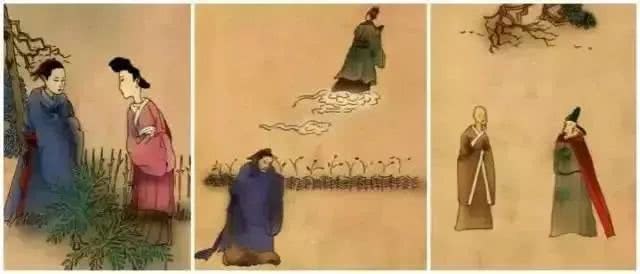
The Legend of Da Hong Pao
The legendary mother trees of Da Hong Pao
China is the homeland of tea and also the kingdom of tea, and on the crown of this kingdom there is a dazzling pearl: Wuyi rock tea (Da Hong Pao). Chinese tea expert Luo Shaojun once said: "Wuyi rock tea... is the most illustrious representative of the noble families in our country within today's great world tea empire."
Welcome to the Wuyi Mountain tea gardens
Wuyi Mountain - the homeland of oolong tea and black tea, with a long history of tea cultivation. For thousands of years, the ancestors of Wuyi used diligence and wisdom to create Wuyi tea of excellent quality and diverse varieties, accumulated rich production techniques and experience and profound tea culture concepts, and left us with many precious tangible and intangible treasures.
Since the Han Dynasty, Fujian has been connected to Yanshan through the eight great passes in Wuyi Mountain. The historically famous Ten-Thousand-Li Tea Road started from Chong'an County in Fujian (present-day Wuyishan City). Wuyi black tea was carried over these passes by shoulder poles and wheelbarrows, entered the Yangtze River via water transport, and thus went on to Russia and into Europe, composing a 400-year legend of black tea trade. Among them, Tongmu Pass is one of the eight great passes!
The beautiful tea mountains
The beautiful Nine-Bend Stream
The ancient Nine-Bend tea trail
A confession from a tea maker
I have been connected with tea since childhood, and I am deeply fond of making and tasting tea. Under my master's guidance and influence, I developed refined skills in tea making and tea tasting. In recent years, due to changes in the tea market environment, my master insisted that I go out and temper myself on my own, so I run a tea house, producing and selling on my own, free from the bullying of outside tea merchants!
"Meet friends through tea, treat guests with sincerity, win by quality, be frank and mutually trusting" - this is the sentence my master said to me the most! The old man asked me to write these things simply because he is angry that outside tea merchants keep driving the purchase price of tea lower and lower, so that after a whole year of hard work and busyness, one gains almost nothing. Instead, after tea merchants pass it on from us to the outside, the price multiplies several times. Not to mention the problems within the industry, people also rack their brains trying to buy good tea.
Therefore, I want to let the broad community of tea lovers truly find first-hand Wuyi rock tea (Da Hong Pao), and avoid falling for the distribution tactics of middlemen; of course, also to let the broad community of tea farmers get a return for their hard work in cultivation.
The beautiful Wuyi Mountain is a precious heritage that nature has left us. Wuyi Mountain is a World Cultural and Natural Heritage site and a National 5A-level tourist attraction. Friends are welcome to visit Wuyi Mountain, to taste tea and open our hearts together, and to meet friends through tea!
This is our own tea garden
If you and I are fated, then we are acquaintances who open our hearts to each other!
The benefits of Wuyi rock tea (Da Hong Pao)
Modern scientific research has found that Wuyi black tea and rock tea (Da Hong Pao) are high in four beneficial components: tea polyphenols, tea polysaccharides, theanine and EGCG, and have good effects such as anti-cancer, lowering blood lipids, enhancing memory and lowering blood pressure. The tea polysaccharide content is 3.1 times that of black tea and 1.7 times that of green tea, and can enhance human immunity and lower blood lipids; as a tea-specific theanine - its content reaches 1.1%, which can promote blood circulation in the brain and has the effect of enhancing memory and lowering blood pressure; among them, the most important EGCG has anti-cancer functions.
The charm of Wuyi rock tea (Da Hong Pao) and Wuyi black tea
Charm one: Rich cultural heritage
1. Da Hong Pao appeared early in history, traceable back to the Han Dynasty.
2. Wuyi rock tea has always been a favorite of emperors and high officials of successive dynasties, and has also been praised by literati and scholars.
3. Diverse and colorful forms. Culture ranges from emperors of successive dynasties praising it after drinking, to literati and scholars composing poems and painting, all the way to folk tea competitions, with rich forms of expression. Surveys show that there are at least more than 200 poems about Wuyi rock tea, more than 60 prose pieces, and articles praising Da Hong Pao in modern and contemporary times are even more countless.
Charm two: A special growing environment
Wuyi tea grows in a natural environment, surrounded by mist and clouds in all four seasons, with high humidity, abundant rainfall, little sunshine, and mostly "diffused light" or "scattered light." Wuyi rock tea Da Hong Pao all grows in valleys, ravines, gullies and rock hollows. The soil is good. For Wuyi rock tea Da Hong Pao, most of the soil in which it grows is between decayed rock and gravelly soil, hence it has rock bone and floral fragrance.
Charm three: The unique rock bone and floral fragrance
Wuyi rock tea Da Hong Pao has a unique rock rhyme. Liang Zhangju in the late Qing Dynasty recorded in "Gui Tian Zhen Ji" its "fragrance, clarity, sweetness and liveliness." Tea expert Luo Shaojun once said: "Once Wuyi rock tea is truly appreciated by consumers, it will produce a strong preference and boundless loyalty."
Charm four: Wuyi black tea, considered the ancestor of black tea
Since the Song Dynasty, the ancestors here had a history of making green tea. Until a coincidence 400 years ago, the world's first black tea was born in Tongmu Village. Therefore, the Wuyi black tea produced here is considered the ancestor of black tea. 400 years ago, because black tea was highly esteemed by European courts, Wuyi black tea went out into the world.
Tongmu Pass Grand Canyon
Processing steps of Wuyi rock tea (Da Hong Pao)
As for the rock tea making technique, it is indeed as the famous tea expert Chen Chuan said: "The creation technique of Wuyi rock tea is unique, the most advanced technology in the world, unparalleled, and worthy of the Chinese people looking out upon the world with pride." This "make the green according to the green" semi-fermented oolong tea craft is the culmination of ancient Chinese tea-making techniques, satisfying people's dual needs of enjoying fragrance and drinking tea during the tea-tasting process. In 2006 it was listed among the 518 items of national intangible cultural heritage, the only one among teas.
Picking
The picking of Wuyi rock tea (Da Hong Pao) differs from ordinary black and green tea. The fresh leaf picking standard is new shoots with buds and leaves grown to maturity (three or four leaves opened), with no surface water, no damage, fresh and uniform. The fresh leaves must not be too tender; if too tender, the finished tea has low aroma and a bitter, astringent taste; nor too old; if too old, the taste is thin and the aroma coarse and inferior. Also, picking in rainy weather and picking with dew should be avoided as much as possible; tea leaves of different varieties, different rock areas, sunny and shady hillsides, and different dry and wet conditions must not be mixed.
Making the green
Making the green is an important stage in forming the quality of Da Hong Pao. The cooled green leaves in the water sieve are continuously rolled, whirled and turned up and down, repeated 7~8 times, gradually forming their unique quality characteristics. The number and duration of shaking the green depend on the changes in the green leaves (aroma type and leaf color), commonly known as "make the green according to the green." In the latter stage, if necessary, "hand work" is added to make up for insufficient shaking. Generally, the rule of shaking the green is light first then heavy, with standing time short first then long, shaking more and working less.
Fixing
Fixing is the mark of ending the making-the-green process and is the main factor in stabilizing the quality of the rough tea and the quality of making the green. Its fixing standard: the leaf state is dry and soft, the leaf edges rise in white blister-like form, after tightly kneading by hand no water overflows and it feels sticky, the green odor is fully gone and a clear fragrance appears.
Rolling
Rolling is the main factor in forming the appearance of Wuyi rock tea and affecting the tea's yield rate. After the initial rolling, it can be put into the wok for a second frying, making the tea strips soften again to facilitate the second rolling and also supplementing the insufficiency of fixing.
Water-removing baking
The rock tea "water-removing baking" is carried out in a sealed baking room using baking cages. On baking pits at different temperatures (90~120°C), it is operated by the "flowing water method." The twice-rolled leaves undergo baking at different temperatures - high, low, high - until they are 60-70% dry, then removed from the baking. The whole process takes more than 10 minutes. The speed is fast and the work intense, so it is also called "swinging water baking."
Winnowing, cooling and sorting
After the water-removing baking and removal from the baking, winnow to remove flakes and dust, then spread out to cool for 5-6 hours to enhance the post-ripening effect, making the taste mellow and the color sandy yellow and moist. Then after sorting to remove stems and broken tea, it can be re-baked.
Stewing over fire and packing while hot
The sorted tea strips are first re-baked at a baking temperature of 90~100°C for 1-2 hours, then switched to a low temperature of 70~90°C for "slow stewing over gentle fire." This is a process unique to Wuyi rock tea and has a very good effect on improving the soup color, durability for brewing, mellow taste and maturation of aroma. Finally, packing while hot is also a heat treatment process and also has a certain good effect on quality.
Completing the above steps takes at least three months!
The traditional handmade crafting technique of Wuyi rock tea Da Hong Pao has been listed as a national "intangible cultural heritage." Its procedures are so complicated, its technique so superb, its labor intensity so great, its time so long, and its restricting factors so many, that no other tea category has them.
Make tea with heart; making tea is making heart
If you and I are fated, then we are acquaintances who open our hearts to each other!
This year's new tea has already been produced.
My Moments will share the latest current state of the rock tea industry every day,
the production process of traditional rock tea Da Hong Pao and black tea Lapsang Souchong,
reveal industry shady practices and little-known secrets, and how to tell true from false rock tea,
and methods for identifying good from bad!
Questions and answers about Wuyi rock tea and black tea
1. Which of the six major tea categories does Wuyi Da Hong Pao belong to, and what should we pay attention to when choosing?
Answer: Da Hong Pao belongs to oolong tea. It is the king of Wuyi rock tea, the leading product of Wuyi rock tea, and moreover the finest among teas. Tea leaves growing in the Wuyi Mountain range uniquely command the spiritual energy of the landscape. The special soil of rock crevices and gullies gives Da Hong Pao a tenacious, mellow quality. When choosing, pay attention to the traditional baking method, which further adds the charcoal fragrance and fire fragrance related to wood that are unique to the Da Hong Pao tea category.
2. Why is Da Hong Pao also called rock tea?
Answer: Rock tea, as the name suggests, is tea made from century-old tea trees that absorb rock nutrients. Its growing environment is close to rocks, in valleys, with short sunshine, much reflected light, large temperature differences, high humidity, and all year round fine springs soaking and dripping or rainwater washing down the mountain body. The minerals and various trace elements in the mountain body are brought by water sources to the tea gardens at the foot of the mountain. Under photosynthesis, they promote the old tea trees' absorption of the minerals and trace elements in the mountain body. This uniquely favorable natural environment creates the excellent quality of Da Hong Pao.
3. What is the status of Wuyi Mountain Da Hong Pao in Chinese tea?
Answer: Da Hong Pao is the leading variety among Wuyi rock teas. Its reputation and position are like Beijing's status in our country.
4. In growing Da Hong Pao, are pesticides and chemical fertilizers used? When choosing, how should I avoid them?
Answer: We never use fertilizers or pesticides to grow tea trees. We are extremely cautious in managing the tea garden. The tea garden must be enclosed and protected with stone walls, and we rely only on adding guest soil and covering with green grass to increase soil fertility; when there are insects, we only spray mountain herbs. The tea I produce ensures the safety of every single leaf, producing tea you can trust "from tea garden to teacup."
5. I've seen people advertise that the tea mountains are all decades-old tea trees. Is that true?
Answer: If it is tea from the Wuyi Mountain production area, it is indeed true. The tea fields have all been passed down from our ancestors. Taking our tea garden as an example, the tea trees are basically all over 60 years old, and some old bushes are even over a hundred years old. The tea trees are covered in moss. Only such tea trees have a mellow taste and full aroma.
6. When should Da Hong Pao be picked and made to ensure high quality?
Answer: The picking time for Da Hong Pao is exactly Wuyi Mountain's rainy season. The mountain paths are narrow and slippery, and it is very easy to fall, so we have to go up the mountain at 6 in the morning. The tea leaves picked from 9-11 in the morning and 2-5 in the afternoon are of the best quality, while dewy leaves are the worst. We pick for only these 5 hours a day.
To ensure quality, our tea mountain has three no-pick rules: no picking on rainy days, no picking when there is dew, and no picking under the blazing sun. We pick only the 5 opened leaves, and in the end only 2-5 leaves are kept for making tea. All this is to pick tea leaves of moderate tenderness. Only in this way will the tea's aroma be rich and the tea color proper after processing.
7. For Da Hong Pao on the market at several dozen or around 100 per jin, how can I tell when buying whether it is real Da Hong Pao?
Answer: There are many methods of identification. Judging from this price alone, I cannot say that other people's is not Da Hong Pao. Da Hong Pao has always been an imperial national tea. Let me show everyone past prices.
This is only the tea-making cost: 299 yuan, not including opening a shop and operating it, or the wages of shop staff. If the tea leaves are a bit better, the price doubles even more. The precious thing about tea lies in the limited output of the mountain plot. For tea with small output from the mountain plot, the price is even more astronomical.
For the Da Hong Pao you see at several dozen yuan or around 100, you should roughly already have your judgment!
Make tea with heart; making tea is making heart
If you and I are fated, then we are acquaintances who open our hearts to each other!
This year's new tea has already been produced.
My Moments will share the latest current state of the tea industry every day,
the production process of traditional rock tea Da Hong Pao and black tea Lapsang Souchong,
reveal industry shady practices and little-known secrets, and how to tell true from false rock tea,
and methods for identifying good from bad!
We live off the mountain and live off the water,
We rely on our own conscience,
We revere nature, we grew up in Wuyi Mountain,
and we only want to earnestly pass on Wuyi Mountain's good tea!