Avoid these 6 pitfalls when growing orchids in summer; if you fall into even 1, your orchid will struggle to survive the summer
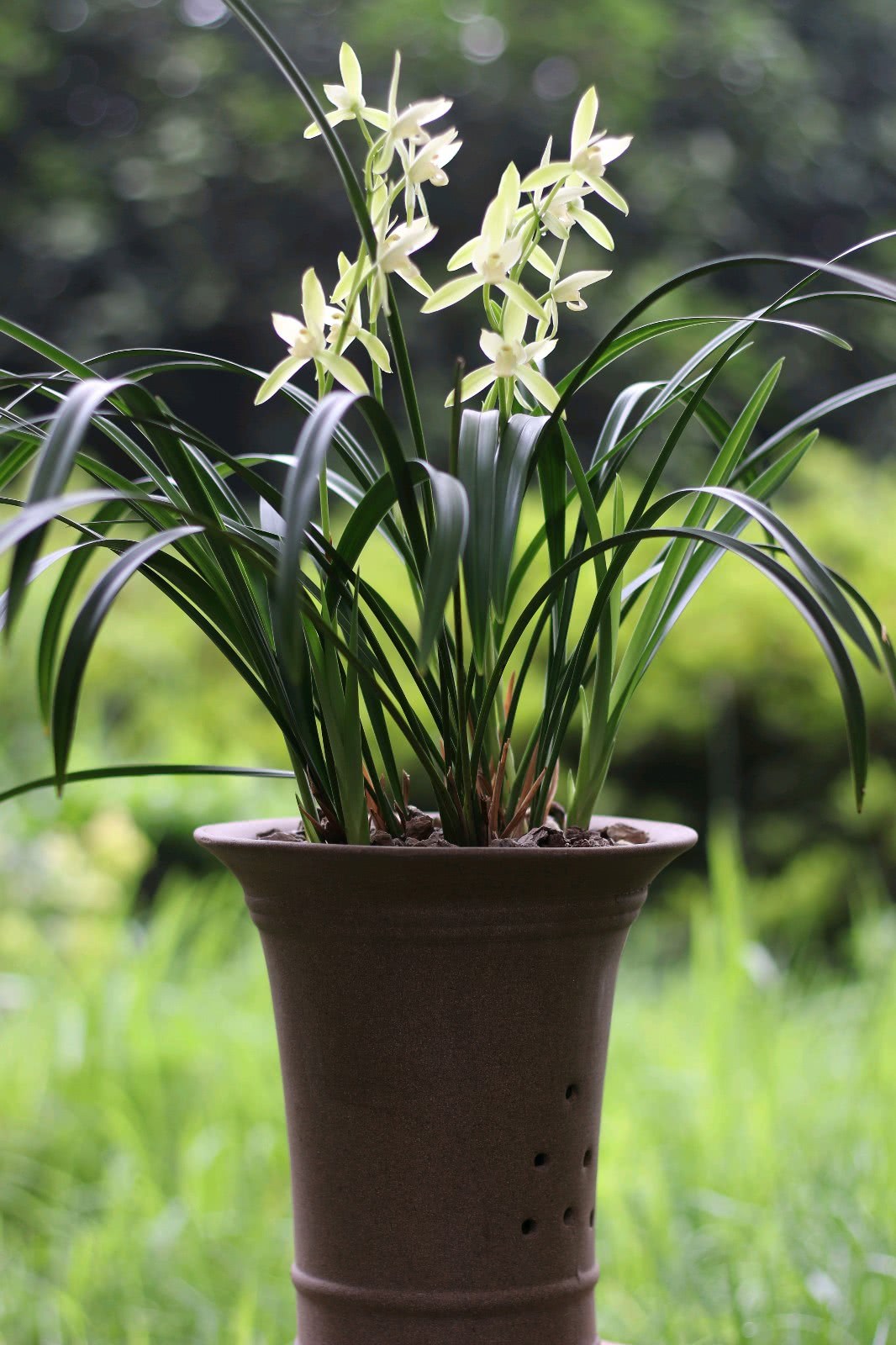
Orchids, known as the "gentleman among flowers," have elegant forms and a delicate fragrance that refreshes the heart and mind. Planting one and placing it in the living room or study reflects the owner's fresh and refined temperament; paired with an antique shelf, it further expresses a leisurely and contented taste in life. The flowers are lovely, but they are not easy to care for; one careless moment in maintenance and yellow leaves, failure to bloom, and root rot follow one after another. In fact, when growing orchids, you must avoid these pitfalls, otherwise every pot you grow will rot.
1. First pitfall: using a large pot for a small plant. A large pot means more growing medium, and more growing medium affects air and water permeability, making it very easy for water to accumulate and kill the plant. For orchid seedlings with short and few roots, it is harmful with no benefit. So it is better to choose a suitable pot according to the condition of the orchid and the size of the plant. Use a small pot for a small plant, and when the plant grows a bit larger, switch to a slightly larger pot. You must never cut corners here.
2. Second pitfall: watering too frequently or too little. Water is the source of life for orchids, and also their vital weak point. Do not water or mist the surface just because the top of the pot looks slightly dry; when the surface is dry, the medium in the middle and lower parts of the pot is still moist. If you really do not know how to water, you can use a flower and plant moisture meter, insert it into the potting soil, and the data can accurately show the soil moisture. Water again when it is short of water, and water thoroughly when you do.
3. Third pitfall: water getting into the leaf center. Washing orchid leaves and misting are both fine, but the premise is that ventilation or a fan must be provided to follow up. In short, quickly blow dry the water in the leaf center. Otherwise, water entering the leaf center plus today's high humidity and high temperature means rot is not far away.
4. Fourth pitfall: fertilizing at random. "A crop's flower depends entirely on fertilizer." In today's era when granular growing media are prevalent, orchids do need fertilizer, but if the fertilizer given to orchids cannot be absorbed by them, it will accumulate in the potting soil and easily cause root rot. So it is best to choose an organic liquid fertilizer. An organic nutrient solution specially for orchids, purely plant-fermented and rich in organic matter, is easy for plants to absorb and can promote nutrient uptake by orchid roots. Only when the roots grow well can the orchid be well.
5. Fifth pitfall: shade with no sun and poor ventilation. Orchids like shade, but that does not mean they should not see sunlight. Growing them in shade easily produces leaves but no flowers, and many flower lovers encounter exactly this situation. So give them appropriate sun exposure and place them in a ventilated spot. Except in summer, they can basically take full sun. Right now the summer sun is too harsh, so appropriate shading is fine; if they are exposed to the sun, it will scorch and rot the leaves, causing the orchid plant to decline prematurely.
6. Sixth pitfall: frequently changing the growing medium and repotting. Some orchid growers have this habit: when they see an expert growing vigorous, upright orchids, they love to ask what growing medium they use, or they simply follow what others say and repeatedly mix new growing medium for their own orchids, repotting far too often. If the orchid plant is constantly messed around like this, even if it does not die, it will lose seven or eight tenths of its vitality. In fact, there is no best growing medium, only the best management. As long as you have mastered your own growing medium, it is the best.