Give jasmine some sun and a drink of water, and it will bloom more with a stronger fragrance
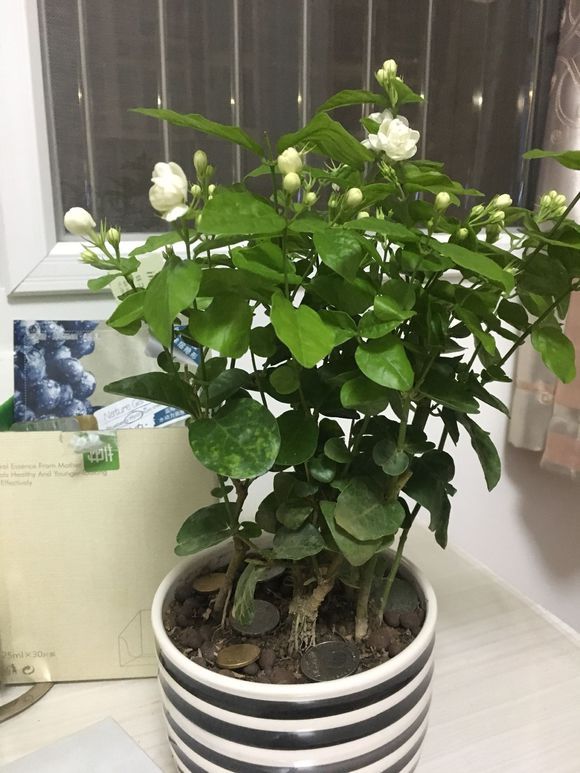
Jasmine, with its pure white flowers, gives off wave after wave of fragrance when it blooms, refreshing the heart and mind! Many friends now like to keep a potted jasmine indoors, not only to decorate the home, but the fragrance also helps refresh the mind. If you want potted jasmine to bloom more with a stronger fragrance, what should you pay attention to in its care? Today I will share it with everyone.
1. Soil. You surely have a lot of experience mixing soil; the general principle is: just make sure it holds nutrients, breathes, and drains well. For jasmine's potting soil, you can use garden soil, river sand, pond mud, coconut coir, perlite and so on mixed in a certain ratio. Pond mud plays the role of holding nutrients, river sand has no nutrients and plays the role of drainage, and perlite and coconut coir play the role of aeration, all of which are good for root growth.
2. Fertilizing. Jasmine is a flower that loves light and loves fertilizer. If you want lots of blooms, you must keep up with fertilizer and water. But many flower lovers find that after fertilizing, root rot easily occurs. What exactly is going on? If jasmine cannot absorb the fertilizer applied, the fertilizer will remain in the potting soil, and over time it will soak and corrode the roots jasmine has just grown, causing root rot. So it is best to give jasmine a drink of water, that is, organic nutrient solution.
Jasmine likes acidic soil. Huadede acidic organic nutrient solution is rich in humic acid and organic matter, and plant roots easily absorb it. Fertilize about once every 10 days, especially now during jasmine's growth period, when new branches will differentiate and develop flower buds. If nutrients cannot keep up at this time, it will be hard to get blooms. But note, fertilize only when the potting soil is dry; fertilizing when the potting soil is moist makes the plant's roots prone to rot.
3. Watering. 80% of flowers are killed by watering. When to water and how much to water are both a matter of knowledge. Watering is divided into root drenching and foliar spraying. The weather is very hot now, so my suggestion is to drench the roots in the evening and spray the leaves in the morning after getting up. As for how much to water, there really is no standard, because it depends on your pot size, environmental humidity, and the growth condition of the jasmine. But the principle you must follow when watering is: do not water if not dry, and water thoroughly when you do.
To give a simple example, jasmine that has just sprouted new buds must wait until the new buds droop a little before watering. For beginners who have trouble judging the soil moisture, you can use a plant and flower detector; insert it into the soil and it can detect the plant's water, fertilizer, light and other needs. Any change in the environment can be seen in the data changes. When you see it is short of water, just water it.
4. Light. A flower proverb often says, "Jasmine that cannot be killed by sun," which means jasmine is not afraid of sun and needs more sun to have lush branches and leaves and fragrant blooms. But in summer, do not put it in direct sun at noon, as it will wilt from the sun. It is best to give it sunlight before 10 a.m. and after 4 p.m. If it often gets sun and is placed in a ventilated spot, jasmine will have thick, strong branches and bloom more.