What varieties of spider plant are there? A full guide to summer care methods
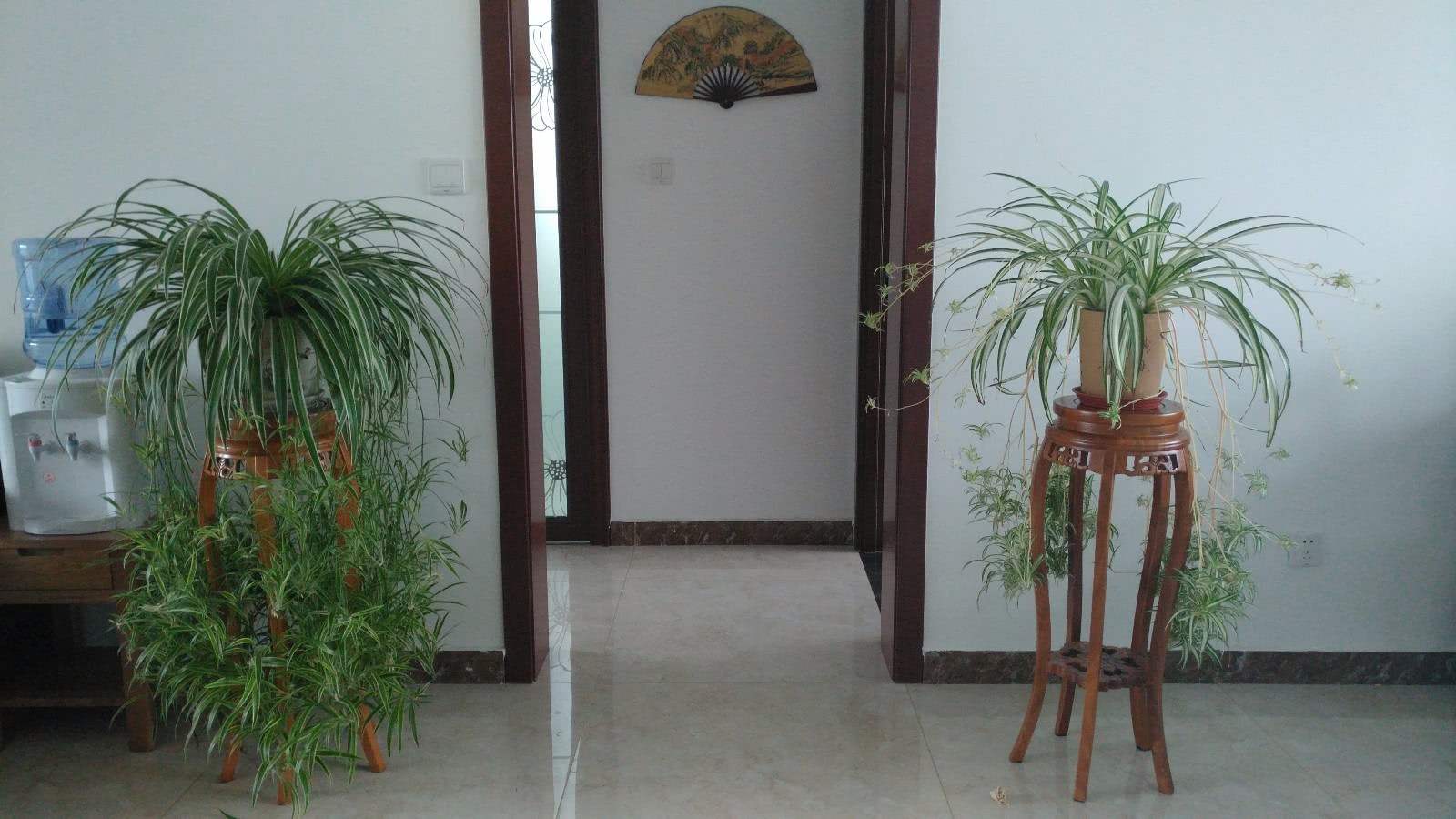
Besides pothos, the spider plant is also excellent at purifying the air, and its ability to absorb harmful gases such as formaldehyde and carbon monoxide from the air is even stronger than that of pothos. The spider plant has long been known as the "fairy in the air", and there are many varieties; the more common ones include the common spider plant, purple spider plant, golden-edged spider plant and so on. Different types of spider plants hung up in the living room or on the balcony have different effects. Today, let's introduce a few of the more common spider plants and some care tips.
1. Common spider plant. This kind of spider plant is fairly common; the stems connect with the leaves, the leaves droop, and they range from narrow to wide, in dark green. Its flowering period is June and July, and the flowers are pale yellow and white. It has a strong ability to absorb toxic gases indoors, especially formaldehyde. Many households choose this variety for growing it, as it is economical and practical.
2. Purple spider plant. Also called the painted spider plant, it has slender stems, many branches, and roots growing from the nodes. The leaves are oblong, green mixed with silvery-white stripes, and the underside of the leaves is purple. It likes a warm and humid growing environment, and direct blazing sun should be avoided during care.
3. Golden-edged spider plant. Its leaves are broadly linear, tender green, and its special feature is that the edges of the leaves are golden. It has a raceme inflorescence that curves and droops, with white flowers. It likes a semi-shaded growing environment and grows best in places with weak light. Grown indoors, it is both ornamental and able to purify the air.
4. Silver-edged spider plant. Unlike the golden-edged spider plant, the edges of its leaves are white, broadly linear, and about 30 cm long. It likes a warm, humid, semi-shaded environment, has relatively poor cold tolerance, and is suited to growing in well-drained, fertile and loose sandy soil.
How should spider plants be cared for in summer?
Spider plants are fairly simple to grow; you mainly just need to do the following well. First is choosing the flowerpot: choose an earthenware pot with a diameter of 15-20 cm and fill it with a mix of garden soil, leaf mold and river sand, planting 3 plants per pot. When the roots grow out of the bottom of the pot, repot immediately, so that the spider plant will grow more luxuriantly.
In summer, water about 2 times a week, place it in a cool and ventilated spot indoors, and do not expose it to the blazing sun. When the indoor temperature reaches above 35°C, you can spray around the spider plant every day to cool it down, but be careful not to pour water into the leaf core, as it easily rots. Gardeners who cannot get the watering pattern right can use a plant and soil monitor; connect it to your phone and you can see the water and nutrient status of the potting soil, and it will tell you how much water to give, which is very simple.
In summer many plants enter dormancy, but spider plants still grow normally, so fertilizing is essential. If nutrients are insufficient, it will cause the leaf tips to turn brown, the leaf color to fade, and even withering and drying up. For fertilizer, you can choose Huadongde organic nutrient solution, which is purely plant-fermented, rich in organic matter, relatively easy for plants to absorb, and contains a fairly high amount of nitrogen, which can effectively promote the spider plant's leaves to grow rapidly and lushly green!
There is one more point that many gardeners overlook, and that is promptly pruning and tidying the spider plant. In fact, we should tidy up the spider plant every month, remove dead leaves along the pot, prune the stolons, and turn the flowerpot about once every half a month. This keeps the branches and leaves of the spider plant growing evenly and keeps the leaves fresh.