Spider plant grown outdoors overflows and bursts its pot: 3 key care factors
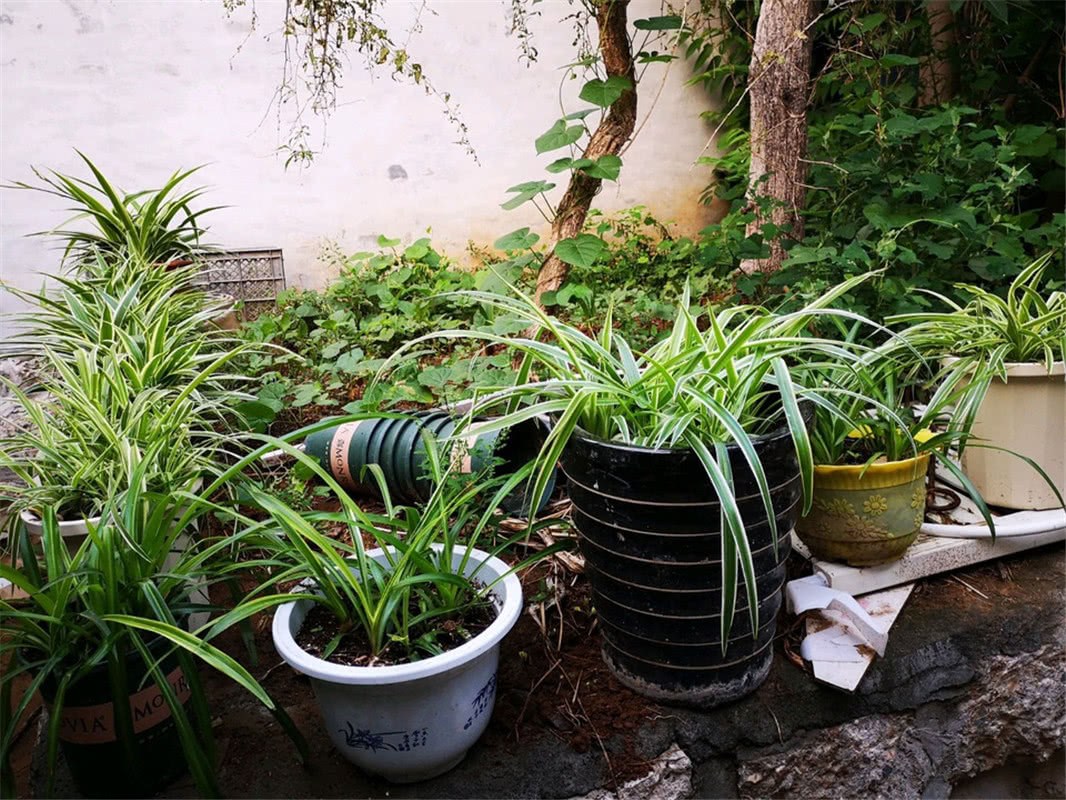
Dear plant lovers, do you all like spider plants? In the little gardener's view, it and the pothos are the "two big bosses" among home greenery potted plants, and compared with pothos, the spider plant is even easier to grow into a overflowing pot. One plant lover was growing a spider plant, felt the indoor environment was no good, so grew it in the garden, and after only a short time it overflowed the pot and even burst the pot open.
1. The spider plant that burst its pot
The little gardener thought of a saying, that is "the spider plant you grow can only overflow the pot, but the one I grow bursts the pot" - that is truly the highest level of growing flowers, haha, but this little plant lover really grew these few pots of spider plants quite well, with strong roots and sturdy bodies, and this many shoots, this garden is clearly beside an old house at a glance, having a garden is really an enviable thing.
Whether a spider plant is healthy or not, besides looking at whether the branches and leaves are lush, you can also look at its stems; this little plant lover's stems are thick and strong, about as thick as a little finger, showing that the spider plant is growing extremely well. Below, the little gardener tries to analyze why the spider plants grown by this spider plant lover overflow the pot so easily; if flower friends want their own spider plants to overflow the pot too, they might as well take a look.
2. The "three key factors" for spider plants overflowing the pot
The first point, the environment issue. When growing spider plants, good ventilation is the first factor of the environment, followed by the lighting issue. Grown in this small yard, the spider plant grows beside other tall plants, basically receiving light and also getting appropriate shade. Many plant lovers fail to grow spider plants well simply because they mistakenly think spider plants love shade; spider plants tolerate shade, but a certain amount of light is needed to make them overflow the pot.
The second point, the soil fertility issue. When this spider plant lover potted it up, after laying a layer of small stones at the bottom, she put a layer of chicken manure fertilizer, and on top used soil mixed in the ratio peat soil : leaf mold : perlite = 2:2:1, very rich in nutrients and also very good in air permeability. Usually, she also watered it with self-fermented soybean fertilizer; with this round of heavy feeding, the spider plant certainly can overflow the pot.
Soybean fertilizer is very rich in nitrogen, and plant lovers can also ferment and use it themselves, but soybean fertilizer has a very strong smell, so the little gardener does not recommend using it for plants grown at home. For potted spider plants at home, you can use a plant-fermented organic nutrient solution, which can promote the spider plant to send out shoots and also effectively prevent yellow leaves, green and environmentally friendly.
The third point, air humidity. When caring for spider plants, in an environment with relatively high air humidity they can grow faster, there is no doubt about this. Recently with plenty of rain, the spider plants in the small yard have grown especially well. When caring for them at home, during dry times we can use a spray bottle to spray water mist and artificially increase humidity, and this is also a key point for overflowing the pot!