How do you water flowers? Please keep this watering guide handy.
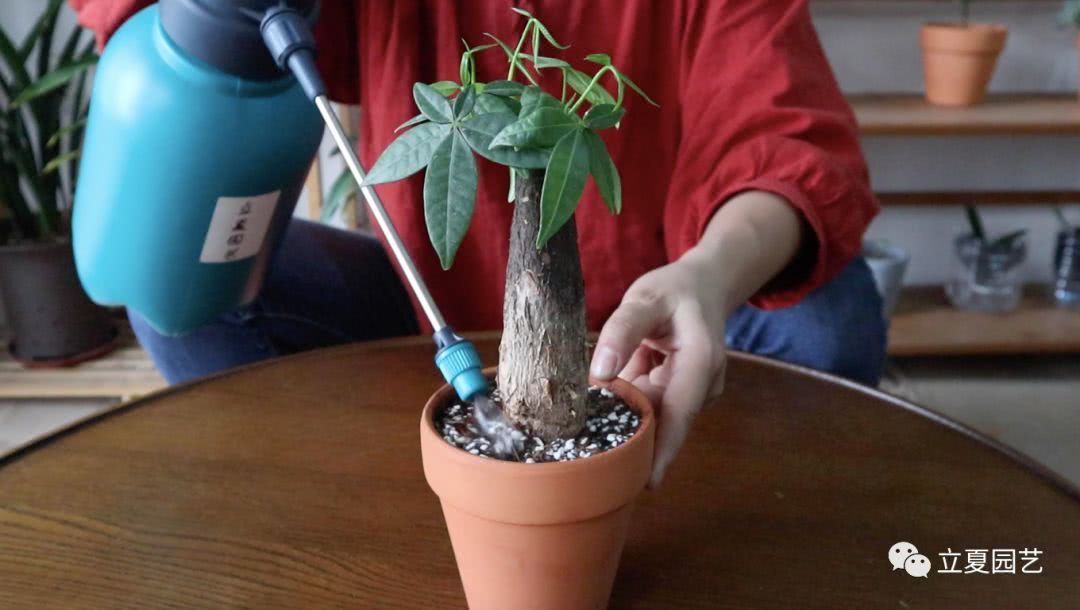
Water is an indispensable resource for the life activities of all living things. Flowers and trees need sufficient water during photosynthesis, respiration, transpiration and other processes. For growing flowers, watering is the most frequent and most important management task.
Whether flowers grow vigorously and whether they bloom abundantly depends to a large extent on whether watering is done properly. If the soil is too dry, flowers will wilt and even die; if the soil is too wet, root rot and death can occur, and potted flowers especially need attention when watering. So how should potted flowers be watered?
1. Pay attention to water quality
The water quality should preferably be clean fresh water free of salt and alkali. Generally, potted flowers are best watered with rainwater; if tap water is used, it should be stored for a certain period so the chlorine in the water can evaporate before use; well water contains various impurities and is generally not suitable for use. Rice-washing water and the waste water changed from a goldfish tank can also be used to water potted flowers. Laundry water containing soap or soap powder and dishwashing water with grease stains must never be used.
For flowers such as camellias, azaleas, orchids and clivia that require acidic soil, even more attention must be paid to water quality, otherwise the potting soil will become alkaline and cause poor plant growth.
2. Pay attention to water temperature
Do not water when there is a large difference between soil temperature and water temperature (or between room temperature and water temperature). You can choose an appropriate time in the morning or evening, or adjust the water temperature (generally it is stored in a vat in advance). If cold water is poured under the scorching sun and high temperature, the plant will immediately develop "physiological drought", and the leaves will quickly scorch and wilt.
3. Pay attention to the amount of watering
In the practice of pot cultivation, people have summarized the watering experience of the "nine more and nine less."
Water more for herbaceous plants, water less for woody plants;
Water more for moisture-loving flowers, water less for drought-loving flowers;
Water more for plants with large, soft leaves, water less for plants with small, waxy leaves;
Water more during the vigorous growth period, water less during the dormant period;
Water more when the plant is large and the pot is small, water less when the plant is small and the pot is large;
Water more for those on balconies, water less for those in courtyards;
Water more in hot weather, water less in cold weather;
Water more in dry weather, water less in cloudy weather;
Water more during bud formation, water less during flowering.
The so-called more or less is a comparison under the same conditions. If drought and dehydration occur, with branches and leaves wilting, first move the plant to a shaded place, add a little water in the pot, spray a small amount of water on the leaves, and after the stems and leaves stand up, water thoroughly. If a large amount of water is poured directly, it will damage the roots and cause leaf drop.
If there is continuous rainy weather, it is best to move the pot to a rain-sheltered place under the eaves; if water has already accumulated in the pot for a long time and waterlogging has occurred, the plant must be removed with the soil, placed in a cool, ventilated place to quickly breathe and release moisture, and after 3-5 days, once it has recovered, repot it. If after long rain the sky suddenly clears, woody flowers must first be placed in a cool, ventilated place for 1-2 days before seeing sunlight.
If exposed to the sun rashly, because during this period the root hairs' ability to absorb water has weakened, even though the potting soil is very wet at this time, the branches and leaves will still lose water and shrivel (called "waterlogging shock"), and may even die.
If this phenomenon has already occurred, immediately move the pot to a cool, ventilated place, cut off some of the shriveled branch tips, stop watering, and let it slowly recover.
4. Pay attention to watering time
Watering should be done when the plant is in active growth, but avoid the scorching sun. Therefore, in general, watering in winter should be after 9-10 a.m.; in summer it should be before 8 a.m. and after 5 p.m. For plants under direct sunlight, the amount of water in the morning should be larger, otherwise they will wilt before the afternoon.
5. Master the principles of watering
Most problems with potted flowers come from improper watering. No matter which kind of potted flower or tree, in any season, one principle must be mastered when watering, namely: "Water when dry, do not water when not dry, water thoroughly when completely dry."
Under the condition that the flowers are not harmed by lack of water, it is usually safer and more reliable for the soil to keep less moisture than too much, that is, "better dry than damp."
In addition, note: do not give only surface-wetting "halfway water," leaving the potting soil wet on top and dry below. Over time, the plant roots will wilt from lack of water, and the potted flowers will grow poorly.