The super simple method for growing zucchini in pots on a balcony
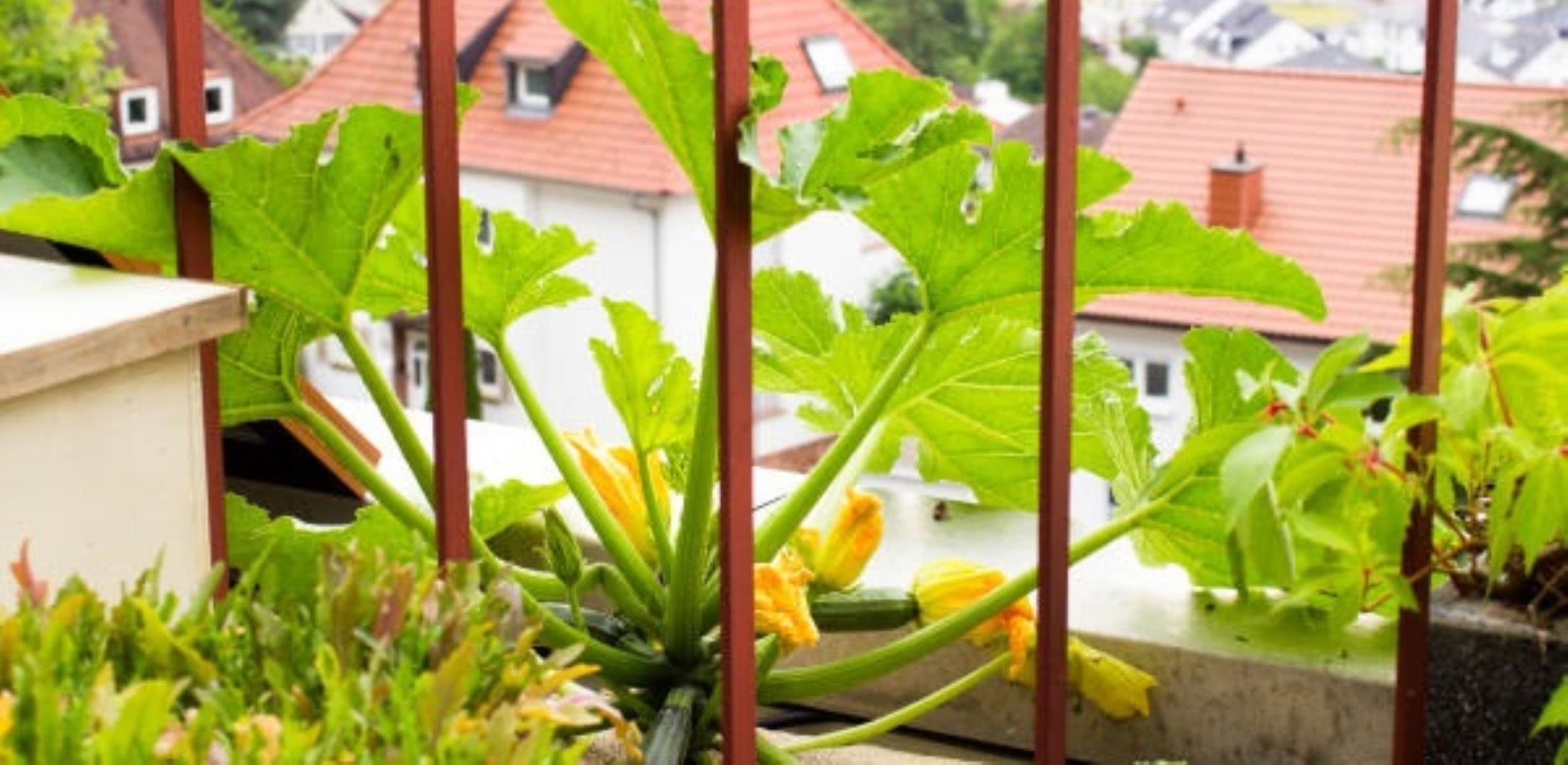 All you need is one flower pot, and with a few simple techniques mastered, you can grow jiaogua zucchini.
Even if you do not have your own garden, you can still grow vegetables on your balcony at home.
Besides growing a few seasonings like scallions, ginger and garlic, you can even grow some vegetables on the balcony. For example - delicious jiaogua, or zucchini.
You only need enough space for one flower pot, plus some seeds, and you can grow worry-free vegetables with no pesticides and no GMOs.
In addition, it is best to meet three more conditions:
Sun:Zucchini needs at least a few hours of sunlight every day to grow and set fruit. If your balcony does not get enough sun or the light is blocked, the zucchini may grow somewhat small. But do not worry, if the balcony has insufficient light or there is no balcony, just some light is enough.
Plenty of water:Zucchini grows and sets fruit on hot days, so the plants need to be watered in the morning and in the evening. It is recommended to use a flower pot with drainage holes, so root rot will not happen.
Nutrient soil and fertilizer:Zucchini has relatively high fertilizer requirements, and organic fertilizer suits it better. This is also very simple - just buy some.
Next, start with step one: raising seedlings
The time for sowing and raising seedlings is generally in May and June. It will be adjusted according to temperature differences between north and south, but this requirement is not strict. You can even plant whenever you want.
You can use a small flower pot or a paper cup. Put three or four seeds into the soil, about 3 or 4 cm deep, cover them with soil, and keep the soil evenly moist.
After about a week, you should be able to see the first batch of new sprouts. If several seedlings grow in one pot, when the 4th leaf appears, you can carefully remove the weaker seedlings. If the seedlings are all growing well, you can keep them all, but at this point do not rush to separate them into pots.
After about another week, once the plants are fairly firm, separate them into pots. Put only one plant in each pot, and be careful not to damage the roots.
Step two: watering and fertilizing, building a trellis
When the plants slowly grow new sprouts, the next thing is to build a trellis. The trellis is quite simple, and in this way the zucchini seedlings will then start to vine.
It is best to keep watering regular. If the watering frequency is irregular, or there is a lack of water, the zucchini will alternate between drought and waterlogging, which can easily make the final fruit not sweet and may even be a bit bitter.
Zucchini is suitable for organic fertilizer. This way you do not need to fertilize often; you only need to turn the fertilizer into compost and put it in the flower pot.
Kitchen fruit and vegetable peels and pits are very good materials, but this requires earthworms in the flower pot to convert them into compost.
If you do not know where to catch earthworms, you can also just buy ready-made fertilizer.
Another advantage of growing zucchini is that it has very few pests and diseases. There may only be mold disease under humid conditions, and you just need to buy medicine and spray it.
The last step: harvesting the fruit
After about two months, you can harvest and eat them. It is generally recommended to eat zucchini when it has grown to about 20 cm. At this point the zucchini is not fully mature, but it is at its most tender.
If it grows a bit more, to full maturity, the flavor will be more fragrant, but it will also be less tender, and the flesh will be somewhat firmer. You can decide based on your own taste.
Another thing to note: it is best not to grow pumpkins at the same time, because they may cross-pollinate and produce a strange kind of squash that may taste very bad: