Growing Orchids in Summer: Try the "Plain Care" Method for Armfuls of Blooms
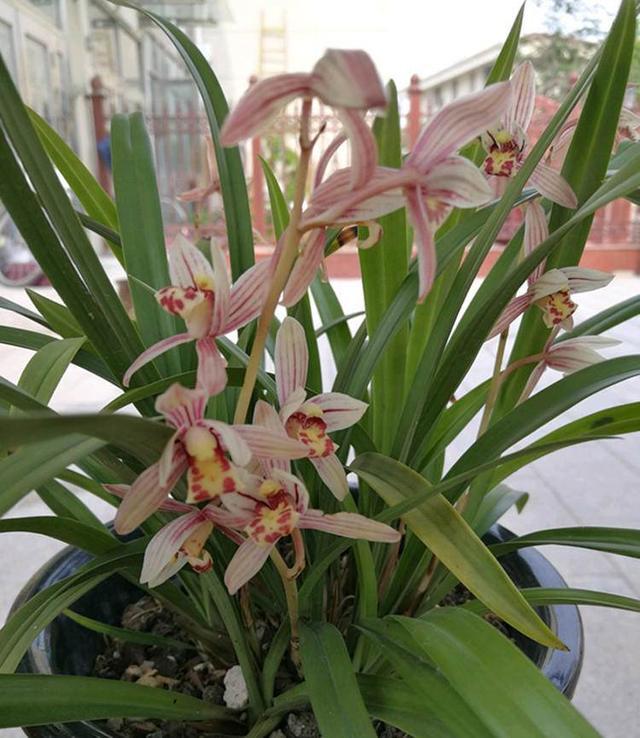
It has long been said that orchids favor plain care and are afraid of and averse to fertilizer. In fact, what orchids fear is concentrated fertilizer, and proper fertilization is essential for their vigorous growth. In summer, if flower lovers want to grow orchids well, they need to learn the "plain care" method, so that your orchids will bloom in armfuls.
So, what is the orchid "plain care" method? Flower lovers, read on carefully:
Early summer (April to June) is the growth period for new orchid shoots, and fertilization should focus on nitrogen and potassium (use less nitrogen fertilizer for variegated orchids). Flower lovers can use organic liquid fertilizer specially made for orchids, once every 10 to 15 days. From mid-to-late June, orchids enter the stage of accumulating nutrients and enlarging the pseudobulbs (to support flower bud growth), and fertilizers mainly based on phosphorus and potassium should be applied. Flower lovers can use organic nutrient solution specially made for orchids, diluted 500 to 800 times, to water the roots.
In the early part of summer, apply liquid fertilizer specially made for orchids once every 10 to 15 days. When applying the liquid fertilizer, pour it slowly from the edge of the pot and try not to pour it into the leaf center; be careful to apply it slowly from the pot edge and avoid pouring it into the leaf center. When the severe summer heat pushes temperatures above 30°C, all types of orchids should have fertilizer application reduced, and about every 20 days, organic liquid fertilizer for orchids diluted 1000 times can be sprayed once as a foliar top dressing.
Foliar fertilization is best done in the evening to prevent high temperatures from damaging the leaves during fertilization. Once the orchid seedlings are grown strong, they lay a good foundation for the germination and growth of flower buds. Naturally, there will be more blooms.
In addition, when using the "plain care" method and applying organic fertilizer to orchids in summer, the organic fertilizer must be fully fermented and decomposed (fermented for 1 to 2 years), then diluted with clean water before use. Fertilization is best done in the evening after the sun has set, and the next morning, water the potted orchids thoroughly with clean water, or spray clean water once again (commonly known as "return water"), to prevent fertilizer water from collecting at the roots and causing blackened leaf tips or diseases in the leaf center.
If flower lovers notice blackened leaf tips on orchids in summer, it is generally caused by excessive fertilization. At this time, fertilization should be suspended for 30 to 40 days. If the orchid leaves appear yellowish and thin in texture, it is very likely caused by a lack of fertilizer, and a top dressing should be applied. Fertilization must always follow the principle of "light fertilizer, applied appropriately," and especially for small seedlings and weak seedlings, concentrated fertilizer is even more taboo.
Once it is found that orchids have been given overly concentrated fertilizer, the soil must be changed immediately, and after washing the orchid roots clean, they should be replanted in plain soil. In addition, summer is the flowering period of Cymbidium ensifolium (jianlan); when the flower scape emerges from the soil or during the flowering period, flower lovers should suspend fertilization to avoid fertilizer water being poured into the flower buds and causing bud rot.