How to transplant young citrus seedlings? A detailed guide to transplanting techniques
Transplanting techniques for young citrus seedlings
Following the principles of high industrial efficiency, product safety, resource conservation and environmental friendliness, when building a new citrus orchard, choose an area with convenient transportation, close to a water source, and with access to electricity, water and roads. Roads should cover the whole orchard and be laid out in a grid pattern, and the roads must be solid and firm. The orchard should be at an altitude below 400 m; mountain land, gentle slopes and flat land are all acceptable. Citrus has strong adaptability to soil, and after various soil improvements it can be planted. When building an orchard on mountain land, follow the principle of a "hat" on the mountaintop, "boots" at the foot of the mountain and "fruit planting" on the mountainside, that is, do not destroy the natural forest belt and vegetation on the mountaintop; leave a forest area at the foot of the mountain to protect the fruit-growing area on the mountainside. This can effectively ensure the balance of the natural ecology.
The seedlings for planting young citrus should be virus-free, disease-free healthy nutrition-cup seedlings; grafted seedlings on trifoliate orange (Poncirus trifoliata) rootstock are recommended. The planting rows and plant spacing should be determined according to the terrain. If planting on mountain land, horizontal planting rows should be opened around the mountain, with a gradient drop between rows, one row of citrus planted on each gradient, using "pin"-shaped planting; the width of each terrace should be 3 m or 6 m, with a plant spacing of 2 m; the planting pit specification should preferably be 60 cm x 60 cm x 40 cm, and 111 plants per mu can be planted for high yield. If planting in open fields, beds must be raised and drainage ditches dug. For single-row raised-bed planting, the planting pit is located in the middle of the bed; for plots with good drainage, large beds can be raised for double-row planting, with a row spacing of 3 m x 3 m or a row spacing of 2.5 m x 3 m, and a ditch spacing of 6 m; the planting pit specification should preferably be 60 cm x 60 cm x 40 cm, and 74-88 plants per mu can be planted. Citrus planted before the Spring Festival can achieve 3-5 flushes of shoots. Citrus planted in autumn from September to November can achieve 4-6 flushes of shoots the following year.
For newly planted Orah mandarin seedlings, sufficient and good organic fertilizer must be applied, the soil must be thoroughly improved to lay a solid foundation, and two flushes of shoots must be ensured the following spring. While applying sufficient base fertilizer, apply 5-10 kg of bio-organic fertilizer per plant at the bottom of the planting pit and mix it evenly with the soil to form a funnel-shaped layout. After planting the seedlings, at a distance of 40-50 cm from the main trunk, spread 0.5 kg of Letu Fu'an and other bio-organic-inorganic special fertilizers in a circle, then cover with 3-5 cm of soil.
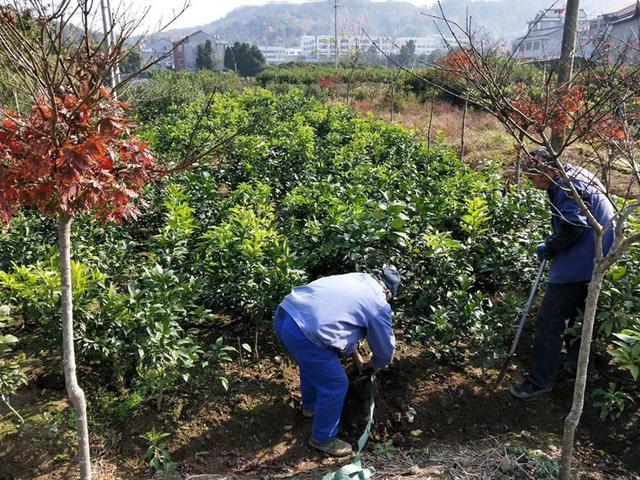
If transplanting seedlings for planting, be sure to select uniform-sized, virus-free, robust seedlings, remove the cup film, straighten them for planting and backfill soil. When the soil is half backfilled, gently lift the seedling upward (nutrition-cup seedlings do not need to be lifted), then continue backfilling and compacting the soil to 2-5 cm below the graft union, build a tree basin with soil (30 cm high, 60 cm in diameter), and water each plant thoroughly with about 15 kg of settling water. Points to note: 1. The film at the graft union must be cleaned off completely. 2. When backfilling soil, do not cover the graft union; the graft union must be more than 3-5 cm above the ground. 3. When covering the seedlings with soil, tread the surrounding soil firmly, but do not tread on and injure the seedling roots. 4. When watering, pour slowly. 5. If covering with black film, do not place it tightly against the trunk; keep a distance of 1-2 cm and do not injure the leaves.