Why Carry Out Afforestation Site Preparation? Reasons and Tree Planting Techniques
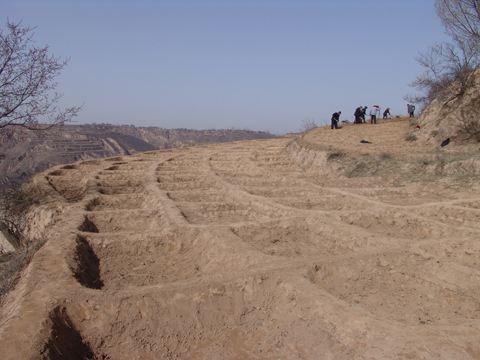
The Necessity and Reasons for Afforestation Site Preparation and Tree Planting Techniques
1 The Necessity and Reasons for Afforestation Site Preparation
In order to make large areas of land suitable for planting vegetation, afforestation site preparation is the preliminary work of artificially improving the soil environment and creating a good growing environment for seed germination. Brown earth is the main forestry soil in Shanxi Province, covering an area of 3.147 million mu. It is mainly distributed in the secondary forests or remnant forest areas of the mid-mountain zones of the Wutai, Taihang, Lüliang, Taiyue, Zhongtiao and other mountains. It is a soil developed under coniferous forest or coniferous-broadleaf forest cover, with altitude increasing from south to north, widely distributed on shady slopes or semi-sunny slopes of mid-mountains at 1700-2400 m, with the upper limit connecting to mountain meadow soil and the lower limit connecting to leached soil. The main vegetation includes trees such as spruce, Chinese pine, larch and Chinese arborvitae, shrubs mainly including forsythia, lilac, Lespedeza and Rosa xanthina, as well as herbaceous plants such as sedge, cyperus, lichen and moss. There is a relatively thick litter layer on the surface. Due to insufficient light from forest canopy closure, high temperature and rain in summer, and freezing environment in winter, decomposition is slow and organic matter accumulates in large amounts, with organic matter content in the humus layer at 7-15%. Water accumulates in the soil for a long time, and the soil body is fully leached. Fulvate infiltrates into the bottom layer of the soil with water, and the infiltrated fulvate is reduced to apocrenic acid and ulmic acid, causing a brown color to appear. Because a large amount of base is leached, excess organic acids appear in a free state, making the soil slightly acidic. Site conditions are poor. Precisely because of this, before artificial afforestation, site preparation is an indispensable step and also a particularly important technical measure.
2 Specific Implementation and Application of Afforestation Site Preparation
(1) General land usually contains debris such as stones and weeds. After site preparation, the debris is completely cleared away, the soil becomes loose, and it fully receives sunlight. The surface temperature and low temperature of the ground gradually rise, causing the spring soil to thaw earlier, which is very beneficial for seed germination and seedling growth.
(2) Through artificial water storage, increase the average water content of the land. After comprehensive clearing and plowing during site preparation, the land becomes loose and scattered with strong permeability, and the surface roughness of the land increases, enhancing its ability to retain and store water.
(3) Use local soil replacement and site preparation to change the soil properties of the afforestation land and create an environment more suitable for seedling growth.
(4) Through soil maturation, increase nutrients and organic matter in the soil. The quality of afforestation site preparation directly affects tree planting. High-quality site preparation means a high seed survival rate, so attention must be paid to the technical level and requirements in afforestation site preparation.
3 Application of Tree Planting in Practice
Only by clarifying tree planting methods and mastering tree planting techniques can sufficient results be achieved for the entire ecological environment.
(1) Direct seeding afforestation method: a technique of sowing tree seeds and then establishing a forest. The advantage of using this technique for afforestation is that the method is easy and it saves the procedure of cultivating seedlings. It is very suitable for use in relatively large areas. However, it has relatively high requirements for the innate soil environment and also relatively high requirements for subsequent protection of seedlings. Therefore, before sowing, site preparation must be done well to improve soil quality. The general methods of direct seeding afforestation include: broadcast sowing, hole sowing, block strip sowing and broadcast sowing, etc. However, seeds used for direct seeding afforestation must first undergo procedures such as disinfection and germination promotion, so that the effectiveness of spring sowing can be ensured, achieving rapid seedling growth, enhanced drought resistance and reduced harm from birds and animals. This technique is also called the sowing afforestation method.
(2) Seedling planting afforestation method: a technique that uses a complete-rooted established seedling as a carrier for afforestation. This technique is excellent in all aspects, has low land requirements, strong resistance to the environment, and the seedlings grow vigorously and stably. Therefore, using this technique does not impose strict requirements on the land itself. However, it should still be noted that when using the seedling planting afforestation technique, the root system of the established seedling may be squeezed and deformed, damaged or lose water, so during the cultivation process it must be done well and carefully, and the seedlings must also be cultivated. Precisely because seedling planting afforestation has few restrictions on various factors, it is the most commonly used and most widely applied technique under current conditions. It is also called tree planting afforestation or transplanting afforestation.
(3) Vegetative propagation afforestation method: a technique that uses organs such as branches and roots of trees as carriers and materials for afforestation. This technique can fundamentally save the time and cost of cultivating seedlings. It is simple to operate, the technique is easy, and the seedling survival rate is also very high. Young trees grow quickly in the early stage and can maintain the original excellent genetic performance. However, it is limited to afforestation sites with relatively good soil, and it is also restricted by the concentration of trees and the number of parent trees. Precisely because of this, this type of technique is instead suitable for those trees that require vegetative propagation. For example, poplar, willow, pine, Paulownia and bamboo [Jishan Huayao].
(4) Tillering afforestation: refers to the method of directly using tiller seedlings for afforestation. Sea buckthorn has a very strong root-tillering ability and many natural root-tiller seedlings. Especially after stumping, each mu of land can produce more than 5000-11000 root-tiller seedlings, producing a large number of seedlings whose male and female can be distinguished for tillering afforestation. This type of method is adopted in many places where sea buckthorn is planted. The specific practice method is: in a suitable season, dig out tiller seedlings together with roots from within the sea buckthorn forest, then transport them to the forest farm for afforestation. When planting, attention should be paid to spreading the root system, and the soil should be firmed after covering, so as to ensure the growth of the seedlings.