Annual Cultivation and Management Calendar for Greenhouse Blueberries on the Shandong Peninsula
Cultivation and Management Calendar for Greenhouse Blueberries on the Shandong Peninsula
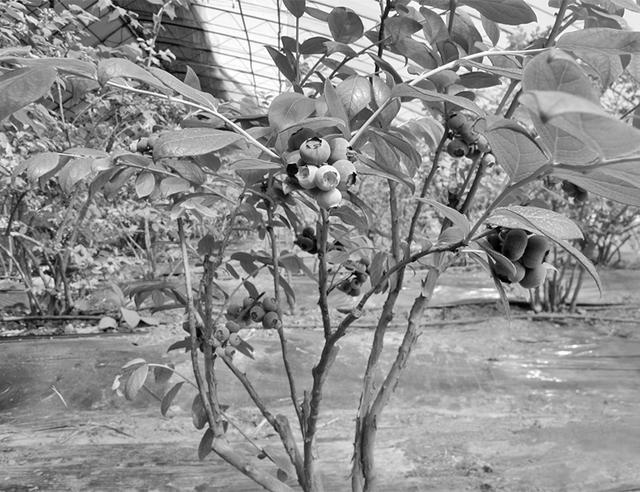
Blueberry, botanically known as Vaccinium, is a small-fruited berry shrub in the genus Vaccinium, family Ericaceae. Blueberries have the unique benefits of preventing cranial nerve aging, strengthening heart function, preventing visual fatigue, and resisting cancer, and are one of the five major healthy fruits recommended by the Food and Agriculture Organization of the United Nations. China's research on the introduction and cultivation of blueberries began at the end of the 20th century. The Shandong Peninsula has a cool climate, suitable temperatures, and mostly acidic soil, making it very suitable for blueberry cultivation. The Shandong Peninsula began introducing and commercially cultivating blueberries in 2000 and is currently China's largest large-scale blueberry growing region. Through many years of greenhouse blueberry cultivation (Figure 1), a set of techniques for greenhouse blueberry cultivation has been summarized and is presented below for reference.
Figure 1 Greenhouse blueberry cultivation
1 January (Minor Cold, Major Cold)
Phenological stage: dormancy - bud break - bud emergence. This month is the coldest time of the year. To reach the temperature for blueberry bud break, the most important farming operation is heating inside the greenhouse, followed by water and fertilizer management, plant protection, and weeding.
1.1 Heating
For greenhouses that have met the chilling requirement (about 750 hours under the 0-7.2°C model), begin heating. The greenhouse should not be heated too quickly; a slow heating method should be adopted so that the blueberries can adapt to temperature changes. Adjust by regulating the straw mat covering area and the size of the ventilation openings so that the temperature inside the greenhouse meets the following requirements: daytime temperature of 9-15°C in the 1st week, 15-22°C in the 2nd week, and thereafter controlled at 22-28°C during the day, not exceeding 33°C, until inflorescence separation. At night, keep the greenhouse warm by fully covering it with straw mats.
1.2 Water and fertilizer management
After heating, irrigate promptly with bud-break water. Fertilization should be mainly nitrogen fertilizer. Blueberries readily absorb ammonium nitrogen, while nitrate nitrogen is not only difficult for them to absorb but also adversely affects growth. It is recommended to use ammonium sulfate, combined with multi-element phosphorus and potassium fertilizer, applied through drip irrigation.
1.3 Plant protection management and weeding
After the greenhouse is heated, as the temperature inside rises, weeds begin to grow in the greenhouse, providing a living place for aphids to grow and reproduce. Weeding should be done early to avoid the aphid damage period overlapping with the blueberry flowering period, when spraying would harm the bee colonies used for pollination. First thoroughly remove weeds in the greenhouse by hand, then spray pesticides. This is generally done in late January (7-10 days before flowering). Optional pesticides include pymetrozine, imidacloprid, and mineral oil.
2 February (Start of Spring, Rain Water)
Phenological stage: inflorescence separation - flowering period. The main farming operations include temperature control, bee pollination, and water and fertilizer management.
2.1 Temperature control
Use an automatic temperature controller or manually adjust the size of the ventilation openings at the top of the greenhouse to regulate the temperature inside. During inflorescence separation, keep the daytime temperature at 22-28°C, not exceeding 33°C. During the flowering period, keep the daytime temperature at 23-25°C, not exceeding 28°C. At night, keep it as warm as possible, and the temperature should not be lower than 10°C.
2.2 Bee pollination
The greenhouse uses a combination of honeybees and bumblebees for pollination. Each greenhouse should have at least 1 hive of honeybees and 1 hive of bumblebees. When placing the hives, the entrance should face southeast. Honeybee hives are placed directly on the ridge surface; bumblebee hives are placed 40-80 cm above the ridge surface, and the hive is covered with a shade net, with a certain distance maintained between the shade net and the hive. Once the hives are fixed, their position should not be changed, otherwise the pollinating bees will not return to the hive in time, and the low nighttime temperatures will freeze them to death. During pollination, honeybees need to be fed sugar water (white granulated sugar : water = 1 : 0.6). Feeding begins when the hives are placed, and the sugar water is replaced every 2-3 days. During full bloom, the sugar water is temporarily stopped. Commercial bumblebee hives already contain feeding sugar water, so no additional sugar water is needed. Avoid spraying pesticides during the flowering period, so as not to affect pollination by the pollinating bees and affect blueberry fruit set.
2.3 Water and fertilizer management
Avoid heavy irrigation during the flowering period. The principle is not to irrigate unless there is drought, and to irrigate only a little if there is drought. The flowering period is a time of large nutrient consumption by the plant, and drastic environmental changes should be avoided. Irrigation generally causes a sudden drop in soil temperature, which is unfavorable for flowering and fruit set. Fertilization is not suitable during the flowering period.
3 March (Awakening of Insects, Spring Equinox)
Phenological stage: flowering period - petal fall - young fruit. Farming operations at this stage include temperature control, water and fertilizer management, and plant protection management.
3.1 Temperature control
During the flowering period, the suitable daytime temperature is 23-25°C, not exceeding 28°C. When 95% of the petals on the whole tree have fallen, remove the hives, keep the daytime temperature within 33°C, and keep it as warm as possible at night.
3.2 Water and fertilizer management
During the flowering period, irrigation still follows the principle of not irrigating unless there is drought, and irrigating only a little if there is drought. During the young fruit stage, water and fertilizer are applied simultaneously, mainly nitrogen fertilizer, combined with multi-element phosphorus and potassium fertilizer, applied through drip irrigation.
3.3 Plant protection management
Pay attention to the occurrence and control of gray mold. Trichoderma harzianum wettable powder, 10% polyoxin wettable powder at 1000-1500 times dilution, or 3% polyoxin aqueous solution at 400-800 times dilution can be used for spraying. Promptly pick (cut) off diseased fruit, diseased flowers, diseased leaves, and diseased branches.
4 April-May (Pure Brightness, Grain Rain, Start of Summer, Grain Buds)
Phenological stage: young fruit - ripening stage. The main farming operation is fruit picking; other operations include temperature control, water and fertilizer management, plant protection management, and bird control.
4.1 Temperature control
During the young fruit stage, the daytime temperature is still controlled within 33°C, and at night it is kept as warm as possible. During the fruit ripening stage, open the ventilation openings at the top of the greenhouse as much as possible to keep the daytime temperature inside at 24-28°C, and keep it as warm as possible at night.
4.2 Water and fertilizer management
Complete fertilization 2 weeks before picking, and do not fertilize during the fruit-picking period. For water, follow the principle of irrigating only a little if there is drought.
4.3 Plant protection management
During the ripening stage, blueberries are susceptible to damage by fruit flies. The control method is to trap and kill adults with sugar-vinegar liquid. Taking advantage of the chemotaxis of fruit fly adults, before the blueberry fruit ripens, prepare a bait sugar-vinegar liquid with sugar : vinegar : wine : water = 1 : 2 : 2 : 4. Put it in mineral water bottles with holes, hang 30 bottles per greenhouse in shaded areas of the blueberry canopy, regularly remove the adults in the bottles, and replace the sugar-vinegar liquid once a week. In addition, clean up the orchard sanitation and promptly remove fallen fruit to reduce fruit fly damage. For bird control, cover the ventilation openings at the front of the greenhouse with bird netting to prevent birds from pecking the blueberries.
4.4 Picking
Pick fruit that has reached the picking standard promptly. Harvest in batches.
5 June-October (Grain in Ear, Summer Solstice, Minor Heat, Major Heat, Start of Autumn, End of Heat, White Dew, Autumn Equinox, Cold Dew, Frost's Descent)
Phenological stage: shoot growth - secondary shoot growth - flower bud differentiation. These 5 months belong to the post-harvest tree maintenance stage in the greenhouse. The main farming operations include plant protection management, water and fertilizer management, ridge reshaping, pinching, applying tung oil, and weeding.
5.1 Plant protection management
After blueberry harvest, twig blight, leaf spot, and root rot are prone to occur. Pests include scale insects, white grubs, thrips, and slug moths.
Control of twig blight. Plant disease-resistant varieties; cut off 15-20 cm below symptomatic branches and destroy them; strengthen water and fertilizer management to improve tree vigor and maintain orchard sanitation. After pruning, promptly remove diseased branches, old branches, etc. from the orchard and burn them; control temperature and humidity in the greenhouse and ventilate it regularly; if water accumulates in the greenhouse after rain, drain it promptly. For chemical control, spray with pyraclostrobin + boscalid at 1000 times dilution, cyprodinil + fludioxonil at 1500-3000 times dilution, or pyraclostrobin at 2000 times dilution.
Control of leaf spot. Plant disease-resistant varieties; avoid excessive irrigation and reduce humidity in the greenhouse. For chemical control, difenoconazole at 2000 times dilution, azoxystrobin at 1500 times dilution, or polyoxin B at 1500 times dilution can be used.
Control of root rot. Reasonable soil and fertilizer management to improve tree vigor; avoid planting in low-lying areas; control the number of irrigations; during continuous rainy weather, keep drainage in the ridges unobstructed to avoid water accumulation; avoid root damage during farming operations. For chemical control, drench the roots with hymexazol + metalaxyl at 800 times dilution, or Trichoderma harzianum at 300 times dilution.
Control of scale insects. In conjunction with pruning, cut off infested branches to reduce the overwintering population. When there are few scale insects attached to blueberry branches, they can be brushed off with a brush or scraped off with a bamboo strip. For chemical control, seize the key control period, that is, when scale insects are attached to blueberry leaves; at this time the scale insects are in the nymph stage and are sensitive to pesticides. Optional pesticides include 95% mineral oil emulsifiable concentrate at 200 times dilution and 22.4% spirotetramat suspension concentrate at 200 times dilution.
Control of white grubs. Light trapping: based on the phototaxis of scarab beetles, use black light lamps to trap and kill adults and reduce the number of white grubs. For chemical control, drench the roots with 48% chlorpyrifos emulsifiable concentrate at 1000 times dilution.
Control of thrips. Taking advantage of the blue-tropism of thrips, use blue sticky traps to trap and kill adults. For chemical control, 60 g/L spinetoram suspension concentrate at 1500 times dilution or 20% dinotefuran soluble granules at 1500 times dilution can be used.
Control of slug moths. Taking advantage of the phototaxis of slug moth adults, use black light lamps to trap and kill adults. For chemical control, emamectin benzoate at 1500 times dilution, 20% fenpropathrin emulsifiable concentrate at 1500 times dilution, or zeta-cypermethrin emulsifiable concentrate at 2000 times dilution can be used.
5.2 Water and fertilizer management
After fruit harvest, control nitrogen fertilizer application, mainly using phosphorus and potassium fertilizers, applied in 2 applications from after picking to the dormant period. The 1st is generally in early June (immediately after picking is finished), and the 2nd is generally in late August. Apply organic fertilizer in autumn by broadcasting on the soil surface, spreading it over the entire ridge surface, followed immediately by shallow raking of the ridge surface. For fruiting trees with a yield of more than 3 kg per plant, apply about 4 kg of fermented cow manure.
5.3 Ridge reshaping, pinching, applying tung oil, and weeding
During the picking process, the ridge surface becomes misshapen due to trampling by people, so after picking it generally needs to be reshaped. Pinching is mainly to promote the branching of lateral shoots from the branches, increase the number of fruiting branches, and improve the quality of flower bud formation. When the post-harvest shoot length exceeds 30 cm, pinch promptly to control its vigorous growth so as not to affect flower bud differentiation. Applying tung oil is mainly to protect and extend the service life of the greenhouse frame; use a paint roller to apply tung oil evenly. Remove weeds in the greenhouse by hand.
6 November (Start of Winter, Minor Snow)
Phenological stage: nutrient translocation - dormancy. The main farming operations include installing the greenhouse film and covering with straw mats, and temperature management.
6.1 Installing the greenhouse film and covering with straw mats
The greenhouse regulates the internal temperature by installing the film and covering with straw mats, so that the temperature inside reaches the chilling accumulation standard.
6.2 Temperature management
At this time, temperature management is intended to meet the chilling requirement needed for blueberries to break dormancy. The chilling requirement is crucial for the later growth and development of blueberries. If the chilling requirement is insufficient, even if environmental conditions are suitable, blueberries cannot sprout at the proper time, or sprout unevenly, and may even develop deformed floral organs or severe abortion, leading to reduced yield and quality. After installing the greenhouse film, adopt the measure of covering with straw mats during the day and uncovering them at night, so that the temperature inside the greenhouse is controlled at 0-7.2°C and the chilling requirement of more than 750 hours is reached.
7 December (Major Snow, Winter Solstice)
Phenological stage: dormancy. The main farming operations are temperature management, plant protection management, and pruning.
Temperature management is the same as in November. Spray Bordeaux mixture to prevent blueberry diseases. Pruning of fruiting trees is mainly to control tree height and improve light conditions. Pruning is mainly thinning, removing overly dense branches, thin and weak branches, diseased and pest-infested branches, and tillers produced from the root system. When pruning, first determine the number of flowers to retain based on tree size and vigor: for example, for a plant with a load of 2 kg, retain 60-70 branches and 150-200 flowers; for a plant with a load of 3 kg, retain 90-120 branches and 250-300 flower buds. Second, maintain a certain number of large fruiting branches and keep the large branches at their optimal fruiting age of 5-7 years; when they exceed this, cut them back for renewal. Pruning should be completed before heating. First cut off dry, diseased, and pest-infested branches, then prune reasonably according to tree vigor, size, and target yield.
Fund project:Special Fund for Forestry Public Welfare Industry Scientific Research of the Science and Technology Department of the State Forestry Administration, "Breeding of Improved Varieties of Characteristic Small Berries and Development and Demonstration of Industrialization Technology" (201204402).