Detailed Explanation of Scion Selection Methods and Wax Sealing Techniques for Fruit Trees
Scion Selection and Wax Sealing Techniques for Fruit Trees
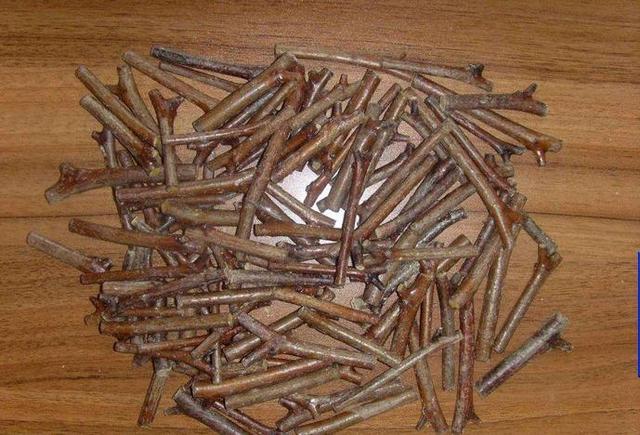
Scion selection. ① The grafted variety must be superior, of high economic value, and adapted to the local climate. ② Scions must be collected from superior mother trees. A superior mother tree refers to one that, after years of investigation and observation, has a pure variety, is adapted to local climatic conditions, grows vigorously, yields abundantly and consistently, and bears fruit of excellent quality. Do not use weak-growing fruit trees, young trees, or branches from the root crown as scions. ③ Select plump, sturdy one-year-old branches with full buds as scions; do not use water sprouts or poorly grown branches as scions. This is because plump one-year-old branches have fuller buds, giving a high survival rate when grafted as scions, and after survival the new shoots grow vigorously, and the branches have a high degree of lignification after autumn. ④ Scions must not carry pests or diseases. To avoid the spread of pests and diseases, scions must not carry pests or diseases, especially viral diseases, to avoid transmission through grafting. ⑤ Generally, it is best to select branches facing south on the canopy as scions, because south-facing branches on the canopy have sufficient nutrients and develop better, giving a high grafting survival rate, while north-facing branches have a somewhat lower grafting survival rate.
Wax sealing of scions. Wax-sealing scions is a moisture-retention measure used in stem grafting; it requires no other insulation measures, can greatly increase the survival rate, and this method is simple, easy to carry out, labor-saving and economical. Specific operation method: first heat paraffin until melted; place the container holding the paraffin in a large metal container holding water and heat it over water; when the wax liquid temperature reaches 90-100°C, begin sealing the scions; cut the scions to the required length; hold one end of one or several scions with your hand, quickly dip them into the wax liquid, quickly take them out and shake off the excess wax liquid, then seal the other end in the same way. If grafting is done immediately after sealing, only the upper end of the scion needs to be sealed, and the lower 3-4 cm need not be waxed. The paraffin temperature should generally be kept at 90-100°C; if the temperature is too high, it easily scalds the scions and affects survival; if too low, the wax layer is too thick, brittle and not firm. The wax formulation method is: 1 part rosin, 2 parts yellow wax (beeswax), 1 part animal or vegetable oil. Put the animal or vegetable oil into a pot and melt it, then put the rosin and yellow wax into the pot together and stir evenly. After the wax is prepared, it needs to be heated and melted before use.