Hami Melon Greenhouse Cultivation Techniques: Practice in Luosu Village, Luokun Town
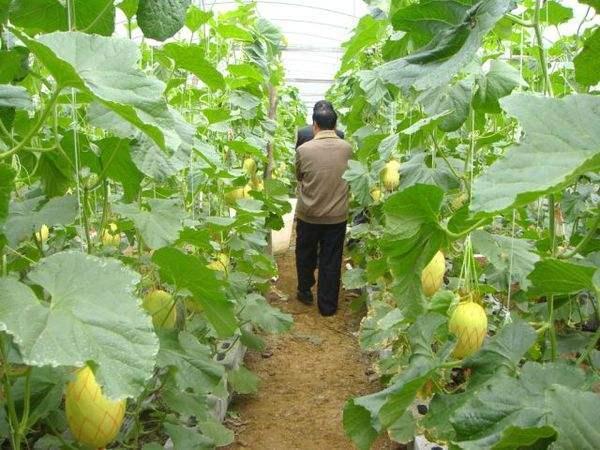
Hami Melon Greenhouse Cultivation Techniques in Luosu Village, Luokun Town
1 Improvement of greenhouse facilities
Carry out overall maintenance of the seven greenhouses originally built in Luosu Village, tidying of side ditches, and installation of drip irrigation facilities.
2 Preparation for seedling raising
2.1 Selecting suitable varieties and sowing dates
The variety raised in our town is Xizhoumi No. 25. This variety is a mid-to-late maturing variety with strong tolerance to low temperature and weak light conditions, a compact plant type, early maturity, high quality, high yield, and disease resistance, and it also has a certain adaptability to high temperatures. At the same time, according to the growth characteristics of the selected variety, sowing was determined to be carried out on August 24, and harvesting in early November.
2.2 Seed treatment
After dry heat treatment in a dryer at 70°C for 24 h, sow directly with dry seeds. The specific operation method is: wrap the hami melon seeds in paper or an envelope, then place them in the dryer, adjust the dryer temperature to 70°C, wait for the temperature to rise to the set temperature, and maintain the set temperature for 24 h to kill seed-borne pathogens such as fusarium wilt and gummy stem blight. Dry heat-treated seeds can be sown directly.
2.3 Seedling raising
Using the substrate seedling raising method, select standard 32-cell or 50-cell plug trays, add substrate into the plug trays; when adding substrate, it should not be too full. Place the filled plug trays neatly into the seedbed, water thoroughly, and begin sowing. After sowing is completed, water again to maintain suitable humidity for emergence. After sowing, control the daytime temperature at 28-30°C and the nighttime temperature at 20-25°C; seedlings emerge in 8-10 d. After large-scale emergence, reduce the temperature in time, maintaining 20-25°C during the day and 15-18°C at night to prevent leggy growth. During this period, water as little as possible or not at all.
2.4 Control of seedling raising temperature
At this time the temperature is relatively high and water evaporation is large. When building the seedbed, after leveling the bed bottom, lay a layer of non-woven fabric as a partition from the soil. The purposes are: first, to separate the seedbed soil from the seedling roots; second, non-woven fabric has a water-permeable effect and can prevent waterlogging in the seedbed from causing root rot.
3 Preparation for transplanting
3.1 Fertilization
Greatly increase the application of high-quality farmyard manure: apply 1 t of high-quality farmyard manure per 667 m2, use chemical fertilizer in appropriate amounts, and deep plow 25-40 cm.
3.2 Cultivation mode
Generally use trellis cultivation to make full use of space. For the autumn-winter crop, high ridges must be used (10-15 cm), covered with plastic film, and watered sufficiently at the bottom.
3.3 Control of temperature and humidity
Because different crops and crops at different growth and development stages have different requirements for temperature and humidity, variable temperature and variable humidity management should be adopted throughout the crop's entire growth cycle. When temperature and humidity conflict, priority should be given to reducing humidity; the main measures are ventilation and controlling watering.
3.4 Disinfection of the greenhouse
Before sowing, use high-temperature greenhouse sealing to kill pest and disease sources, or flood irrigation for about 15 d, or use chemical agents for thorough disinfection treatment. (6) Biological characteristics of hami melon: a high-temperature crop; during the seedling stage, the minimum temperature required is 18-20°C. Growth is hindered at 8-12°C. A deep-rooted crop; rooting depth can reach 1.5 m. A strong-light crop; short light duration delays the appearance of female flowers.
3.5 Preparation for transplanting
Apply base fertilizer: 1 ton of decomposed sheep manure, 50 kg of compound fertilizer, and 2 kg of carbendazim per 667 sq m, then shallow plow. Irrigate heavily; when the soil is dry, plow 35-40 cm when it does not stick to the shovel, cover with plastic film, and leave to dry and disinfect for 7-10 d. If conditions permit, it is best to use drip irrigation under film cultivation. Before planting, water thoroughly; especially for drip irrigation, water continuously for more than 12 h. Start sowing or transplanting 2-3 d after watering. After punching holes with a hole punch, move the seedlings into the holes, water, and cover with soil.
3.6 Control of soil temperature and planting density
As needed, when the soil temperature is stably above 12°C. Build ridges in the greenhouse: ridge spacing 1.3-1.5 m, ridge width 50-70 cm, ridge height 10-15 cm, and plant spacing 50-60 cm. Use double-row staggered sowing on one ridge, with 1500-2000 plants per 667 m2.
4 Management after hami melon transplanting
4.1 Water and fertilizer management
After planting, water to help the seedlings recover; water less before flowering and promote more root establishment; spray foliar fertilizer once during the seedling stage. After flowering, in order to promote fruit set, water appropriately; absolutely avoid flood irrigation to prevent leggy growth, which affects fruit set and net formation. Under normal circumstances, it can be determined according to seedling condition. If the plant clearly shows signs of water shortage (leaves soften at noon, and there are no water droplets on leaves and stem tips in the morning), water can be supplemented appropriately. If there is too much water, although the aboveground part grows rapidly, the underground part grows slowly, the plant root system is shallowly distributed, and later growth is affected. After fruiting, water to expand the melon; water reasonably according to weather conditions, and spray foliar fertilizer mainly based on p and k twice. Control water 10-15 d before harvest, maintain appropriate dryness, and improve quality.
4.2 Pruning and training
After the hami melon planting and seedling recovery period ends, it enters the vine extension growth stage. When the hami melon grows its 5th true leaf, the work of tying the vines should begin. Vine tying should be carried out promptly after the vines begin to extend. The time for tying vines is best on a sunny afternoon, because in the morning the melon vine tissues have sufficient water content and are easily damaged when tying. Tie the vines in a spiral shape, carried out irregularly as the vines grow, tying as they grow, until the vines cover the trellis. When tying vines, side vines growing from the base of the main vine should be removed early to avoid increasing the burden of nutrient transport by the main vine.
4.3 Management during the growth period
After entering the vine extension stage, the hami melon plants begin to grow rapidly. During this period, attention must be paid to the timing and method of watering to avoid fruit cracking.
4.4 Pest and disease control
The main pests and diseases of hami melon are: pests mainly include aphids, whiteflies, tobacco whiteflies, leafminers, red spiders, and yellow squash beetles; diseases mainly include powdery mildew, downy mildew, and gummy stem blight. Symptoms of powdery mildew: white mold layer patches first appear on the leaf surface or stems, then gradually increase and become larger.
Symptoms of downy mildew: at the initial stage of disease, water-soaked spots first appear on the leaves; under humid conditions, black mold layers are produced on the back of the leaves, then expand into irregular polygonal yellow-brown disease spots. The conditions for the occurrence of powdery mildew and downy mildew are high temperature and high humidity, and poor variety resistance. Agricultural measures are to select disease-resistant varieties and reduce temperature and humidity in the greenhouse.
Early control: for powdery mildew, use sulfur triadimefon wettable powder solution at 1000 times dilution or 70% thiophanate-methyl wettable powder at 700 times dilution for spraying, once every 7-10 d, for 3-4 consecutive times; for downy mildew, use propamocarb wettable powder at 500 times dilution, 72% curzate wettable powder at 500 times dilution, or 58% metalaxyl mancozeb wettable powder at 500 times dilution alternately, once every 5-7 d, for 4-5 consecutive times.
Gummy stem blight mainly occurs during the fruit expansion period; it is prone to occur when the root and stem area is too wet and soil aeration is poor. Oil-soaked spots appear on the nodes of the melon vines, and when humid there is a white mold layer and yellow-brown gum exudation.
Control measures: strengthen ventilation, keep the area around the root and stem dry, apply sufficient base fertilizer, and strictly prune. When disease occurs, use 70% thiophanate-methyl wettable powder at 200 times dilution and fenaminosulf to smear the stem base and infected parts.
For aphids and whiteflies, use 10% imidacloprid wettable powder at 1500 times dilution and acetamiprid for alternate spraying; for leafminers, use 10% fenpropathrin-malathion emulsifiable concentrate at 1500 times dilution or dimethoate for spraying; for red spiders and yellow squash beetles, use 1.8% abamectin emulsifiable concentrate at 4000 times dilution for spraying. Physical control can use yellow boards to control the amount of pest sources in the greenhouse.
5 Timely harvesting
Fruits should be harvested promptly when mature. For varieties sold locally, harvest at more than 90% maturity; for transport to other places, 80% is sufficient. Watering and water requirements: less during the seedling stage, sufficient during the vine extension and flowering stages, ample during the fruit expansion stage, and minimal during the maturity stage. Stop watering 7-10 days before harvest.
Because this was a trial planting, technical services could not keep up, resulting in low yield and affected melon quality. Next, the study of theoretical knowledge will be strengthened, integrating theory with practice and focusing on practice. In particular, the training of upward vines and pruning of side vines during the hami melon vine tying period should be followed up in a timely manner. For pests and diseases, adopt prevention as the main approach and integrated control.