How to Grow Seedless Grapes? A Detailed Explanation of Cultivation Techniques and Economic Value
Seedless Grape Cultivation Techniques and Economic Value
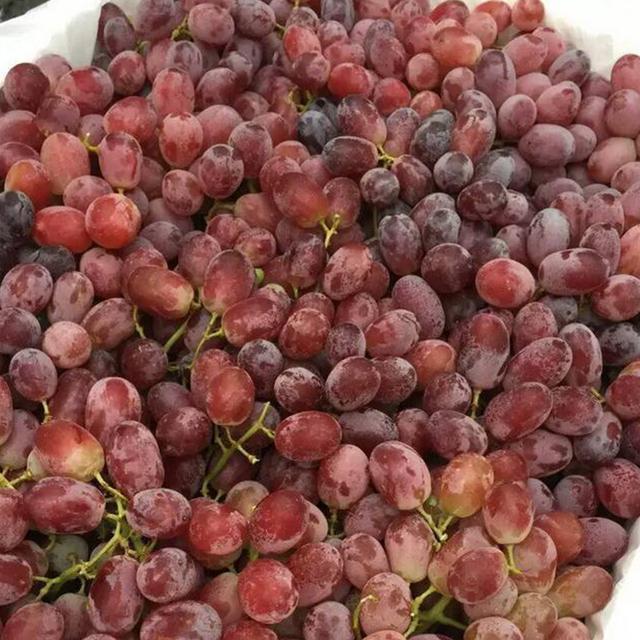
Grapes, also known as caolongzhu, are honored with the title "fruit of the gods." They belong to the Vitaceae family as deciduous vines, with cylindrical stems and ovate leaves with highly developed branching at the base. They are rich in nutritional value and can be eaten fresh or processed into grape juice, raisins, grape seed beverages, grape seed oil, and wine. The lees can be used to extract tartaric acid, and the roots and vines can be used as medicine, having the effects of stopping vomiting and preventing miscarriage. Seedless grapes were developed through breeding in China in the early 1990s. They possess excellent characteristics in appearance, quality, disease resistance, high yield, storability, early maturity, and stress resistance, and are convenient to eat. As consumer recognition continues to increase, the market share of seedless grapes is growing larger. In many countries, such as the United States, over 80% of table grapes are seedless varieties. It is predicted that seedless grapes will have good development prospects in the future [1].
1 Cultivation Techniques
1.1 Cultivation Environmental Conditions
When establishing a seedless grape vineyard, select a plot with no industrial pollution, no waste water, no dirty dust, loose and fertile soil, flat terrain, and good drainage and irrigation conditions in the surrounding area. Plots meeting the above conditions are suitable for seedless grape cultivation.
1.2 Variety Selection
Select seedless grape varieties with unique flavor, excellent quality, high yield, and good economic benefits for cultivation. Because the superiority of a variety is influenced by region, its excellent characteristics can only be expressed under certain natural environments and cultivation conditions. For example, the unique light and heat conditions of Xinjiang have produced the highest quality Crimson Seedless grapes. In addition, the excellent characteristics of varieties are influenced by time and have a certain timeliness. When planting varieties that were once excellent, their superior characteristics may degrade. For example, the grape variety Ribier, which was once promoted on a large scale, currently does not show obvious excellent characteristics.
1.3 Cultivation Key Points
Taking Crimson Seedless grapes as an example, they are suitable for cultivation in frost-free periods of over 165 d in arid or semi-arid regions. Trellises or "T"-shaped wide hedge trellises should be used, combined with medium and short cane pruning, to control vine growth and prevent excessive vigor from affecting fruiting and product quality. After fruiting, methods such as girdling and gibberellin treatment should be used to promote berry enlargement. Crimson Seedless grapes have many flower buds differentiated and are prone to high yields, but under excessive load or improper management conditions, they easily cause uneven berry coloration, which can be improved by appropriately removing old leaves and removing bags early. As another example, Flame Seedless grapes are suitable for cultivation with small trellises or "Y"-shaped wide hedge trellises. This variety has strong vigor, and medium and short cane pruning should be the main method. During cultivation, attention should be paid to controlling the load and the input of organic fertilizer, while also focusing on the application of phosphorus, potassium, and trace element fertilizers to promote early fruit ripening and improve quality.
1.4 Later Stage Management
Taking Crimson Seedless grapes as an example, grapevine saplings grow extremely fast. A large number of flower buds can form in the year of planting, and there will be a certain yield the following year. Therefore, trellises must be built and training must be done at planting. Trellis materials can include stone pillars, cement pillars, wooden stakes, and thick bamboo poles. Among these, thick bamboo poles have the lowest cost and are convenient for trellis construction.
1.4.1 Training and Pruning. Training and pruning of mature trees during the full fruiting period is particularly important for the yield of the fruit tree and the development of tree vigor, and is divided into winter and summer pruning. Winter pruning: mainly select and retain fruiting canes for the following year, maintaining 4~6 fruiting canes per plant, and generally adopting 2~3 bud short cane pruning for fruiting canes. Summer pruning: mainly involves pinching the main shoot multiple times to thicken the fruiting main cane; for secondary shoots, retain 1~2 leaves and repeatedly pinch to promote winter bud development and flower bud formation. At the same time, pinching can control excessive vegetative growth to preserve flowers and fruits and improve quality and yield.
1.4.2 Fertilizer and Water Management. During the growth and development process, seedless grapes need large amounts of elements such as nitrogen, phosphorus, potassium, and calcium, as well as trace elements such as iron, magnesium, and boron. Their demand for potassium is higher than for nitrogen and phosphorus. Seedless grape fertilization is mainly based on high-potassium compound fertilizer and phosphorus and potassium fertilizers. The average fertilization amount for mature trees is 30~45 t/hm2, and sprouting fertilizer, fruit-strengthening fertilizer, color-turning fertilizer, and post-harvest fertilizer need to be applied. For young trees, fertilization should stop before the end of August to facilitate cane maturation.
1.4.3 Pest and Disease Control. Seedless grapes are affected by pests and diseases to different degrees at different stages, and corresponding measures should be taken for control during the growth period, flowering period, and fruiting period respectively. During cultivation, attention should be paid to controlling yellow spider mites, red spider mites, leafhoppers, bird damage, clearwing moths, powdery mildew, gray mold, white rot, sunburn, gas burn, white rot, and other pest, disease, and bird damage.
1.4.4 Flower and Fruit Preservation. Reasonably retain canes, retain fruits, and apply fertilizer to maintain stable tree vigor and increase the thickness of the main cane. Control irrigation from 3~5 d before flowering through the flowering period, ensure drainage during the rainy season, pinch at the right time before flowering and control secondary shoots, and about 1 week before flowering retain 10~12 leaves and pinch the cluster tip, removing secondary clusters [Jishan Huayao].
2 Economic Value
Grape cultivation has a long history in China and is also one of the main fruit tree species cultivated in China. With the improvement of people's living standards, consumer demand is gradually changing, and the grape planting area is also expanding rapidly. Market demand for table grapes is huge, so there are relatively good planting prospects. In recent years, the price of fresh grapes has been stable with some increase. The average income of conventional varieties is 300,000~450,000 yuan/hm2, and the average income of high-grade table varieties is as high as 600,000~750,000 yuan/hm2.
Grapes are not only delicious but also highly nutritious. Besides being eaten fresh, the fruit can also be processed into various products such as wine, grape juice, grape vinegar, raisins, and canned goods. In ripe grape berries, in addition to containing over 70% free water, colloid-bound water, and chemically bound water, they also contain carbohydrates, organic acids, minerals, amino acids, and various vitamins and other components beneficial to the human body and essential to the human body. Most of the beneficial substances in grapes can be directly absorbed by the human body and help with digestion. Research shows that the resveratrol content in grapes is relatively high, which has an inhibitory effect on some cancers induced by products catalyzed by cyclooxygenase and catalase, and can also regulate cholesterol and resist platelet aggregation, thereby having obvious preventive and auxiliary therapeutic effects on cardiovascular diseases. Therefore, grapes are excellent health food, and cultivating grapes can obtain relatively good economic benefits, social benefits, and ecological benefits.