High-efficiency Cultivation Technique of Two Rounds of Mother Fern Retention and Three Harvests of Spears for Asparagus in Pinghu, Zhejiang
High-efficiency Cultivation Technique of Two Rounds of Mother Fern Retention and Three Harvests of Spears for Asparagus in Pinghu, Zhejiang
Fund projects: National Bulk Vegetable Industry Technology System Project (CARS-25), Key Laboratory of Horticultural Crop Biology and Germplasm Creation, Ministry of Agriculture
Pinghu City is located in the Hangjiahu Plain, with a mild climate, fertile soil, four distinct seasons, and a frost-free period of more than 200 d (days) throughout the year, making it suitable for the growth of asparagus and many other crops. Pinghu began trial planting of asparagus in 2003. On the basis of successfully growing asparagus by using spent mushroom substrate waste to improve and fertilize the soil, it promoted the "rice-mushroom-asparagus" circular production model (that is, the rice straw produced after rice harvest is used as the culture material for mushroom cultivation, and the spent mushroom substrate waste produced after mushroom cultivation is composted and fermented as the base fertilizer for asparagus planting) and the asparagus technique of retaining mother ferns 2 times and harvesting spears 3 times (that is, retaining mother ferns twice in spring and autumn, and harvesting spears in spring, summer and autumn 3 times throughout the year). In the production process, ecological circular cultivation techniques such as rain-shelter cultivation, increased application of organic fertilizer, integrated water and fertilizer high-efficiency water-saving irrigation, and clean production by crushing mother ferns and returning them to the field were applied in a supporting manner, reducing the use of chemical fertilizers and pesticides, protecting the ecological environment, and achieving coordinated development of production and ecology. At present, the asparagus planting area in Pinghu has reached 603.6 hm2 (9 054 mu), making it a major asparagus production base in Zhejiang Province. In 2017, Pinghu adopted the cultivation technique of retaining mother ferns 2 times and harvesting spears 3 times, achieving an average commercial tender spear yield of 1 570 kg per 667 m2, an output value of 12 899 yuan, and a benefit of 5 340 yuan, increasing yield and income by more than 10% compared with traditional asparagus cultivation methods. Fresh asparagus from Pinghu is welcomed by consumers and marketers for its thick stems, tender spears and sweet, glutinous taste. 90% of the products sell well in cities such as Shanghai, Hangzhou and Suzhou, and are also exported to Beijing, Hong Kong and other places, with very significant social and economic benefits. The high-efficiency cultivation technique of retaining mother ferns 2 times and harvesting spears 3 times for asparagus in Pinghu is introduced in detail as follows.
1 Variety selection
1.1 Grande An F1 double hybrid asparagus variety introduced from the United States, with thick and large spears, uniform thickness, straight spears, tightly closed scales, tall plants, strong growth vigor, and good high and stable yield. The tender stems are green, crystal-clear and smooth, with a relatively good taste. Its greatest advantage is its good comprehensive traits, which can meet the requirements of the fresh market and processing export in many aspects.
1.2 Green Dragon A variety introduced from the United States, high quality and high yield, with delicate tender stem texture, good green color, uniform thickness, high branching point, and strong resistance, suitable for processing and fresh sales. The tender stems are plump, glossy green, and uniform in size, with tightly wrapped scales at the tip. The height of the first branch is 48.1 cm, and the loose-head rate is relatively low. It has good adaptability, strong resistance, is not easily susceptible to disease, and has strong tolerance to root rot and stem blight. It has a short dormancy period and is suitable for open-field and protected cultivation.
1.3 California Early An F1 hybrid introduced from the United States, with strong growth vigor and tall plants; short dormancy period and good early harvest, about 10 d (days) earlier than ordinary varieties, with a long harvest period throughout the year and good yield. The spears of this variety are uniform in size, dark green, with fewer light purple parts, and the spear tips are conical with tightly wrapped scales.
2 Seedling raising
2.1 Nutrient soil preparation Take paddy field soil, mix 5 kg of superphosphate into each cubic meter of soil, crush with a machine and mix evenly, then fill into 10 cm x 10 cm nutrient pots for later use. Commercial seedling substrate can also be purchased directly.
2.2 Seed treatment After washing seeds that have not been coated, first soak them in warm water at 55-60 degC for 15 min (minutes) with constant stirring, then soak them in normal-temperature water at 25-30 degC for 72 h (hours).
2.3 Sowing and seedling raising Sowing time: spring sowing from early March to early May, summer sowing from mid-May to early July, autumn sowing from mid-August to mid-September. In production, autumn sowing is mainly used, with a seed rate of 45-60 g per 667 m2 of field. Nutrient pot seedling raising is adopted, with a seedbed width of 1.1 m. Two days before sowing, drench the pot soil thoroughly with 600 times dilution of 50% carbendazim wettable powder, and sow 1 seed per pot. After sowing, cover the seeds with medicated soil. The medicated soil is prepared by mixing 10 g of 30% carbendazim and thiram (Miaojundi) wettable powder with 20 kg of fine soil, and it should be pre-moistened two days before sowing. The covering thickness is about 1 cm, and after sowing cover with plastic film to retain moisture. For spring seedling raising, build a small arch shed for insulation; for autumn seedling raising, cover with shade net for cooling. Plug tray seedling raising can also be used.
2.4 Seedbed management After spring sowing, keep the seedbed soil moist. Once 20% of seedlings emerge, remove the plastic film to prevent seedling damage from removing the film too late. After more than 70% emergence, the small arch shed should be ventilated in time to prevent excessive daytime temperature inside the small arch shed (above 30 degC) from burning the seedlings, and the night temperature should be kept above 13 degC. When the air temperature stabilizes at 20 degC and the seedlings are 20 cm tall, promptly remove the film of the small arch shed or adopt the method of ventilating without removing the film to enhance light. 7 d (days) before transplanting, ventilate and provide light, and control water to harden the seedlings, with the temperature preferably 25-30 degC. Two days before transplanting, spray with 1 000 times dilution of 50% carbendazim wettable powder plus 3 000 times dilution of 10% imidacloprid wettable powder to prevent diseases and pests, and transplant with the pesticide. For autumn sowing, cover the outside of the greenhouse with a shade net, and add a small arch shed outside the seedbed covered with a shade net for double-layer shading and cooling. The small arch shed should be ventilated in time to prevent excessive daytime temperature inside the small arch shed (above 35 degC) from burning the seedlings. In the following spring, when the ground temperature stabilizes above 15 degC, field planting can be carried out.
Water management: If the soil in the nutrient pot turns white, be sure to water thoroughly in the morning or evening on a sunny day. After 7 d (days), if the soil in the nutrient pot turns white again, water thoroughly again. After spring sowing and summer sowing, transplant when the seedlings have 3-4 branches and the plant height is more than 25 cm, 45-60 d (days) after sowing.
3 Field planting
3.1 Land preparation Generally, land preparation is carried out 10-15 d (days) before field planting. Choose sandy loam plots with deep, loose soil, rich in organic matter, low groundwater level, good drainage and irrigation, and pH 6-8. The soil texture in Pinghu is somewhat clayey and can be improved by using nutrient-rich spent mushroom substrate waste. From May to July, collect spent mushroom substrate waste in a centralized manner for composting. In principle, the compost pile should preferably be 2 m wide and 1.5 m high, with unlimited length. Turn the material once every 15 d (days), for a total of 3-4 turns. After fermentation is completed from August to December, apply it to the soil as base fertilizer. Generally, apply 3 000-5 000 kg per 667 m2, deeply plow it into the soil, and then level the land.
3.2 Field planting Use GP-C622, GP-C825, GP-C832 single-span or multi-span steel-frame greenhouses for full-process rain-shelter cultivation. For a 6 m wide greenhouse, plant 4 rows of asparagus. The distance between the planting centers of the 1st and 4th rows of asparagus and the edge of the greenhouse should be about 1.0 m; the distance between the planting centers of the 1st and 2nd rows and between the 3rd and 4th rows of asparagus is 1.4 m; and the distance between the planting centers of the 2nd and 3rd rows of asparagus is 1.2 m. For an 8 m wide greenhouse, plant 6 rows of asparagus. The distance between the planting centers of the 1st and 6th rows of asparagus and the edge of the greenhouse should be about 1.0 m, and the distance between the planting centers of the 6 rows of asparagus is all about 1.2 m. The plant spacing should be controlled at 25-40 cm. For an 8 m wide greenhouse, plant 1 250-2 000 plants per 667 m2; for a 6 m wide greenhouse, plant 1 111-1 780 plants per 667 m2. At planting, open a planting furrow 10-15 cm deep in the middle of the bed (bed width 60 cm), and broadcast 3% phoxim granules in the planting furrow to control underground pests, with a dosage of 3-4 kg per 667 m2. At planting, orient the buds of the seedlings in the same direction, spread the root system, cover with 5-6 cm of soil, and drench the planting bed thoroughly within 3 h (hours) after planting.
4 Management in the first year after field planting
In production, autumn sowing is mainly used. After field planting in the following spring until the mother ferns are cut in summer, no commercial spears are harvested. After cutting the mother ferns in summer, retain 3-4 mother ferns per plant. In combination with summer cutting of mother ferns, clean the field and loosen the soil, and apply 7 kg per 667 m2 of Israeli potassium nitrate calcium treasure (N-P-K-Ca 15-5-35-25, the same below) water-soluble fertilizer, once every 15 d (days), for a total of 2 applications. Commercial spears can be harvested 30 d (days) after retaining the mother ferns. During the spear harvesting period, topdress once every 15-20 d (days), applying 7 kg per 667 m2 of Israeli potassium nitrate calcium treasure water-soluble fertilizer each time, for a total of 6 applications.
5 Field management
5.1 Water management Micro-drip irrigation for water-saving irrigation is recommended. During the asparagus growth period, the suitable soil moisture content is such that the soil around the drip line on the planting bed is moist, but no water is visible in the furrow, and the sole of the shoe does not pick up soil when walking in the furrow.
5.2 Fertilizer management According to the growth and development needs of asparagus and the characteristics of integrated water and fertilizer application, focus on applying winter sprouting fertilizer, summer spear fertilizer, and autumn growth fertilizer throughout the year, applied in the form of water-soluble fertilizer through micro-drip irrigation, which can save labor and improve fertilizer efficiency. Summer spear fertilizer after spring mother ferns are retained and grown into plants: from mid-May to early June, after spring mother ferns are retained and grown into plants, apply 7 kg per 667 m2 of Israeli potassium nitrate calcium treasure water-soluble fertilizer, once every 15 d (days), for a total of 2 applications. Autumn growth fertilizer after summer field cleaning: in combination with summer field cleaning and soil loosening, apply 7 kg per 667 m2 of Israeli potassium nitrate calcium treasure water-soluble fertilizer, once every 15 d (days), for a total of 2 applications. Sprouting fertilizer in mid-to-late December: in combination with winter field cleaning and intertillage soil loosening, deeply apply 1 500-2 000 kg per 667 m2 of spent mushroom substrate organic fertilizer, 50-60 kg of Lion brand potassium sulfate compound fertilizer (N-P-K 15-15-15), and 200 kg of rapeseed cake fertilizer. After fertilization, open furrows and level the bed surface.
During the spear harvesting period, according to the growth of the asparagus mother ferns or the spear harvesting situation, apply 7 kg per 667 m2 of Israeli potassium nitrate calcium treasure water-soluble fertilizer, once every 15-20 d (days), for a total of 6-8 applications. The integrated water and fertilizer technique can reduce humidity in the greenhouse and effectively control the occurrence of asparagus root rot. However, when laying drip irrigation tape, be careful not to place it too close to the asparagus roots. Generally, place the drip irrigation tape 15 cm away from the asparagus roots to prevent waterlogging in the root zone from inducing asparagus root rot.
5.3 Plant management
5.3.1 Retaining spring mother ferns When spring asparagus harvesting continues to late March to early-to-mid April, retain mother ferns according to market conditions. Select tender stems that are robust, free of disease and insect spots, and relatively thick (about 1 cm in diameter) for retention. For two-year-old asparagus, retain 3-4 per plant; for asparagus three years old and above, retain 4-5 per plant. The retained mother ferns should be evenly distributed. When the plant height is 1.3-1.5 m, pinch off the growing tip and remove residual leaves. Generally, set 1 wooden (bamboo) stake 1.3 m high every 1.5-2.0 m. When the aboveground stems form, use cloth strips or nylon rope to gather the aboveground stems between two stakes, and let the branches and leaves spread naturally. Never tie the plants together.
5.3.2 Retaining autumn mother ferns From mid-June to early August, carry out summer field cleaning at the appropriate time according to the duration of summer asparagus harvesting and weather conditions, taking care to avoid the high-temperature season in late July. During field cleaning (mechanical field cleaning can be chosen), choose sunny days to cut off aboveground plants and weeds, and move them out of the asparagus field for centralized treatment. After loosening the soil, drench the asparagus crown and surrounding soil with fungicides such as 600 times dilution of 40% carbendazim and mancozeb wettable powder for soil disinfection.
After summer field cleaning, retain autumn mother ferns. For one- and two-year-old asparagus, retain 3-4 per plant; for asparagus three years old and above, retain 4-5 per plant. For asparagus in an 8 m wide greenhouse, pinch off the growing tip when the plant height is 1.5 m; for a 6 m wide greenhouse, pinch off the growing tip when the plant height is 1.3 m. Set up supports in time and run double lines to prevent lodging.
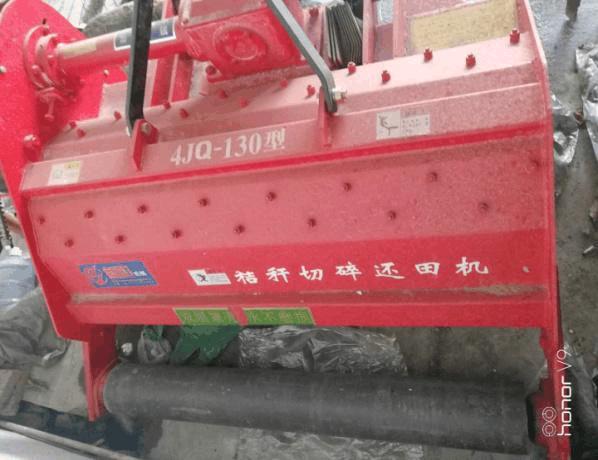
5.4 Winter field cleaning In mid-December, after the aboveground plants of asparagus have completely withered, carry out field cleaning. During field cleaning, choose sunny weather and use a greenhouse king four-wheel tractor equipped with a 4JQ-130 typestraw chopper and returning machineto replace manual cutting of mother ferns for field cleaning (Figure 1). Mechanical field cleaning can process 867.1 m2 of asparagus straw per hour, saving labor by more than 5 times. After crushing, the mother ferns are gathered in the waste treatment area for composting and fermentation. After field cleaning, pay attention to soil disinfection. Before disinfection, first scrape off 23 cm of surface soil around the asparagus crown, expose it to the sun for 2-3 d (days), then drench the asparagus crown and surrounding soil with 600 times dilution of 40% carbendazim and mancozeb wettable powder or 300 times dilution of 45% lime sulfur mixture.
Figure 1 Mechanized cutting of mother ferns for field cleaning using a straw chopper and returning machine
Figure 1 Mechanized cutting of mother ferns for field cleaning using a straw chopper and returning machine
6 Pest and disease control
6.1 Pest control The main pests of asparagus include beet armyworm, tobacco cutworm, thrips, aphids, etc., among which beet armyworm causes the most serious damage. Beet armyworm occurs 6 generations per year, and tobacco cutworm occurs 5 generations per year. July to October is the peak damage period for these two noctuid pests, mainly damaging the 3rd, 4th and 5th generations. Their larvae can damage asparagus tender stems, the green parts of aboveground stems, and cladodes. When damage is severe, tender stems may fail to sprout normally or become deformed, and the green parts of aboveground stems and cladodes may all be damaged. For noctuid pests, insect sex pheromone lures can be used for trapping and killing. Hang 1-2 special traps per 667 m2 in the greenhouse, at a height slightly higher than the asparagus mother ferns, and adjust them promptly as the mother ferns grow taller. During the young larval stage, spray with 3 000 times dilution of 20% chlorantraniliprole suspension concentrate, with a pre-harvest interval of 1 d (day); 3 000 times dilution of 15% indoxacarb suspension concentrate, with a pre-harvest interval of 3 d (days); 2 500-4 500 times dilution of 6% spinetoram suspension concentrate, with a pre-harvest interval of 5 d (days); or 1 000 times dilution of 10% chlorfenapyr suspension concentrate, with a pre-harvest interval of 10 d (days). The above pesticides should be sprayed 1-2 times depending on the pest situation. Weeds such as emarginate amaranth in the greenhouse are also major host plants damaged by pests such as beet armyworm, and should be sprayed together.
Thrips and aphids can be trapped and killed with colored boards. Yellow boards and blue boards both have significant trapping and killing effects on thrips, among which blue boards have the best trapping and killing effect. When thrips and aphids occur mixed in the field, yellow boards can also be used for trapping and killing to achieve the purpose of trapping and killing both pests. The hanging height of the colored boards should be slightly higher than the asparagus mother ferns and adjusted promptly as the mother ferns grow taller.
Hang 30-40 blue (yellow) boards of 25 cm x 40 cm per 667 m2. In the early stage of thrips occurrence, spray with 2 500-4 500 times dilution of 6% spinetoram suspension concentrate or 2 000 times dilution of 10% cyantraniliprole dispersible oil suspension concentrate for control, with a pre-harvest interval of 7 d (days), and only 1 spray is needed. In the early stage of aphid occurrence, spray with 15 000 times dilution of 70% imidacloprid water-dispersible granules or 2 000 times dilution of 10% cyantraniliprole dispersible oil suspension concentrate, with a pre-harvest interval of 7 d (days), and only 1 spray.
In Pinghu, no damage to asparagus by underground pests such as black cutworm has been found. According to the author's investigation, the main pest damaging the base of asparagus is beet armyworm, whose larvae can feed at the base of asparagus and are often mistaken for damage by black cutworm. When controlling, pay attention to spraying the ground.
6.2 Disease control The main diseases of asparagus include root rot, stem blight, etc.
Root rot: Under the greenhouse rain-shelter cultivation model, asparagus root rot occurs most seriously. It can occur in all growth seasons of asparagus, especially in the hot and rainy season. The inclination angle of the greenhouse should preferably be close to 90 deg. If the inclination angle is too gentle, rainwater splashing in will lead to more serious occurrence of asparagus root rot on both sides of the greenhouse. On the basis of good winter field cleaning, carry out soil disinfection in time. In individual plots where root rot occurs, in the early stage of the disease, drench the roots with 500 times dilution of 50% carbendazim wettable powder or 600 times dilution of Bacillus subtilis wettable powder containing 1 000 billion spores per g. Promptly handle diseased plants with severe root rot. After digging them out, spread quicklime and disinfect the soil with 500 times dilution of 50% carbendazim wettable powder. Rainwater is the carrier for the spread of pathogen spores, and avoiding water flow transmission is the key to preventing the occurrence of asparagus root rot. Therefore, on the basis of rain-shelter cultivation, do a good job in opening furrows to reduce humidity, lowering the groundwater level, and promptly draining accumulated water when the rainy season comes.
Stem blight: Before the occurrence of asparagus stem blight or in the early stage of the disease, spray on the leaves with 1 000-1 500 times dilution of 10% difenoconazole water-dispersible granules, with a pre-harvest interval of 15 d (days); or 500 times dilution of 80% mancozeb wettable powder, or 350 times dilution of 65% zineb wettable powder, or 600 times dilution of 70% thiophanate-methyl wettable powder, with a pre-harvest interval of 7 d (days), and spray 2-3 times depending on the disease situation. The mother ferns can also be smeared with 50 times dilution of 50% carbendazim wettable powder or 100 times dilution of 25% azoxystrobin suspension concentrate.
6.3 Physiological disease control During the growth period of asparagus, tender stems may crack, splitting longitudinally into brown deep openings and causing rot. This is mainly a physiological disease caused by unbalanced water supply in the soil, that is, long-term drought in the soil followed by sudden watering. The key to preventing cracking is timely irrigation, maintaining relatively stable soil moisture content, and preventing alternating dry and wet conditions.
7 Harvesting
Asparagus can begin to be harvested in the same year after field planting. Generally, it enters the full production period in the 3rd year and can be harvested continuously for 15-20 a (years). When the aboveground tender stems grow to about 30 cm, they can be harvested, generally in the morning using a special asparagus knife. In the high-temperature season, tender stems grow quickly. To ensure quality, they can be harvested 2 times a day. The harvested asparagus is graded, sorted and packaged according to customer requirements, generally divided into 3 grades: stem diameter 0.8 cm (length 22 cm), 0.8-1.2 cm (length 26 cm), and more than 1.2 cm (length 32 cm).
Harvesting is divided into spring, summer and autumn each year. Spring spears are harvested from February to March, with a yield of 300-400 kg per 667 m2, accounting for 30% of the annual yield, and an output value of 4 000-5 000 yuan, accounting for 40% of the annual output value. Summer spears are harvested from May to August, with a yield of 600-700 kg per 667 m2, accounting for 45% of the annual yield, and an output value of 3 400-4 000 yuan, accounting for 30% of the annual output value. Autumn spears are harvested from September to October, with a yield of 400-500 kg per 667 m2, accounting for 25% of the annual yield, and an output value of 3 200-4 000 yuan, accounting for about 30% of the annual output value. In total, the annual commercial tender spear yield per 667 m2 is about 1 500 kg, the output value is about 13 000 yuan, and the benefit is about 5 300 yuan.