The Concepts of "Pin" and "Zhong" in Orchids Explained Clearly in One Go
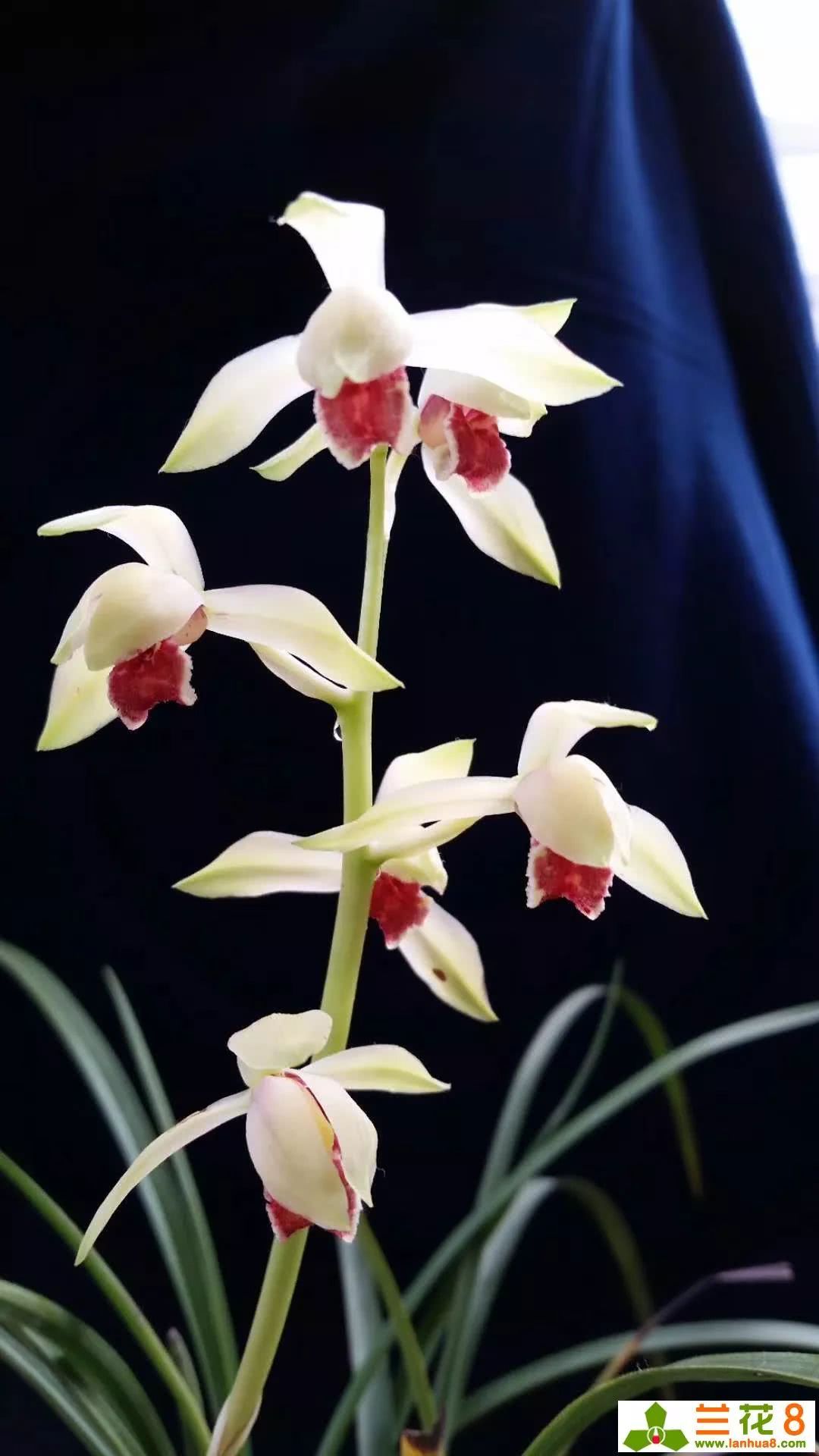
Promote Chinese orchid culture, spread orchid knowledge
At present, research on cultivated orchids in orchid circles has entered an unprecedented new stage. Orchid experts, scholars and other orchid enthusiasts from south to north are all extremely focused on new progress in cultivated orchid research. Based on what is currently known, the cultivation traits of Chinese orchids today are roughly divided into leaf trait types, flower trait types and form trait types. Leaf trait types emphasize orchid trait characteristics such as marginal variegation, full-rim variegation, striped variegation, crystal variegation and line variegation; flower trait types focus on exploring trait characteristics such as flower shape, flower color, flower quality, flower charm and fragrance; form trait types tend toward research on orchid biological forms such as leaf shape and plant posture.
In my personal view, any variety of cultivated orchid has a distinction between its "pin" and its "zhong". The so-called "pin" refers to the grade, quality, appearance and character of a cultivated orchid. The so-called "zhong" refers to a group of cultivated orchids that share common hereditary characteristics in ecology and morphology. Under normal circumstances, "pin" reflects the external appearance of a cultivated orchid, highlighting its relatively stable external quality. "Zhong" reflects the internal constitution of a cultivated orchid, highlighting its absolutely stable internal quality. When we hope for three generations of a cultivated orchid joined together or for repeat blooming for three years, what we pursue is the "zhong" of the cultivated orchid rather than its "pin". We deeply fear that a exquisitely beautiful cultivated orchid will bloom only briefly, and that is why we pay more attention to the "zhong" of the cultivated orchid.
The reason many people new to orchids run investment risks is that they have not clarified the relationship between the "pin" and the "zhong" of cultivated orchids. As soon as they see an orchid with outstanding appearance, they rush to buy it, and once the quality degrades, it causes risk losses. The reason clever orchid growers "gamble" year after year and make money year after year is that what they win by "gambling" is "zhong grass" rather than "mute grass"; what they watch closely is a cultivated orchid with multiple shoots joined together, blooming year after year, and sharing common hereditary characteristics in both ecology and morphology.
It is generally believed that "pin" is phenomenon and "zhong" is essence; "pin" is the external manifestation of "zhong", and "zhong" is the internal quality of "pin"; "pin" is the foundation, and "zhong" is the key; there is neither a "zhong" without "pin", nor a "pin" without "zhong". In short, "pin" and "zhong" restrain, influence, act upon and transform each other, forming a cultivated orchid system that both follows discoverable rules and is extremely complex. From the general rules of variety selection, a cultivated orchid that exists as "pin" now may very likely degenerate in the future into an ordinary grass variety with no trace of its orchid trait characteristics left; while a cultivated orchid that exists as "zhong" now should still, after many years, remain a variety that surpasses all others in beauty.
From the special rules of ecological and morphological change in cultivated orchids, a cultivated orchid that exists as "pin" now may perhaps, after many years, evolve into a "zhong", a variety with stable genetic genes and identical biological traits. Of course, a cultivated orchid that exists as "zhong" may also degenerate into "pin" grass with unstable genetic genes. The purpose of studying the "pin" and "zhong" of cultivated orchids is to find general rules of high practical value and great guiding significance, and thereby guide orchid-related activities.
Under normal circumstances, a cultivated orchid that grows naturally, has a well-developed root system, is robust, has multiple shoots joined together and blooms year after year is a cultivated orchid in the sense of a variety; a single shoot standing alone, old weak diseased grass, artificially beautified grass and accidental wonder grass should only be classified as cultivated orchids of the "pin" category. The purpose of making these previously unspoken little common-sense points public is to let orchid friends all understand the basic essentials of variety orchids and gambling grass, to have more contact with the mighty "zhong" orchids, and not to be confused by "pin" grass that changes at a turn.
Orchid Bar, your good teacher on the path of growing orchids