How commercial orchids are born step by step
Promote Chinese orchid culture, spread orchid knowledge
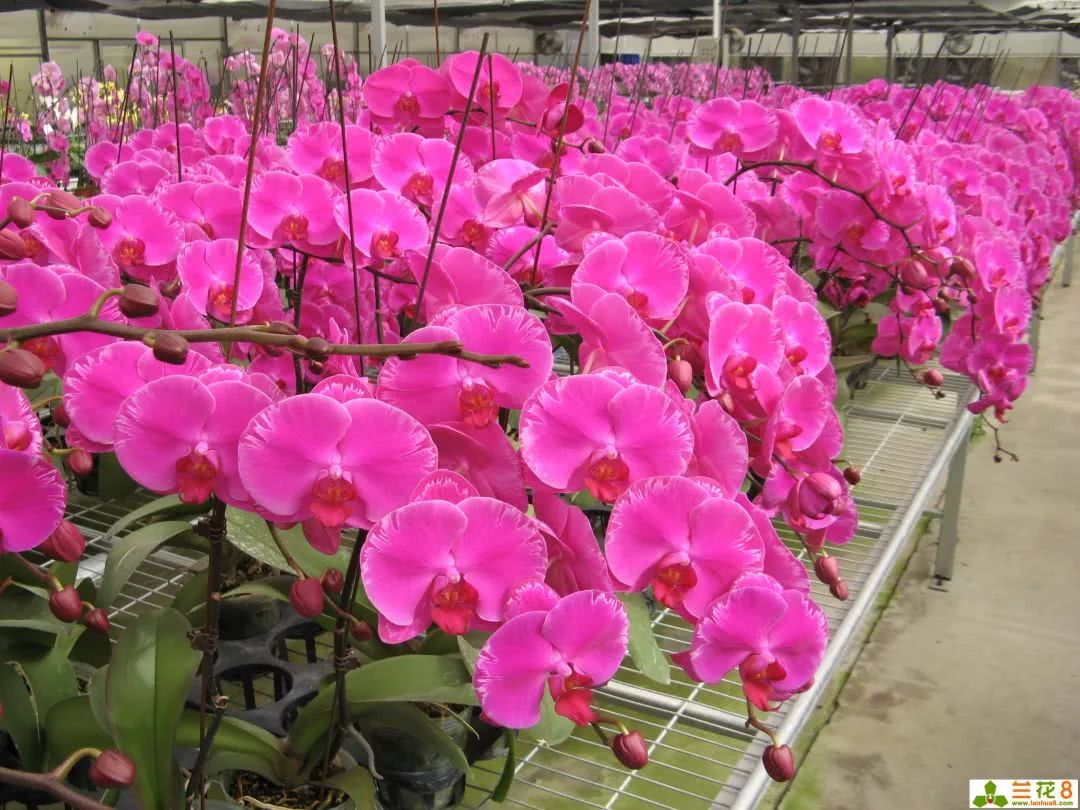
After years of effort, the orchid factory has cultivated orchids growing on the cliffs of the Hawaiian Islands into one fine potted orchid after another, and sold them all over the world, so that more people can admire their distinctive beauty.
The orchid factory is located on the island of Hawaii, and its main work is domesticating and hybridizing local exotic orchids to cultivate more novel potted orchids. According to the 1999 horticultural crop statistics report of the United States Department of Agriculture, orchids have become the country's second best-selling potted flower after the poinsettia. For the orchid factory, this is undoubtedly exciting good news. In this favorable overall environment, the company's sales performance has continued to climb in recent years.
Today, the company focuses on local Phalaenopsis species, trying every means to carry out large-scale production, so that these "aloof" orchids can smoothly enter ordinary households and add color and delight to people's lives.
In the minds of company owner Jim McCreary and manager Glenn Buffay, a truly fine orchid should be a very perfect plant. Eighty percent of the product quality standards for orchids focus on three aspects: flower color, plant form and growth vigor, while the remaining 20 percent is judged on the specifications, shape and root growth capacity of the pot. "Products that meet the standards are generally grown in 4-inch pots, with plant height usually between 24 cm and 36 cm," Glenn introduced. "According to consumer surveys conducted by the company, customers like orchids with thick flower spikes, large numbers of flower buds, brilliant flower colors and healthy leaves. In addition, they also hope the orchids will have a good aesthetic and artistic effect, giving people a more wonderful visual enjoyment."
In the production workshop, Jim showed the company's products while saying: "To produce distinctive orchids, the first step is to increase product varieties, that is, to prepare for hybridization. Because the botanical habits of orchids are rather special, it is very difficult to complete variety hybridization directly by pollination. Therefore, hybridization becomes a process in the entire production chain that consumes considerable time and energy."
Hybridization begins with artificial pollination, and every step requires workers to devote themselves wholeheartedly. "Out of 100 samples, about 3 plants will form seed-bearing pods. The seeds inside the pods are taken out and placed in test tubes, and then uniformly placed in the company's laboratory for culture. This man-made 'cradle' is a sealed culture cabinet that has been sterilized and equipped with an advanced air filter and a rubber glove-type handle. Based on years of experience, each hybridization experiment requires at least 200 orchid samples to obtain the desired product traits."
Orchid candidate seedlings from successful hybridization must be sent to an advanced biological laboratory in California for virus screening, and only after confirmation of qualification can they be put into production. The company has been engaged in this research for 16 years. During this period, the California laboratory has helped the company detect 24 orchid viruses. Through the experimenters' continuous improvement of orchid varieties, the company's orchid quality has kept improving, and its products are exported to Asian countries such as Thailand for asexual propagation and flask culture production. According to Glenn's estimate, the company has already used about 500 orchid species to breed more than 80 orchid varieties.
David Miranda is the department manager in charge of deflasking production at the company. According to David, in order to safely remove robust orchids from the bottles, they usually wrap the orchid seedlings with cloth material before bottling. This creates a good isolating layer between the plant and the glass, so that when the orchids are deflasked, the plants will not be damaged.
When deflasking orchids, workers place the culture bottles in buckets and carefully shake them. The aqueous solution slowly enters the bottles, and after the roots and medium absorb water, they become loose, so the orchids can be easily taken out, and the medium can also be smoothly peeled off the seedlings. According to plant size, preliminary product grading can also be carried out at the same time as this operation. The company completes at least 800,000 orchid deflasking operations each year, which shows the sheer scale of its orchid production.
After deflasking is completed, workers plant the young plants in 72-cell plug trays. "The growing medium we use is usually rinsed coconut coir and perlite," David said. "Once orchid young plants enter the trays, insecticides and fungicides must be used. Because the growing medium contains fungal substances, and some media are also bacteria carriers, sterilization is an inevitable move to prevent disease."
In addition to sterilization, David also uses integrated pest management to reduce the occurrence of pests. He hangs sticky traps next to the growing benches holding the plug trays to observe pest conditions. In addition, he also uses insect growth hormones to interrupt the life cycle of pests. "Understanding insects' living habits has saved us a great deal of money on pest and disease control. Moreover, the pest control measures now adopted are safe and scientific, and will not cause harm to plants or personnel."
From culture bottle to greenhouse, the seedlings' living environment and sources of nutrient supply have both changed, so nutrient and water supply are especially important at this time. David said: "According to weather conditions, we fertilize with irrigation sprinklers 2 to 3 times a week. As the growth stage and season change, we also adjust the application concentration of various nutrient substances during fertilization based on the principle of nutrient balance. All irrigation water comes from the company's own wells. In addition to purifying the water quality, workers also supplement the water with nutrients containing calcium and magnesium at any time according to growth needs."
In Hawaii, low temperature is the biggest problem facing orchid production. Therefore, all of the company's orchids are grown in greenhouses with automatic temperature and humidity regulation. In order to dissipate heat as quickly as possible, the greenhouses are also equipped with side windows and skylights that can be opened and closed automatically. To reduce temperature and light intensity, the company uses shade netting with a shading rate of 60 percent.
Monica Morrow is the company's office manager. According to her, most of the company's customers are local florists. To save delivery time, the company uses Federal Express to ship products. Every year they must deliver at least 1 million product packages to meet market demand.
In addition, the company's website also provides flower growers everywhere with information such as variety photos, forecasts of product trends and key cultivation techniques, and offers services such as online ordering. "In order to let more orchid producers come into contact with our products, the company not only strictly controls quality, improves the level of factory production and makes every effort to control pests and diseases, but also keeps product prices as low as possible. The purpose of doing this is to let the orchids of the Hawaiian Islands bloom in more places and let more people smell the fragrance of the flowers," Jim said confidently.
Orchid Bar, your good teacher on the road to growing orchids