Seven tenacious species in the plant kingdom: still growing freely after tens of millions of years
In the animal kingdom, the "cockroach" has been on Earth since ancient times, and its species toughness is evident from the fact that it has not gone extinct. But you should know that although plants depend far more on the external environment than animals, in the plant kingdom there are many more species tougher than cockroaches! Let's see who the most famous "seven tough ones" are~
!
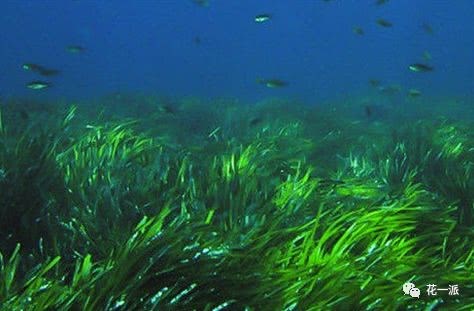
First: Mediterranean seagrass [100,000 years]
Mediterranean seagrass is considered the longest-living plant ever discovered in the world so far. It is currently endangered. The secret to its longevity lies in its characteristic asexual reproduction as a marine angiosperm.
Second: Pando grove [80,000 years]
The vast-branched "Pando" began sprouting at least 80,000 years ago, when our human ancestors still lived in Africa. This means Pando predates the earliest Homo sapiens by 800,000 years.
Third: Tasmanian Lomatia tasmanica [43,000 years]
Tasmanian Lomatia tasmanica, with green leaves and pink flowers, has no fruit or seeds. Currently only 500 remain worldwide, and it is an endangered species. The secret to its longevity is continuing life through vegetative reproduction; when branches fall off, new branches automatically grow.
Fourth: Jurupa oak [13,000 years]
The Jurupa oak cannot grow acorns, and these plants are basically "sterile plants." Every 40-50 years, wildfires burn the shrubland, and they sprout and grow again on the ground; the newly sprouted plants are all located within the radius of the previous shrubland.
Fifth: Mojave yucca [12,000 years]
The Mojave yucca grows extremely slowly, increasing in height by only 1 cm per year. Its long stems are covered with thousands of flower buds. It reproduces asexually; underground rhizomes separate from the parent plant and then develop into stems that are genetically identical.
Sixth: Creosote bush [11,700 years]
An ancient shrub species with high ecological value and medicinal value.
Seventh: Norway spruce [9,500 years]
The oldest single-stem clonal tree, under the global warming trend of the past century, it has already grown into a full-fledged large tree. It took root and sprouted after the end of the last glacial period, after the ice receded from the Scandinavian Peninsula.
All the excitement, all at Huayipai Youzan Mall
Flowers and love | Huayipai