Visiting a plant exhibition in Beijing on the weekend - come and take a look
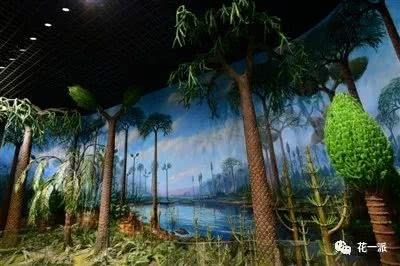
As one of the four classic permanent exhibitions that have been retained since the Beijing Museum of Natural History was founded in 1958, "The World of Plants" is very popular among young people and children. The updated "The World of Plants" exhibition is located on the north side of the second floor of the exhibition building of the Beijing Museum of Natural History, with an exhibition area of more than 850 sq m. It displays as many as 1,200 pieces of various fossils and living plant specimens. The three exhibition halls are divided into three sections: "Plant Evolution," "The Flourishing and Adaptation of Angiosperms," and "Plants and Humans."
The Plant Evolution Hall takes time as its axis, starting from the birth of the Earth, and introduces in sequence cyanobacteria, the endosymbiotic theory, algae, psilophytes, sphenophytes, true ferns, progymnosperms, seed ferns, cycads, ginkgoes, conifers, gnetophytes, and angiosperms. The exhibition route curves and loops, like a time tunnel of plant evolution. Various fossils and living plant specimens are hung on the exhibition walls and placed in display cases according to their categories, as if they are quietly telling the stories of the journey of plant evolution.
In the middle of the exhibition hall, a Carboniferous swamp forest from about 350 million to 290 million years ago has been restored and recreated, with extinct plants such as Lepidodendron, Sigillaria, and Calamites scientifically restored in the forest, lifelike and vivid. These plants were extremely flourishing in that period. After they died, they were buried in swamps for a long time, carbonized and transformed into coal. Therefore, the Carboniferous is also an important coal-forming period in geological history.
The second section tells about various angiosperms adapted to their living environments, selecting plants from 6 vegetation types for display, including tropical rainforest plants, mangrove plants, desert plants, alpine plants, carnivorous plants, and parasitic plants. A strangler fig trunk about 3 m tall and more than 1 m in diameter, and plant buttress roots more than 1 m tall, are displayed in the tropical rainforest plant exhibition area; specimens of the plateau cushion plant Thylacospermum caespitosum, the moss-like Arenaria, and the cushion-shaped Arenaria kansuensis are displayed in the alpine plant exhibition area; specimens such as Nepenthes, Drosera, and Utricularia gibba are displayed in the carnivorous plant exhibition area. These plant specimens use their unique morphological characteristics to tell of their special abilities to adapt to their living environments.
The Plants and Humans Exhibition Hall is divided into two parts. The outer wall is the first part, displaying plant content related to people's material civilization, including seven units in total: edible plants, medicinal plants, oil plants, fiber plants, spice plants, dye plants, and other plants with important economic value.
In the edible plant exhibition area, a large number of seed specimens of rice, sorghum, wheat, corn, and soybean are sealed in exquisite round acrylic boxes and neatly arranged on the backboards of each display niche. Although the "popcorn-type" variety of corn looks unremarkable, it is the best raw material for producing popcorn. These are all crop varieties cultivated by scientists, and they are also indispensable food in each of our daily lives.
Plants are also an inexhaustible treasure trove of medicine. Preserved specimens and crude drug specimens of various medicinal plants are centrally displayed in the medicinal plant exhibition area. You can see a preserved specimen of the Artemisia annua plant. In the 1970s, Chinese scientist Tu Youyou and her team extracted artemisinin from this plant, saving the lives of millions of malaria patients, and in 2015 she won the Nobel Prize in Physiology or Medicine. Liuwei Dihuang Wan and Pipaye Zhike Tangjiang are commonly known medicines, and their main formula medicinal materials are respectively Rehmannia preparata, Cornus officinalis, Chinese yam, Alisma orientale, Moutan cortex and Eriobotrya japonica leaf, Stemona root, Morus alba root bark, Platycodon grandiflorus root, Cynanchum stauntonii root, and poppy husk. Specimens of these medicinal materials are also displayed in this exhibition area.
All the highlights are at the Huayipai Youzan Mall
With flowers, with love | Huayipai