When you see this weed in the farmland, do not pull it out at random; it was once the poor man's life-saving herb and is highly valuable.
With the improvement of rural living standards and medical standards, what people care about now is no longer, as before, whether they can eat their fill and whether illnesses can be cured, but how to earn more money and live a better life, and so they no longer pay much attention to the wild vegetables and wild grasses by the roadside, to the point that many young people today cannot even recognize most wild grasses.
Below, the author introduces just such a wild grass, very common near farmland, yet often pulled out because it is regarded as a harmful weed.
Every year after spring arrives, the rural wilds are covered with all kinds of wild grasses, and the wild grasses near farmland have always been regarded as harmful weeds. Generally, as soon as farmer friends see wild grasses near farmland, they pull them out or spray them with pesticide, also fearing that these wild grasses near the farmland will rob the crops of nutrients, causing the crops to grow poorly and affecting the harvest.
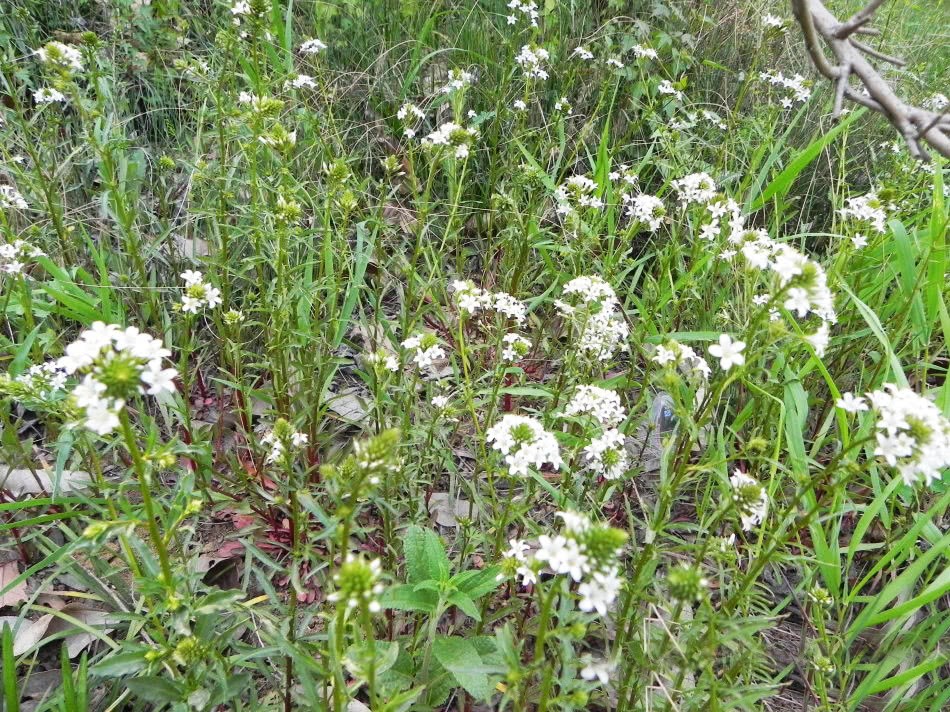
And near farmland there is just such a wild grass: its brown stems stand more than a chi tall, and branches grow from the stems. Its leaves are like mint leaves, pale green and without teeth. At the ends of the branches, flowers bloom in spikes, as fine as millet grains, greenish-white, three or four cun long, drooping gracefully. This wild grass is "Xingxiu Cai" (Lysimachia fortunei, loose-strife).
Speaking of this Xingxiu Cai, many young people today may not be familiar with it; after all, it does not look very outstanding, and it grows beside farmland, so it is often pulled out before it has even grown. But in the past, at least 20 years ago, Xingxiu Cai was a treasure to many older farmer friends.
The author remembers that at that time, many older-generation farmer friends had neither enough to eat nor warm clothes, and relied on wild grasses to fill their stomachs and treat illnesses, and Xingxiu Cai was one of them, so it was also called the "life-saving herb" by many older-generation farmer friends.
So what value does Xingxiu Cai have?
The first point: the tender stems and leaves of Xingxiu Cai can be eaten as a wild vegetable. Its taste is rather sour, and it is fairly tasty to eat, and according to records, Xingxiu Cai contains protein, sugar, vitamins, minerals and many other nutrients, so by the standards of the past it was quite a good wild vegetable. And if Xingxiu Cai is used to make soup, the soup is bright yellow in color, so older farmer friends also call it "yellow eel grass."
The second point: Xingxiu Cai also has very good medicinal value. The whole plant with its roots can be used as medicine, with the effects of invigorating blood, dispersing stasis, promoting diuresis, resolving dampness, relaxing the muscles and unblocking the collaterals, and reducing swelling. In folk medicine it is often used to treat bruises, rheumatic joint pain, amenorrhea in women, breast abscess, scrofula, red swollen painful eyes, edema, jaundice, malaria, dysentery and many other conditions, and it is especially effective for irregular menstruation in women, so older farmer friends also call it "menstruation-regulating herb."
So do not look down on this Xingxiu Cai just because it grows beside farmland; it is not a harmful weed, but rather a very useful wild grass with precious value, so do not pull it out at random when you see it.
Dear friends, are you familiar with "Xingxiu Cai"? You are welcome to leave a message and share your thoughts!