Wild grass at the edge of farmland is often pulled up as a weed, but it is highly valuable and sells for 15 yuan per jin
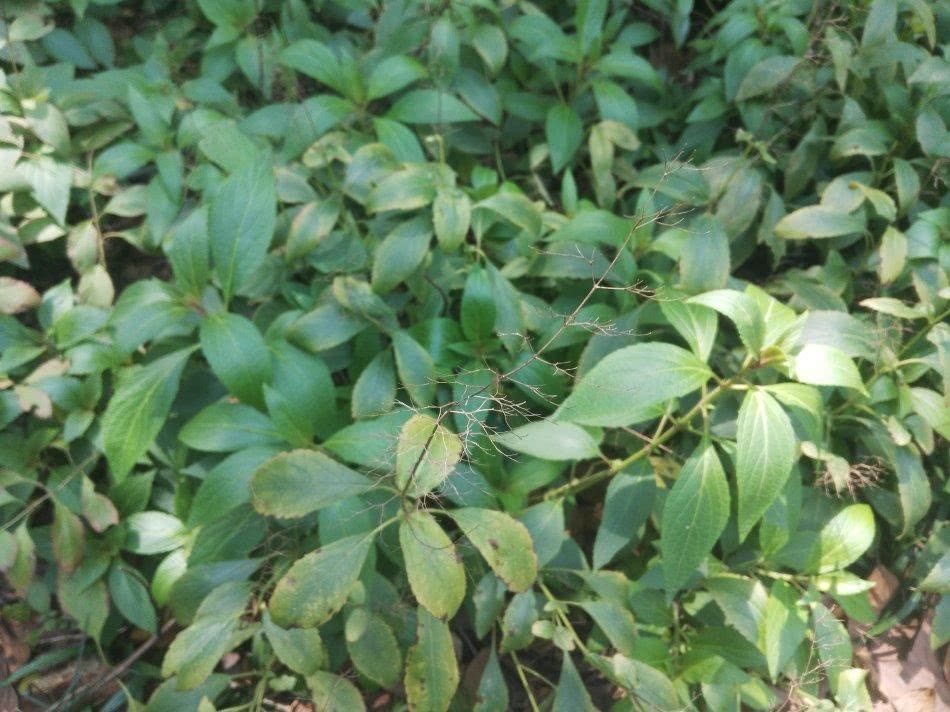
After June arrives each year, farmers start to get busy, especially around Mangzhong (Grain in Ear). For farmers who grow crops, they are not only busy harvesting the crops of the previous season, but also busy sowing the crops of the next season. For fruit growers, June is also the season when many fruits ripen, and many fruit growers are busy harvesting fruit. But during the harvest period, many farmers also hate one thing, and that is the wild grass in farmland and orchards.
When it comes to this wild grass, many farmers get headaches. Why? Many farmers who have worked the land probably know that much of the wild grass in farmland and orchards is even more vigorous than the crops, and its reproductive capacity is also very strong. Often a single wild grass plant can quickly multiply into many plants, which then rob the crops of nutrients, and it is also very hard to remove. That is why this wild grass gives farmers headaches.
And by the water at the edge of farmland, there is just such a wild grass, often pulled up by farmers as a weed, and it is "Xihuangcao" (Isodon serra, also known as linear-leaf rabbitear grass).
Xihuangcao is also called Xigoucao, Shanyangmian, Xiong-dancao, Xuefengcao, Huangzhicao, Xiangchacai, and so on. It is a common wild grass in China, found in rural areas in almost every province and city across the country, often growing along roadsides, field edges, streamsides, riverbanks, and in grassy thickets. Growing in other places is fine, but when it grows at the edge of fields, it is especially easy for farmers to mistake it for a weed.
Little do people know that Xihuangcao is not a weed, but rather a wild grass of high value. However, now that living conditions are better, many people have overlooked its uses, and only older farmers know about it.
So what uses does Xihuangcao have? In fact, since ancient times Xihuangcao has been a folk herbal medicine against hepatitis. According to "Zhonghua Bencao" (Chinese Materia Medica), the whole plant of Xihuangcao can be used as medicine. It tastes bitter and is cold in nature. As medicine it has the effects of clearing heat and detoxifying, draining dampness and reducing jaundice, and dispersing blood stasis and reducing swelling. It can be used to treat damp-heat jaundice, cholecystitis, diarrhea, sores and swelling, bruises and injuries, and many other conditions. And according to some older farmers in the village, Xihuangcao can also be used in summer to cook meat with or brew as tea, which can clear heat and relieve summer heat, and relieve alcohol and protect the liver.
Therefore, in many mountainous areas, older farmers still very much like Xihuangcao. The older farmers in the village also told me that dried Xihuangcao can actually be sold as Chinese herbal medicine, at a price of about 15 yuan per jin. So, everyone should not underestimate this wild grass; used in the right place, it is a treasure.
Dear friends, do you know about "Xihuangcao"? You are welcome to leave a message and share your thoughts!