Pepino melon is also known as pepino, longevity fruit, phoenix fruit, brilliant fruit, immortal fruit, and fragrant pear.
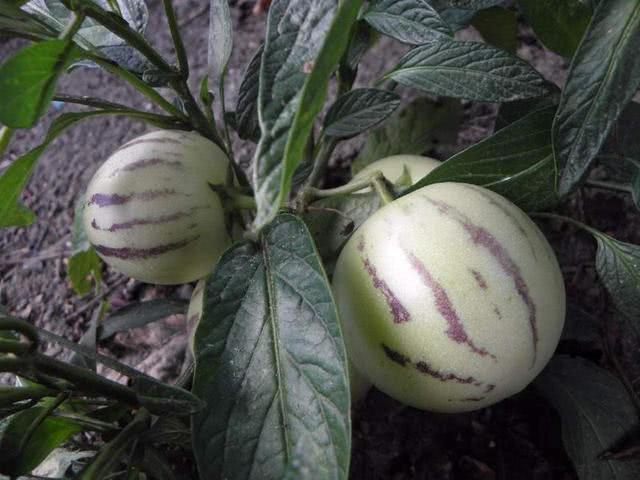
Pepino melon (a fruit of the Solanaceae family)
Pepino melon (Pepino Melon), originally named pepino, has the scientific name Solanum muricatum Aiton. Also known as longevity fruit, phoenix fruit, and brilliant fruit, it originates from South America and is a perennial dicotyledonous herbaceous plant of the Solanaceae family. It may also be called immortal fruit, fragrant pear, or brilliant fruit. When the fruit ripens, the skin turns golden yellow and the shape resembles a human heart. Its flesh has a unique flavor, is crisp and juicy, neither sour nor astringent, and like tamarind, it is a popular fruit.
What people usually call pepino melon is a highly nutritious fruit grown in solar greenhouses in areas such as Minqin in Wuwei and Yumen in Jiuquan, Gansu Province, China. Minqin County, Wuwei City, Gansu Province, is also known as the hometown of pepino melon in China.
Its flesh is fragrant and juicy, with no core inside, and a unique flavor. It has the characteristics of high protein, low fat, and low sugar, and is also rich in protein, amino acids, trace elements, vitamins, and mineral elements, with health-promoting effects. It is a relatively comprehensive food that can be used as both a vegetable and a fruit. Eating it can supplement what the human body needs and has nutritional and health value. This fruit is mentioned in Journey to the West, one of China's four great classical novels, where it was given mythological color.
Morphological characteristics
Pepino melon is a herbaceous plant of the Solanaceae family used as a vegetable, fruit, and ornamental plant. In tropical and subtropical regions, it is a perennial small shrub. In China and Japan, it is cultivated as an annual.
The plant height is 60-150 cm. The base of the stem becomes woody, and adventitious roots easily form at the stem nodes. The basal leaves are elliptical, while the upper leaves are shaped like tomato leaves. Some, after artificial treatment, will bear patterns of monks, immortals, and the like.
Leaves
The leaves are covered with fine hairs. The berry is ovate or conical. When ripe, the skin is pale yellow, and some varieties have purple striped markings, with a diameter of 8-10 mm. The flowering period is April-June, and the fruiting period is September-November. The flesh is pale creamy yellow. The seeds are pale yellow, resemble eggplant seeds, and have a viability period of 2 years. The rhizome is long and cylindrical, 1-1.5 cm in diameter, multi-noded, and green to yellow.
Leaves are basal, 4-8 (-12) in number, subleathery or papery, oblanceolate, linear-lanceolate, linear, or oblong-lanceolate, 15-65 cm long and 1.5-9.5 cm wide, apex acuminate, base attenuate; sheath leaves 2, lanceolate or oblong, 2.5-10 cm long.
Flowers
The spike is upright, rarely curved, densely many-flowered, 2.5-9 cm long; the peduncle is short, 1-6 cm long; the bracts are green, ovate-lanceolate to lanceolate. In addition to one bract per flower, several flowerless bracts gather in a cluster at the top of the inflorescence;
The flower is short bell-shaped, 5-7 mm long; the perianth tube is 2-2.5 mm long; the lobes are ovate, apex acuminate, 3-5 mm long and about 2-4 mm wide, fleshy, yellow or yellow-green;
The base of the filament is enlarged; the enlarged part is sometimes adnate to the perianth segments, sometimes thickened and fleshy, with the margin not adnate to the perianth segments, and sometimes united with one another. The upper part of the filament is free, 1-2 mm long, incurved, and the anther is ovate;
The ovary is nearly spherical, 2.5 mm in diameter; the style is inconspicuous; the stigma is obtusely triangular, with the apex 3-lobed.
Fruit
The "pepino melon" has extremely strong branching and sprouting ability. For each plant, 3-4 branches are kept at 10-20 cm as fruiting branches, and all the remaining branches are pruned off for seedling propagation by cuttings or used as livestock and poultry feed; after flowering and fruiting, only 1-2 fruits may be kept per cluster of flowers and fruits, so that the fruits are large and of good quality.
Growing environment
Choosing the planting site mainly means scientifically arranging a suitable planting period according to the requirements of pepino melon for conditions such as temperature and light.
Pepino melon likes warmth but is not tolerant of high temperatures. It can grow and develop normally within the range of 10-35 °C. The suitable temperature for growth is 20-25 °C during the day and 8-15 °C at night. The suitable temperature for fruit setting is about 20 °C. The plant dies below 0 °C. The suitable soil temperature for root growth is 20 °C. If the soil temperature is below 10 °C, root hair growth slows or stops.
Pepino melon likes ample sunlight and long photoperiods, especially during the fruit ripening period. If light is insufficient, ripening will be delayed; if light is too intense, accompanied by high temperature and dryness, it easily causes leaf curling and worsens disease.
Distribution range
It is now produced in Gansu, Sichuan, Guizhou, Yunnan, Hubei, Hunan, Jiangxi, Fujian, Anhui, Henan, Shaanxi, Guangxi, and other places. The altitude is around 1000-2000 m.
Propagation methods
There are 2 methods of propagation and seedling raising for pepino melon:
The first is seed propagation, that is, sexual propagation;
The second is cutting propagation, that is, asexual propagation.
Seed seedling raising
1. Land preparation and fertilization: Choose neutral soil that is convenient for irrigation, ventilated and light-transmitting, loose, and fertile for planting. Pepino melon is a perennial herbaceous plant, so sufficient base fertilizer should be applied: 4000-5000 kg of farmyard manure per mu, 50-70 kg of N, P, K ternary compound fertilizer, with a plant-row spacing of 40-70 cm, deep plowing of 20-30 cm, then level the land and form strip beds 70 cm wide, with the bed surface 10 cm above the ground.
2. Seed selection: Good color, uniform size, plump grains, dry, and free from mildew are required.
3. Seed treatment: Warm water soaking, chemical seed dressing, and the like may be used to achieve early emergence, uniform emergence, and strong seedlings. Wrap the soaked seeds in a gauze bag and provide suitable temperature, moisture, and air for germination.
4. Sowing method: There are broadcasting, drilling, and dibbling. Because pepino melon seeds are small, the broadcasting method is often used. Sowing should be uniform, generally with a seed spacing of 5 x 7 or 7 x 7 (cm).
5. Management after sowing: Sprinkle another layer of fine sand on the bed surface to cover the seeds. If the temperature is below 12 °C, plastic film should be used to maintain soil temperature and soil moisture. If the seedling bed is dry, spray fine water to facilitate germination, and never use large amounts of water for sprinkler irrigation. After the seedlings emerge, the plastic film must be removed. To avoid scorching sunlight, shade nets may be set up. During the seedling period, generally about every 10 days, spray once with low-concentration nitrogen fertilizer, and at the same time strengthen field management, prevent and control diseases and pests, and ensure robust seedling growth.
6. Planting strong seedlings: Select strong seedlings about 15 cm tall, with many branches, thick stems, lush leaves, and no diseases or pests for planting, with planting at 50 cm x 50 cm in a triangular arrangement. Generally, planting in the evening is preferable, with 2000-3000 plants per mu. After planting, water thoroughly to settle the roots.
Cutting seedling raising
Cutting propagation for seedling raising is a simple method commonly used for pepino melon. That is, take pepino melon stems and branches, cut them into cuttings (cutting slips), and insert them into the soil so that they take root and sprout under suitable environmental conditions and independently grow into robust plants.
1. Selection of cutting stems and branches: Fresh and tender stems and branches from high-yielding plants with good genetic traits should be selected, free from disease and damage, to facilitate new root and new shoot formation. The length of the cuttings is preferably 10-14 cm. After cutting, insert the cuttings into the soil in time; otherwise, place them in a dark place or cover them with a wet cloth to prevent dehydration.
2. Selection of cutting time: Although pepino melon can be cut throughout the year, the survival rate is higher for spring and autumn cuttings. For cutting within a day, it is advisable to do so after 4 p.m. to increase the survival rate. The suitable temperature for cutting is within the range of 15-30 °C.
3. Cutting method: Before cutting, to improve the survival rate, growth hormones may be used to soak the cuttings.
When cutting, insert the cuttings straight into the soil, then cover with soil and press firmly, so that the cuttings are exposed above the ground by about 4-6 cm, with a row spacing of about 10-15 cm and a plant spacing of about 6 cm. After cutting, water in time; the amount of watering may be determined as appropriate.
4. Management after cutting: When cutting from late spring to summer and autumn, shade should be provided to prevent scorching sunlight, and fine water should be sprayed. After the seedlings grow new roots, the shading tools may be removed. If cutting in winter or when the temperature is relatively low, to prevent cold damage, it is advisable to carry out the operation in a solar greenhouse or plastic tunnel, with a small arched shed covered with plastic film and straw curtains. After the seedlings take root, decomposed human manure and urine water may be applied as a top dressing to promote new roots and new shoots. Under suitable external environmental conditions, about 20-30 days after cutting, planting or seedling transplanting can be carried out.
Cultivation techniques
Accordingly, in the south, open-field cultivation can be carried out throughout the frost-free period, but in the high-temperature summer period, shade sheds or shade nets should be set up to prevent high temperatures. For spring open-field cultivation in the Yangtze River Basin, planting can be done after the late frost ends and when the temperature is above 10 °C.
In northern regions, seedlings should be raised under protection in early spring, planted in plastic tunnels, and harvested before the high-temperature season; for summer open-field cultivation, the autumn harvest is before winter; for autumn-winter cultivation, raise seedlings by open-field cuttings in August-September, plant in a greenhouse or tunnel, maintain the nighttime temperature above 10 °C, and harvest from March to May the following spring.
Soil, fertilizer, and water management
Pepino melon has strong adaptability to soil, but practice has shown that when planted in loose, fertile, slightly acidic soil, it grows well, yields high, and has good quality. Therefore, it is advisable to choose fields near the suburbs or with convenient transportation, sufficient water sources, no pollution sources, relatively high terrain, flat land, ventilation and light transmission, convenient drainage and irrigation, high organic matter content, deep soil layer, loose and fertile soil, slightly acidic, and with a suitable pH of 6-7.
Avoid planting pepino melon in saline-alkaline and strongly acidic soil. If unavoidable, lime or sulfur powder must be used to adjust its acidity and alkalinity. Also note that it should not be intercropped with other crops such as pepper, eggplant, tomato, potato, tobacco, and the like, to avoid soil-borne disease transmission and reduced yield.
Bed preparation and specifications
Pepino melon has a well-developed root system, mainly distributed in the 25 cm soil layer. Therefore, for fields planted with pepino melon in spring, deep plowing should be carried out before winter, with a plowing depth of about 25 cm, using winter freezing and sunning of the soil clods to not only eliminate pathogenic spores, egg masses, and pupae in the soil, but also loosen the soil, enhance the soil's water storage and fertilizer retention capacity, and improve soil fertility.
Before spring planting, carry out spring plowing, breaking the field soil into fine particles and leveling it to help preserve soil moisture. On this basis, open furrows and make beds. In areas with much spring rain and a high groundwater table, ridge beds are suitable, with a ridge spacing of 70-80 cm, that is, raising the soil from both sides onto the ridge to form high ridges; in areas with relatively much spring rain and a relatively high groundwater table, high beds are suitable, with a bed spacing of 1.5-1.6 m (including a bed furrow of 30-40 cm) and a furrow depth of more than 20 cm; in areas with less spring rain, a lower groundwater table, and good drainage, flat beds may be used, with a bed spacing preferably of 1.5-1.6 m (including a bed furrow of 30 cm) and a furrow depth of about 15 cm.
Cultivation techniques
Pepino melon is suitable for field planting in the southern subtropical region and the northwestern region of China, protected cultivation in the mid-subtropical region, and greenhouse tunnel planting in northern China. The suitable temperature for pepino melon growth is 25 °C. It can endure low temperatures of 3-5 °C and will freeze to death below 0 °C. Within 15-30 °C, it can continuously flower and fruit, with a long continuous fruiting period and a high fruit-setting rate, and the yield per mu can reach 2000-3000 kg.
Fertilizer and water management
In addition to applying sufficient base fertilizer, top dressing should also be applied twice: once when the fruit seedlings grow to about 30 cm; the other when the fruit seedlings are close to flowering, applying 3 kg each of N, P, and K fertilizer per mu, irrigated 10 cm away from the main root of the seedlings. During the flowering and fruiting period, boron fertilizer and other trace elements or Baofengsu No. 2 should be appropriately added. Apply N, P, K compound fertilizer frequently in small amounts, and pay attention to intertillage and weeding. Generally, fertilize once every 10 days, and apply more potassium fertilizer after flowering. March-June and September-November are the periods when pepino melon has the greatest water demand for growth, development, flowering, and fruiting, so timely watering is needed.
Pruning and training
Pepino melon has strong sprouting ability, so pruning and removing side shoots should be done in time. From the part above 15-20 cm of the plant, select and keep 3-5 robust and evenly distributed branches as main branches, and prune off all the rest. Keep 2-3 inflorescences on each lateral branch, and keep 2-3 fruits per inflorescence, removing all other inflorescences and small fruits. Each plant should bear at most 30 fruits. Because the stems of pepino melon are relatively soft, when fruiting begins, bamboo poles or plastic rope should be used to build trellises to prevent lodging.
Disease and pest control
The main diseases of pepino melon include Phytophthora rot and gray mold. Per mu, 110-150 g of chlorothalonil may be used diluted 400-800 times with water, 600-800 times of huimeijing, and 1000 times of carbendazim or thiophanate-methyl; the main pests are aphids and red spider mites, and 1500 times dicofol, 1500 times pyridazinone, and fenpropathrin may be used alternately. Note that pepino melon is extremely sensitive to omethoate or dichlorvos, and their use should be prohibited.
Timely harvesting
When clear purple striped markings appear on the fruit surface, or when there are no stripes but the fruit surface is glossy and smooth, it can be harvested. If storage is needed, it can be harvested at 70-80% maturity. At room temperature, the storage period is 40-60 days. The fruit can be marketed during the off-season for fruits and vegetables around New Year's Day to the Spring Festival.
Fertilization methods
Pepino melon is a crop used as both a vegetable and a fruit, so farmyard manure should be the main fertilizer. Pepino melon needs much fertilizer and has a strong ability to absorb nutrients, so base fertilizer should be applied heavily. Base fertilizer can be obtained locally, such as barnyard manure, compost, mud fertilizer, human manure and urine, and cake fertilizer. Generally, 4000-5000 kg of organic base fertilizer and 100-200 kg of plant ash are required per mu. When fertilizer is relatively sufficient, it may be broadcast, that is, spread on the ground before spring plowing and plowed into the soil so that the fertilizer is evenly distributed in the soil, which can both improve fertility and improve the soil. If the amount of fertilizer is limited, concentrated fertilization may be used, that is, applying it in planting furrows or planting holes so that fertility is concentrated, which is conducive to stable yield and high efficiency in the same year. Top dressing should be combined with watering and intertillage weeding.
When the plant is about 30 cm tall, dig pits around the plant and apply decomposed human manure and urine as top dressing, then water in time after top dressing. When the first inflorescence of the plant sets fruit, the demand for fertilizer and water increases, so top dressing and watering should be done in time. The amount of top dressing should be based on meeting the needs of plant growth and development, that is, when soil fertility is poor, base fertilizer is insufficient, and seedlings are weak, more top dressing should be applied; otherwise, less should be applied. The type of fertilizer should still be mainly decomposed farmyard manure, appropriately combined with phosphorus and potassium fertilizers.
Pepino melon is a boron-loving crop. When flower spikes appear, 2-2.5 kg of boron-magnesium fertilizer may be applied per mu as top dressing; applying boron-magnesium fertilizer once more during the full fruiting period will make the fruit larger, better tasting, and better looking. The number of waterings may be determined according to actual needs. Pepino melon has no main root, so the intertillage depth should be 3-5 cm, and not too deep, so as not to cut the capillary roots. Intertillage should be carried out after watering or rain to keep the soil loose, ventilated, and moist.
Management taboos
1. Avoid excessively high or low temperatures: when the temperature is above 38 °C or below 8 °C, pepino melon cannot grow normally; below 0 °C, the entire plant freezes to death.
2. Avoid cultivation in waterlogged, low-lying, and heavy clay plots: pepino melon fears waterlogging. In the rainy season, especially in years with excessive rain, roots rot very easily, and in severe cases the entire plant dies.
3. Avoid improper pesticide use: pepino melon is extremely sensitive to dimethoate pesticide, and it should not be used to control aphids and mites, otherwise it will cause plant death or total loss of yield.
4. Avoid failing to remove side buds in time: side buds of pepino melon sprout very easily. This not only affects growth but also causes physiological flower drop and affects fruit setting. Therefore, except for the branches selected and kept, all other side buds should be removed in time.
5. Avoid excessively high humidity: excessively high humidity easily causes Phytophthora disease, so attention should be paid to ventilating the tunnel to reduce humidity; in rainy years, pay attention to timely spraying of new high-lipid film, carbendazim, chlorothalonil, and the like for control.
Eating methods
There are many scientific eating and deep-processing methods for pepino melon, described as follows:
Eating methods
Stir-fried pork slices with pepino melon: 250 g pepino melon, 100 g pork, and appropriate amounts of refined salt, monosodium glutamate, vegetable oil, cooking wine, chopped scallions, minced ginger, and soy sauce. First remove the stem end of the pepino melon, wash, and slice it, then wash the pork and cut it into thin slices; heat the oil in a wok and stir-fry the pork slices, and when they are 70-80% cooked, add the pepino melon slices and seasonings, and stir-fry until cooked.
Fresh fruit eating. To eat pepino melon raw, it must be fully ripe to have a faint delicate fragrance, with pale yellow, soft and smooth flesh that is refreshing and juicy. To preserve nutrition, it should be eaten with the skin.
Cold-dressed pepino melon: Wash and slice fully ripe pepino melon and put it on a plate, add an appropriate amount of refined salt and marinate for a moment, pour off the exuded water, then add an appropriate amount of mashed garlic, monosodium glutamate, rice vinegar, and sesame oil, mix well, and eat.
Steamed pepino melon: Wash the pepino melon, cut it lengthwise to the 2/3 point so that part of the skin remains connected to the flesh, scoop out the pulp, and stuff meat filling into it. Steam it in a steamer, take it out and let it cool, cut it horizontally into slices with a clean sharp knife, and then eat it. In addition, as a vegetable, it can also be fried, braised, stewed, and so on; through deep processing, it can also be made into pepino melon juice, canned food, preserved fruit, ice cream, cheese, jam, fruit wine, candied fruit, and the like.
Eating taboos
There are still some differing views in society about "eggplant-pepino melon," the most important of which is that its sugar content is low and the taste is not very good. Therefore, some domestic scientific research units have carried out selection and breeding of "eggplant-pepino melon" and successfully developed new varieties with high sugar content. Their sugar content is 6-9%, with a sweet taste and good mouthfeel. In this regard, some people believe that whether its sugar content is high or low should not become a standard for judging quality. Sweet pepino melon tastes good and is therefore favored by people, but many sugar-free foods on commodity shelves are also quite popular, are they not? Moreover, there are many people in China today (such as diabetic patients and others) who should not eat much sweet pepino melon, and should instead regularly eat low-sugar pepino melon.
Main value
The edible rate of pepino melon can reach more than 95%, and it has the characteristics of low sugar, high protein, and being rich in multiple vitamins, amino acids, and trace elements. According to laboratory analysis, every 100 g of mature fresh fruit contains 1.9 g of protein, which is 2 times that of cucumber and tomato, and 9 times that of ya pear and Golden Delicious apple; 3.1 g of total sugar, close to cucumber and tomato, and far lower than ya pear and Golden Delicious apple; 0.2 g of crude fat, equal to cucumber and tomato; 130 mg of vitamin C, which is 32 times that of pear and apple, 14 times that of cucumber, and 6.8 times that of tomato; 0.25 mg of vitamin B1, which is 8 times that of tomato and cucumber, and 5 times that of apple; 0.27 mg of vitamin B2, which is 9 times that of cucumber, tomato, and ya pear; 0.9 mg of carotene, which is 2 times that of tomato and 10 times that of cucumber; 1818 mg of total amino acids and 253 mg of essential amino acids, both far higher than cucumber, tomato, pear, and apple; especially the trace element selenium, as high as 15 micrograms, which is 8.8, 22, 12, and 11 times that of cucumber, tomato, pear, and apple, respectively. There are also 3.44 mg of molybdenum, 11.2 mg of magnesium, 6.59 mg of iron, 1.14 mg of zinc, 0.39 mg of manganese, 0.332 mg of cobalt, and so on. It can be seen that the nutritional components contained in pepino melon are both high and comprehensive, and eating it can supplement what the human body needs, with relatively high nutritional value.
High protein is one of the main characteristics of "Solanaceae pepino melon." Protein is the main "building material" of the human body and the main material basis for the continuation of life. Protein is composed of amino acids, and the proportions of various amino acids contained in "Solanaceae pepino melon" are basically consistent with the amino acids needed by the human body, making them easy for the human body to absorb and utilize. They can not only maintain the health of adults, but also have relatively good health-promoting effects on children's growth and the anti-aging of the elderly.
Being rich in multiple vitamins is another characteristic of "Solanaceae pepino melon," among which the contents of vitamin C, B1, B2, and carotene are especially rich. Vitamins are a class of essential nutrients for the human body; if intake is insufficient, they often cause pathological changes in the body and may even endanger life. The role of vitamins in preventing tumors has attracted the attention of medical experts, and the argument that vitamin C can prevent tumors has been proposed.
Being rich in essential trace elements for the human body is another characteristic of "Solanaceae pepino melon." Trace elements are essential elements that constitute body tissues and maintain physiological functions. The selenium, molybdenum, cobalt, iron, and zinc richly contained in "eggplant-pepino melon" are essential trace elements for the human body. Its selenium content is exceptionally rare among Chinese vegetable and fruit varieties. Selenium is a strong oxidant and can maintain the normal physiological functions of the body. It activates human cells and protects organs such as the cardiovascular system; it can also stimulate the production of immunoglobulins and antibodies, enhancing the body's resistance to disease. In 1973, the World Health Organization announced that selenium is closely related to the occurrence of cancer. In 1986, experts from the Chinese Academy of Medical Sciences conducted three nutritional selenium supplementation studies in the high liver cancer incidence area of Qidong City, Jiangsu Province. After 8 years of observation, it was found that the incidence of liver cancer in the selenium-supplemented group was on average 49% lower than that in the control group. Selenium is divided into organic selenium and inorganic selenium. Excessive intake of inorganic selenium can produce adverse reactions, while organic selenium hardly produces antagonistic effects with other drugs and is the safest and most effective. The selenium contained in "eggplant-pepino melon," as well as in garlic, sesame, asparagus, fungi, and the like, is all organic selenium. According to other reports, selenium can also lower blood pressure and has auxiliary therapeutic effects on diabetes.
The fruit of pepino melon has a light elegant fragrance, and the flesh is refreshing and juicy with a unique flavor. In addition to being high in protein, low in sugar, and low in fat, it is also rich in vitamin C and multiple trace elements essential to the human body, especially selenium and calcium, whose contents are greatly higher than those of other fruits and vegetables. Therefore, pepino melon has functions such as anti-cancer, anti-aging, lowering blood pressure, lowering blood sugar, anti-inflammatory, calcium supplementation, and beauty care.
Pepino melon can also be processed into canned food, jam, juice, beverages, and oral liquids. In addition, it also has extremely high ornamental value and can be grown as a potted plant in courtyards, on balconies, or in front of and behind houses.