5 potted plants that are easier to care for than pothos and succulents, and can bloom even without watering for a month
Stop growing pothos and succulents. These 5 potted plants are super easy to care for and can bloom even without watering for a month
We all know that pothos and spider plants are very easy to grow. In fact, besides pothos, these five potted plants are also very drought-tolerant and super low-maintenance. You can give them a try.
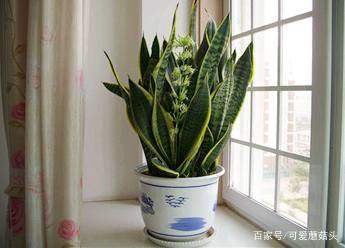
1. Snake plant
Snake plants grow well under sufficient light and should be placed in a bright room with indirect light. In summer, avoid direct sunlight; in winter, place them in a sunny room to keep them warm. If left in a room that is too dark for too long, the leaves will turn black and lose their vitality.
A single leaf can be inserted into a pot to grow a snake plant. It is extremely drought-tolerant. If you have no time to care for it for a month, I can guarantee it will never die.
2. Moss rose
Whether sown from seed or propagated by cuttings, moss rose easily survives in any environment. This is because its survival rate is very high, so it is hard to kill. It is highly adaptable, not picky about soil, and also propagates itself. It blooms when it sees light and closes on cloudy days and at night. It will not die if not watered for ten days or half a month, but with proper care, it can bloom in season and is very beautiful.
3. Bachelor's tree
Perhaps we have only heard of Singles' Day, but we rarely hear of the bachelor's tree. In fact, the bachelor's tree is a succulent woody plant belonging to the Euphorbiaceae family. Its characteristic is that the entire tree has no leaves, leaving only bare branches. The branches look like a stick inserted into the tree, so people call it the "bachelor's tree," and some call it the "green tree" or "fairy wand."
Euphorbia tirucalli is a sparse succulent plant and is very tolerant of drought. It should not be overwatered normally. It is necessary to see it dry, then water thoroughly; wait until dry, then pour again. In the hot summer season, beware of heavy rain after sun exposure, which can cause leaf drop. In summer, when the temperature is above 30°C, the plant is in a dormant or semi-dormant state, and watering must be controlled.
4.
During the growing season, watering should be appropriate to keep the potting soil moist, but water must not be allowed to accumulate in the pot, otherwise it is prone to rot. In summer, growth stagnates and watering needs to be controlled, but water can be sprayed 1 to 2 times a day. During the trial period, watering should also be done regularly to keep the stems and buds moist during their transformation. After flowering, following a brief dormancy, watering should be reduced and fertilizing stopped. After the stems grow new shoots, carry out normal fertilizer and water management.
5. Crown of thorns
Summer and autumn are the growing seasons, and it can overwinter safely if the winter temperature stays above 3°C. If the temperature is above 15°C and there is enough sunlight, it will continue to bloom. It is a thorny, upright or slightly climbing shrub. It prefers a warm, dry climate, and the suitable growing humidity is 18-25°C. If the indoor temperature is kept above 15°C in winter, it will continue to bloom throughout the winter.
Crown of thorns is drought-tolerant. In spring and autumn, watering must follow the dry-wet cycle. In summer, it can be watered once a day. During the rainy season, it is resistant to waterlogging. In winter, it should not be watered. The pot is not suitable for long-term humidification. During the flowering period, the water content also needs to be controlled. Too much water easily causes flower drop and rot.