Phalaenopsis is the top choice for summer flowers, with beautiful blooms that easily fill the pot
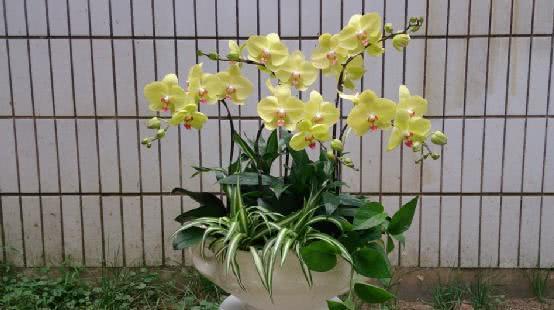
Beautiful and delicate flower shapes with an elegant and noble meaning - yes, I am talking about the Phalaenopsis, known as the "Queen of Orchids." As an ornamental plant we are all very familiar with, it often appears in our living rooms, so here is the question: how can you grow a healthy and beautiful pot of Phalaenopsis? Are there any little tricks involved? If you want to know the answers, then why not look for them in the article below.
Generally speaking, Phalaenopsis does not have high requirements for soil. Slightly acidic or slightly alkaline soil can ensure its good growth. You just need to add some large-grained coarse sand to garden soil and place two pieces of broken tile at the bottom. The potting mix prepared this way balances both water permeability and air permeability. Of course, if you want your Phalaenopsis to grow more vigorously, you can put a small amount of base fertilizer at the bottom of the potting soil. With the support of nutrients, the Phalaenopsis will grow better.
Watering is the second important issue that Phalaenopsis needs attention. Some flower growers say, "Flowers are all killed by watering, rarely by drought." This is especially true for Phalaenopsis - too much water easily causes root rot. But it is rather difficult to judge how to get it right. The more scientific advice we give here is that you can use tap water for watering, but it is best to let it sit for a full day to filter out the chlorine. During the vigorous growth period of new roots, Phalaenopsis should be watered more, and during the dormant period after flowering, less. In spring and autumn, water once every afternoon. In summer, when the plant grows vigorously, water once in the early morning and once in the evening each day. In winter, when light is weak and temperatures are low, watering once every other week is sufficient.
Phalaenopsis grows very quickly, which means it needs to be repotted frequently, and this need is even more obvious in summer. To repot a Phalaenopsis, when the soil is dry, first remove the original substrate, cut off the roots that have aged and died, and then put in some new substrate. After repotting, it is best to water thoroughly once first, and then wait until the water has been fully absorbed by the plant's roots before applying fertilizer. Remember, never do both at the same time, as this may cause root burn.
The suitable temperature range for Phalaenopsis growth is: 18 to 30 degrees. Below 15 degrees it is prone to cold damage, and above 33 degrees it easily enters a semi-dormant state. Whether low temperature or high temperature, both are extremely unfavorable to the growth of Phalaenopsis, so make sure the temperature in your home is suitable for Phalaenopsis growth.
One of the reasons Phalaenopsis attracts some pests and diseases is that the environment is not ventilated enough. Common diseases include: viral disease, soft rot, and so on. Using drugs such as carbendazim and chlorothalonil for prevention and control is enough. Common pests and diseases include: scale insects, red spider mites, and so on. After discovering these pests and diseases, you can use: omethoate, lime powder, and so on. Once you take care of these pests and diseases, the Phalaenopsis will naturally grow to look very beautiful.